
Jachnun (Yemenite slow-baked rolled pastry)
Contains egg (no meat or fish)
ג'חנון · jaḥnun
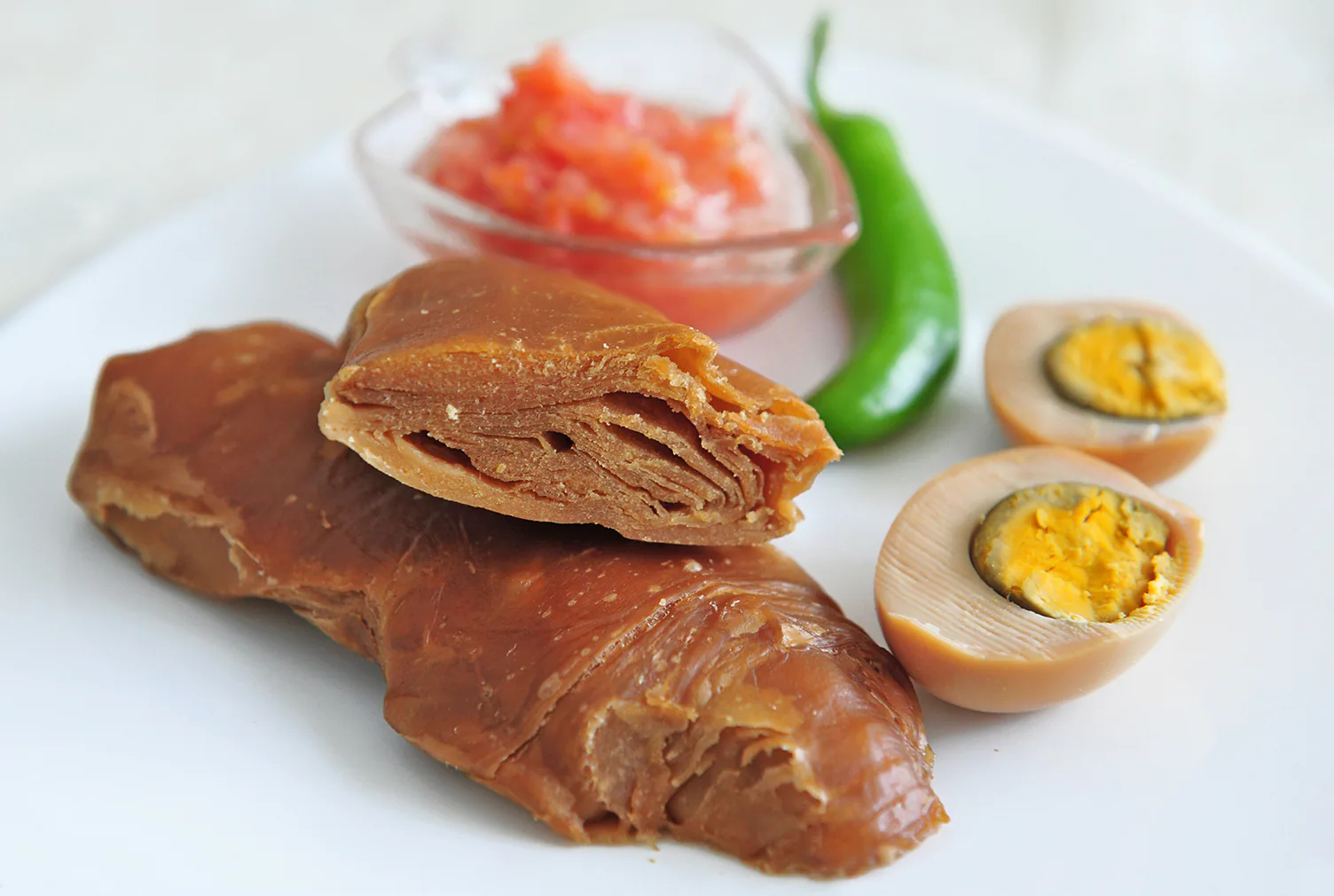
Thin sheets of butter-brushed dough rolled into tight logs and cooked overnight at very low heat until amber, flaky and faintly sweet. The Shabbat breakfast of Yemenite Jews, now loved all over Israel with grated tomato, hard-boiled eggs and zhug.
Jachnun (Yemenite slow-baked rolled pastry) is an Israeli pastry, ready in about 11 hours 45 minutes and made with all-purpose flour and butter. It serves 6 and is rated intermediate to cook.
- Prep
- 45 min
- Cook
- 10 h
- Rest
- 1 h
- Total
- 11 h 45 min
- Serves
- 6
- Level
- Intermediate
- Calories
- 593
Mostly unattended overnight baking.
Main ingredients
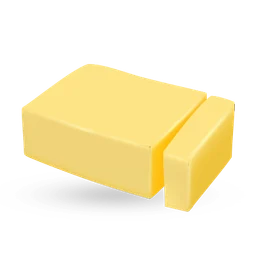
Ingredients
For the dough
For rolling
To serve
Method
Dough
35 minStep 1
Mix the flour, sugar (opens in a new tab), salt and baking powder (opens in a new tab), add the water (and honey (opens in a new tab)) and knead for 10 minutes to a soft, sticky, very elastic dough. Divide into 12 balls, smear each with a little butter (opens in a new tab), cover and rest for at least 1 hour.
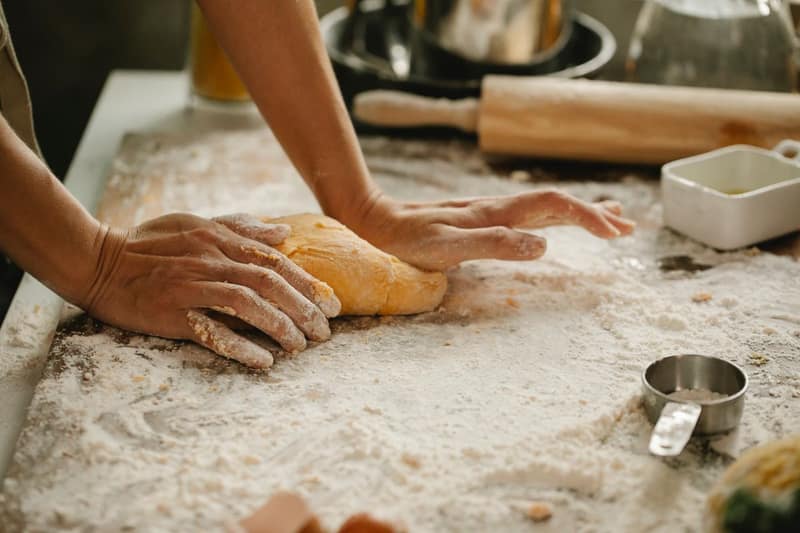
How it looks · Photo: Klaus Nielsen on Pexels Step 2
Grease the work surface and your hands with butter (opens in a new tab). Stretch each ball with your palms into a paper-thin sheet as large as possible. Fold the sides into the centre to make a long strip about 10 cm wide, brushing with butter.
- 20 min
Small holes do not matter; the folds hide them.
To serve
10 h 15 minStep 3
Roll each strip tightly from a short end into a log. Pack the logs side by side in a buttered heavy pot lined with baking paper, in two layers if needed. Nestle the eggs (opens in a new tab) on top.
Step 4
Cover the pot tightly (lid plus foil) and bake at 100 °C overnight, 10–12 hours, until the rolls are deep amber and caramelised.
- 600 min
- 100°C
- Oven (opens in a new tab)
Step 5
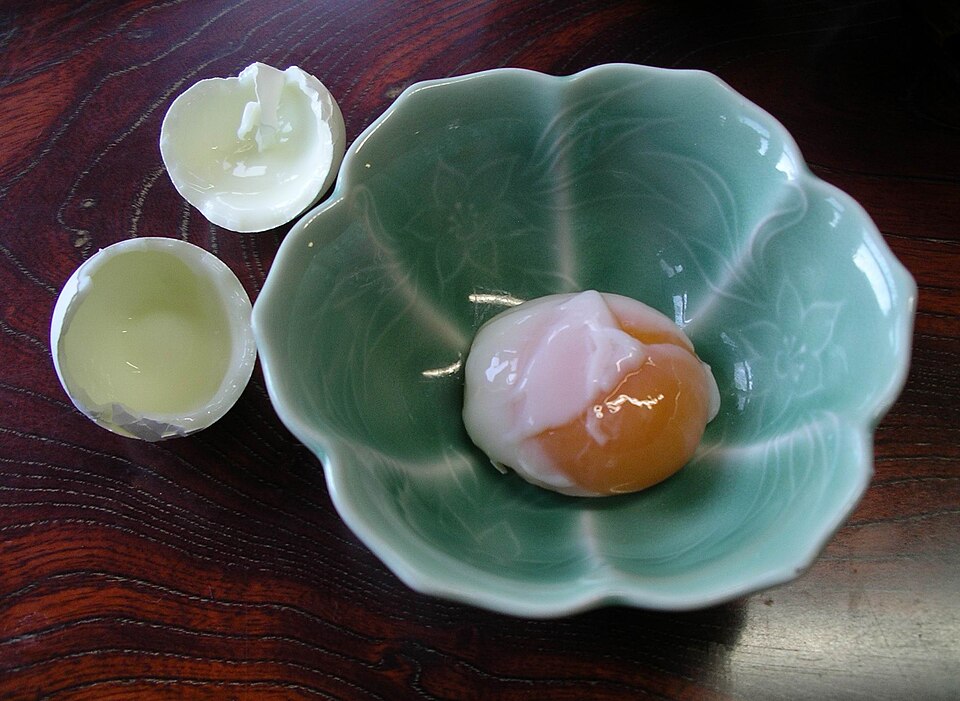
Serve warm with the peeled brown eggs (opens in a new tab), grated tomato (opens in a new tab) and zhug.
- 5 min
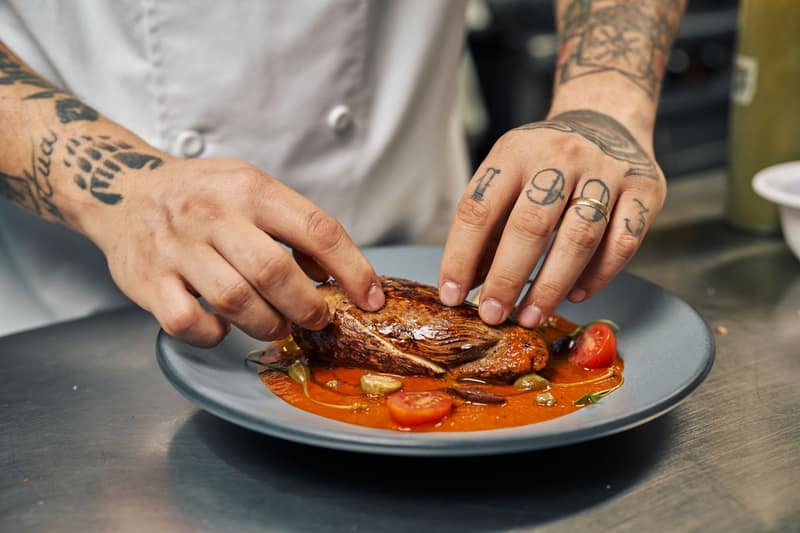
How it looks · Photo: Willians Huerta on Pexels
At a glance
1 · Dough in a bowl
 All-purpose flour
 Sugar
 Salt
 Baking powder
 Honey
then roll
2 · To serve in a pot
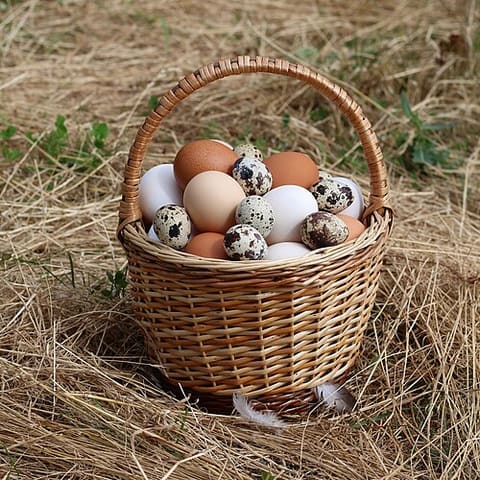 Egg
 Tomato
About this dish
- Origin
- Yemenite Jewish communities (Yemen); now throughout Israel, Israel · Well documentedDeveloped by Jews in Yemen as a way to serve warm bread on Shabbat without cooking; brought to Israel with the mass immigration of 1949–1950.Also popular in YemenMore food from Israel
Israel - Dish
- Breakfast · Brunch · Pastries · Breads & flatbreads · Breakfast dishes
- Cooking method
- Oven-baked, Slow-cooked
- Taste
- buttery, sweet, rich
- Diet
- Vegetarian (lacto-ovo) · No nut ingredientsWith the listed swaps: Ovo-vegetarian, Dairy-freeWorked out from the ingredients. How labels work
All labels
Vegetarian (lacto-ovo) · Eggetarian · Pescatarian · Flexitarian-friendly · No nut ingredients · Alcohol-free · Pork-free · Beef-free - Good for
- Festive & celebration · Make-ahead · Freezer-friendly
- Cook more with
- All-purpose flour · Butter · Sugar · Baking powder · Egg · Tomato
Allergens
- Contains, can be adapted: Milkfrom butter
- Contains: Eggsfrom egg
- Contains: Wheatfrom all-purpose flour, baking powder
- Contains: Glutenfrom all-purpose flour, baking powder
Based on typical versions of these ingredients and not verified allergen-free. Brands differ and cross-contact happens, so always check labels. For severe allergies, follow your clinician’s advice.
Nutrition
593 kcal per serving
Calculated1 serving ≈ 297 g · recipe makes 6
Where the energy comes from
- Protein 11%
- Carbohydrate 50%
- Fat 40%
| Nutrient | Per serving | Per 100 g* |
|---|---|---|
| Energy | 593 kcal | 200 kcal |
| Protein | 15.8 g | 5.3 g |
| Carbohydrate | 73.5 g | 24.7 g |
| Net carbohydrate | 70.3 g | 23.7 g |
| Sugars | 8.8 g | 3 g |
| Added sugars | 6.3 g | 2.1 g |
| Fibre | 3.2 g | 1.1 g |
| Fat | 26 g | 8.8 g |
| Saturated fat | 14.6 g | 4.9 g |
| Trans fat | — | — |
| Cholesterol | 240 mg | 81 mg |
| Sodium | 1055 mg | 355 mg |
| Salt equivalent | 2.6 g | 0.9 g |
Vitamins & minerals per serving
- Potassium
- 354 mg
- Calcium
- 82 mg
- Iron
- 5 mg
- Magnesium
- 35 mg
- Vitamin A (RAE)
- 285 µg
- Vitamin C
- 11 mg
- Vitamin D
- 1 µg
- Vitamin B12
- 0.5 µg
- Folate (DFE)
- 279 µg
How these numbers were made
- Calculated from USDA FoodData Central (SR Legacy) per-100 g values and the listed quantities.
- *Per 100 g of combined raw ingredients; the cooked dish may weigh more or less.
- Optional ingredients are not included: honey.
- “—” means the value isn’t known for enough of the ingredients; it is never zero by default.
- Values are estimates for guidance, not for medical dosing. U.S. Department of Agriculture, Agricultural Research Service. FoodData Central, 2019. fdc.nal.usda.gov.
Good to know
Tips
- Shaped, uncooked rolls freeze well: bake them straight from the freezer for an extra hour.
Common mistakes
- Baking too hot — the rolls burn on the outside before the inside turns soft and sweet.
Serve with
- Serve with grated tomato, the slow-cooked eggs and zhug (Yemenite chilli paste), and a glass of arak or tea.
Food safety
- Keep the long-cooked eggs hot until serving, and refrigerate leftovers within 2 hours.
Storage
- Keeps 2 days refrigerated; freeze unbaked rolls for up to 3 months.
Reheating
- Rewarm covered in a 150 °C oven for 15 minutes.
Variations
- Kubaneh (Israel): A yeasted Yemenite pull-apart bread baked overnight in the same way.
- Malawach (Israel): The same buttery laminated dough coiled into a flat round and fried rather than slow-baked.
Original editorial recipe · FriendsPantry editorial · source: TasteAtlas (dish facts) · Not yet independently reviewed · Added
Sauces, chutneys & dips for this dish
Recipe DNA
How this dish is built
Built from the recipe’s own sections. Each band’s width is its share of the dish by weight. Choose a component to see what it does.
Structure
For the dough
- All-purpose flour500 g
- Sugar3 tbsp · 38 g
- Salt2 tsp · 12 g
- Baking powder0.5 tsp · 2.2 g
- Water300 ml · 300 g
- Honey (optional)1 tbsp · 21 g
Reviews & corrections
Reviews come from signed-in cooks and appear after a moderator checks them. We never show made-up ratings.
You might also like
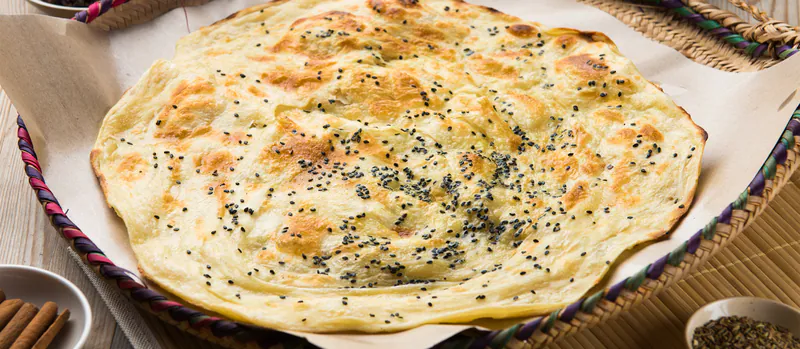
Malawach (Yemenite flaky fried flatbread)
 Israeli · 2 h 40 min · 442 kcal · Contains egg
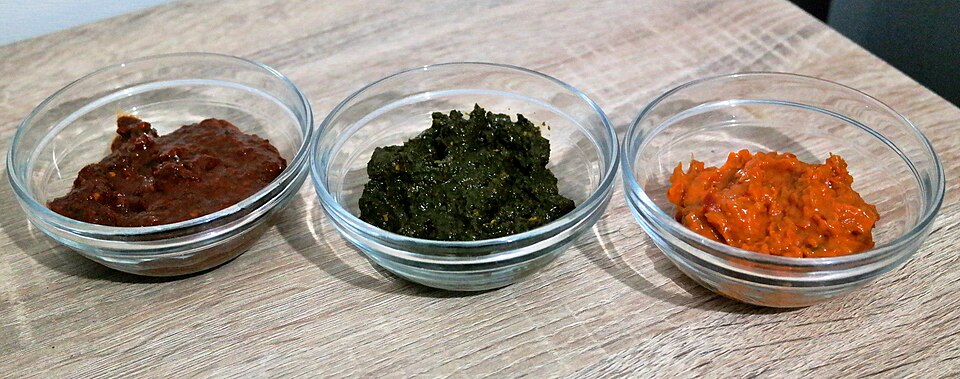
Red zhug (zhug adom)
 Yemeni · 45 min · 49 kcal · Vegan
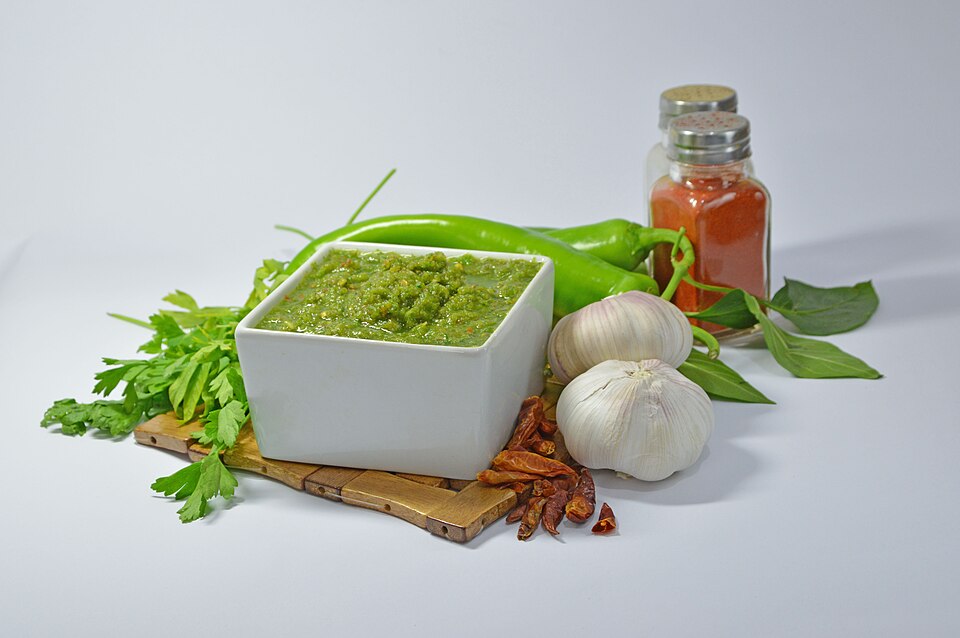
Zhug
Yemeni · 10 min · 90 kcal · Vegan
Hamantaschen (Purim triangle cookies)
Israeli · 2 h 10 min · 335 kcal · Contains egg