
 Swedish · Scandinavian · Breads & flatbreads
Hönökaka (Swedish soft flatbread)
Vegetarian
Hönökaka
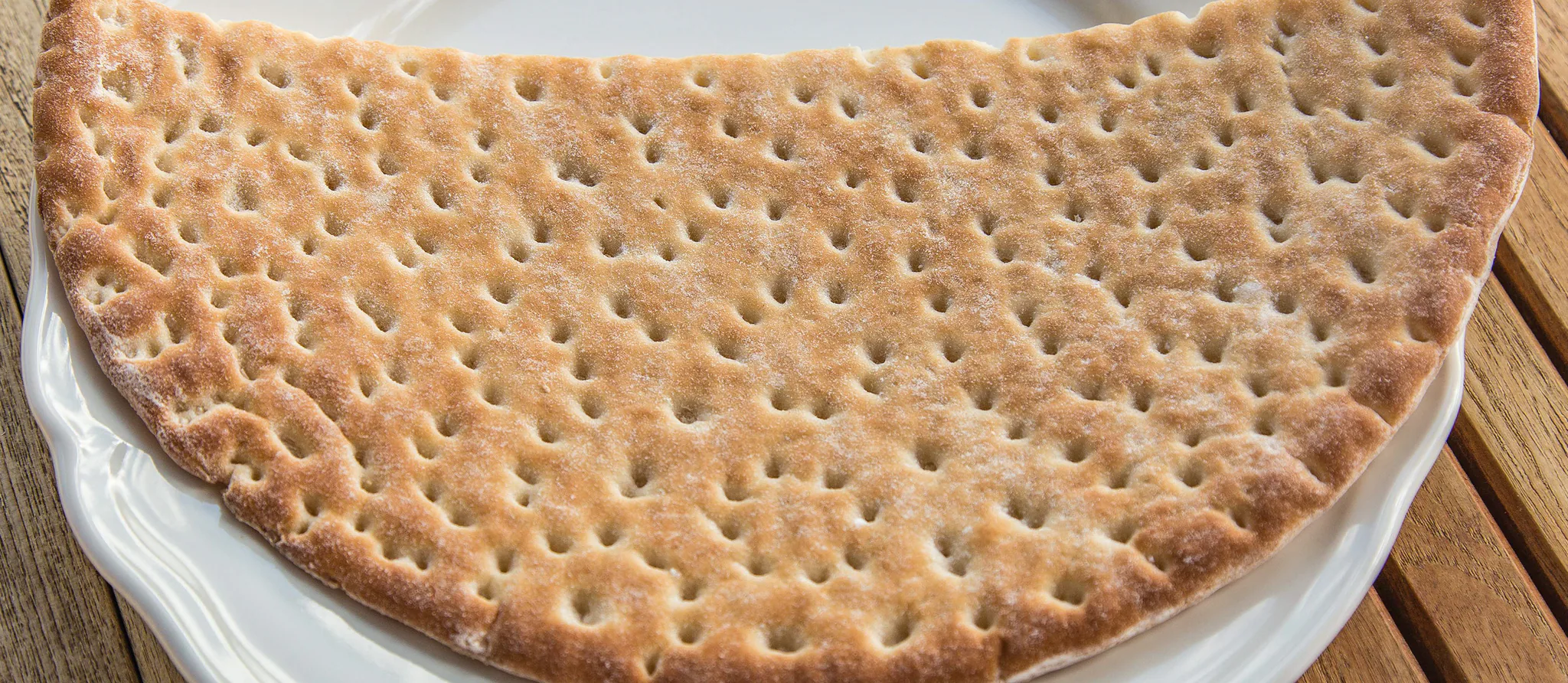
A soft, light Swedish flatbread from the island of Hönö, made from wheat and a little rye flour with milk, butter and light syrup and raised with yeast plus a pinch of hartshorn salt. It is pricked all over and baked very briefly in a hot oven, then split and filled like a sandwich.
Hönökaka (Swedish soft flatbread) is a Swedish bread from Sweden, ready in about 2 hours 5 minutes and made with fresh yeast, baker's ammonia (hartshorn salt) and rye flour. It serves 8 and is rated intermediate to cook.
- Prep
- 30 min
- Cook
- 25 min
- Rest
- 1 h 10 min
- Total
- 2 h 5 min
- Serves
- 8
- Level
- Intermediate
- Calories
- 456
Main ingredients

Method
Step 1
Melt the butter (opens in a new tab) in a saucepan (opens in a new tab), add the milk (opens in a new tab) and warm to body temperature (37 °C). Crumble the fresh yeast (opens in a new tab) into a mixer bowl and stir in a little of the warm milk until dissolved, then add the rest with the syrup and salt.
Step 2
Mix the hartshorn salt (opens in a new tab) into the rye flour (opens in a new tab) and add to the bowl, then add most of the wheat flour (opens in a new tab). Knead for 8–10 minutes to a soft, smooth dough, adding the rest of the flour only if it is very sticky. Cover and leave to rise until doubled, about 40 minutes.

How it looks · Photo: Klaus Nielsen on Pexels Step 3
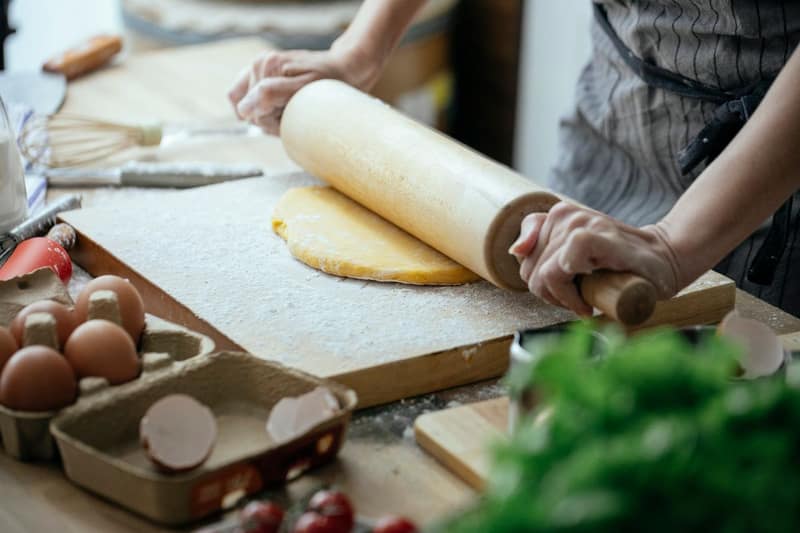
Heat the oven (opens in a new tab) to 250 °C. Turn the dough out, divide into 8 pieces and roll each into a round about 20 cm across and 5 mm thick. Prick all over, densely, with a fork or a kruskavel. Lay on baking trays lined with paper and leave to rise again for 20–30 minutes.
How it looks · Photo: Katerina Holmes on Pexels Step 4
Bake one tray at a time in the middle of the oven (opens in a new tab) for 4–6 minutes, until lightly golden but still pale and soft. Do not overbake.
- 25 min
- 250°C
- Oven (opens in a new tab)
Food safety: Hartshorn salt gives off a strong ammonia smell when the oven door is opened; it disappears completely as the bread cools.
Step 5
Cool the breads on a rack under a clean tea towel to keep them soft. Cut each in half or quarters and split horizontally to fill.
At a glance
 Milk
 Butter
 Fresh yeast
 Golden syrup
 Salt
- Baker's ammonia (hartshorn salt)
 Rye flour
 All-purpose flour
About this dish
- Origin
- Hönö, in the Gothenburg archipelago (Bohuslän coast), Sweden · Well documentedThe recipe is credited to a bakery on Hönö in the early 20th century; today hönökaka is sold all over Sweden. The traditional pricking is done with a knobbly rolling pin called a kruskavel.More food from Sweden
Sweden - Dish
- Breakfast · Lunch · Snack · Breads & flatbreads
- Cooking method
- Oven-baked
- Taste
- mild, sweet, buttery
- Diet
- Vegetarian (lacto-ovo) · No nut ingredientsWorked out from the ingredients. How labels work
All labels
Vegetarian (lacto-ovo) · Eggetarian · Lacto-vegetarian · Pescatarian · Flexitarian-friendly · Egg-free · No nut ingredients · Alcohol-free · Pork-free · Beef-free - Good for
- Freezer-friendly · Make-ahead · Child-friendly
- Cook more with
- Fresh yeast · Rye flour · All-purpose flour · Milk · Butter · Golden syrup
- Techniques
- Baking · Kneading · Fermentation
Allergens
- Contains: Milkfrom milk, butter
- Contains: Wheatfrom rye flour, all-purpose flour
- Contains: Glutenfrom rye flour, all-purpose flour
Based on typical versions of these ingredients and not verified allergen-free. Brands differ and cross-contact happens, so always check labels. For severe allergies, follow your clinician’s advice.
Nutrition
456 kcal per serving
Estimated1 serving ≈ 176 g · recipe makes 8
Where the energy comes from
- Protein 10%
- Carbohydrate 69%
- Fat 21%
| Nutrient | Per serving | Per 100 g* |
|---|---|---|
| Energy | 456 kcal | 259 kcal |
| Protein | 11.7 g | 6.7 g |
| Carbohydrate | 77.9 g | 44.3 g |
| Net carbohydrate | 73.8 g | 42 g |
| Sugars | 9.3 g | 5.3 g |
| Added sugars | 6.2 g | 3.5 g |
| Fibre | 4 g | 2.3 g |
| Fat | 10.7 g | 6.1 g |
| Saturated fat | 6.2 g | 3.5 g |
| Trans fat | — | — |
| Cholesterol | 27 mg | 15 mg |
| Sodium | 532 mg | 303 mg |
| Salt equivalent | 1.3 g | 0.8 g |
Vitamins & minerals per serving
- Potassium
- 247 mg
- Calcium
- 92 mg
- Iron
- 4.3 mg
- Magnesium
- 35 mg
- Vitamin A (RAE)
- 94 µg
- Vitamin C
- 0 mg
- Vitamin D
- 0.8 µg
- Vitamin B12
- 0.3 µg
- Folate (DFE)
- 251 µg
How these numbers were made
- Calculated from USDA FoodData Central (SR Legacy) per-100 g values and the listed quantities.
- *Per 100 g of combined raw ingredients; the cooked dish may weigh more or less.
- Not counted (tiny amounts or “to taste”): baker's ammonia (hartshorn salt).
- Golden syrup: Cane syrup (FDC 167743) used as a stand-in for golden syrup (partially inverted refined cane-sugar syrup).
- “—” means the value isn’t known for enough of the ingredients; it is never zero by default.
- Values are estimates for guidance, not for medical dosing. U.S. Department of Agriculture, Agricultural Research Service. FoodData Central, 2019. fdc.nal.usda.gov.
Good to know
Tips
- Hartshorn salt is sold in Scandinavian and German shops and online as baker's ammonia; store it airtight.
- Freeze the breads as soon as they are cool; they thaw in minutes.
Common mistakes
- Baking for too long; hönökaka should be soft and pale, not crisp.
- Skipping the pricking, so the breads puff up like pitta.
Serve with
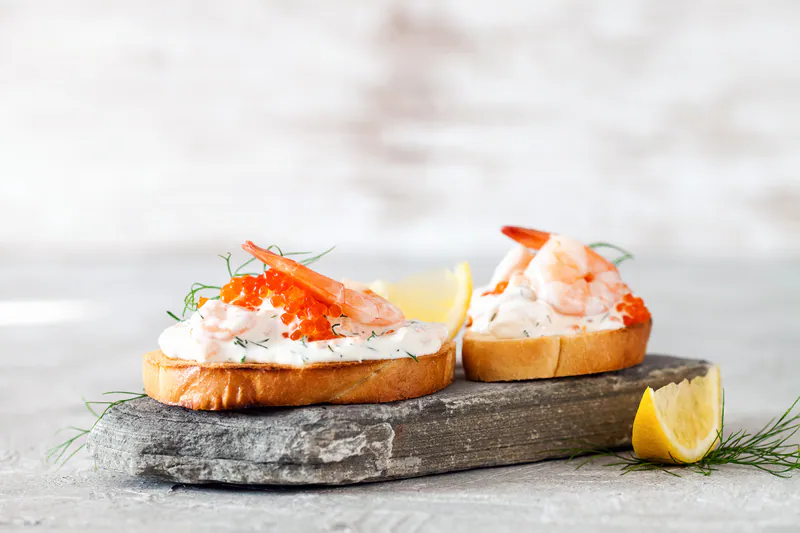
- Split and fill with butter, cheese and cucumber, or with shrimp salad (skagenröra).
- A favourite with smoked salmon or with ham and mustard at Christmas.
Storage
- Keeps 2 days in a bread bag or 3 months frozen.
Variations
- Hönökaka with whole spelt: Some bakers swap part of the wheat flour for wholemeal spelt for a nuttier bread.
Original editorial recipe · FriendsPantry editorial · source: TasteAtlas (dish facts) · Not yet independently reviewed · Added
Recipe DNA
How this dish is built
Built from the recipe’s own sections. Each band’s width is its share of the dish by weight. Choose a component to see what it does.
Structure
For the dough
- Milk500 ml · 515 g
- Butter75 g
- Fresh yeast25 g
- Golden syrup3 tbsp · 62 g
- Salt1.5 tsp · 9 g
- Baker's ammonia (hartshorn salt)1 tsp · 4.4 g
- Rye flour120 g
- All-purpose flour600 g
Reviews & corrections
Reviews come from signed-in cooks and appear after a moderator checks them. We never show made-up ratings.
You might also like
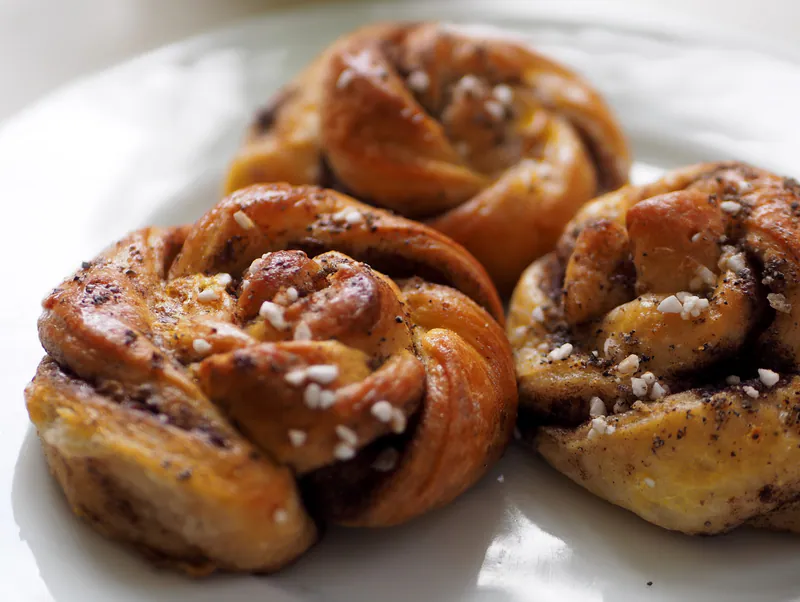
Kardemommeboller (cardamom buns)
Swedish · 2 h 37 min · 257 kcal · Contains egg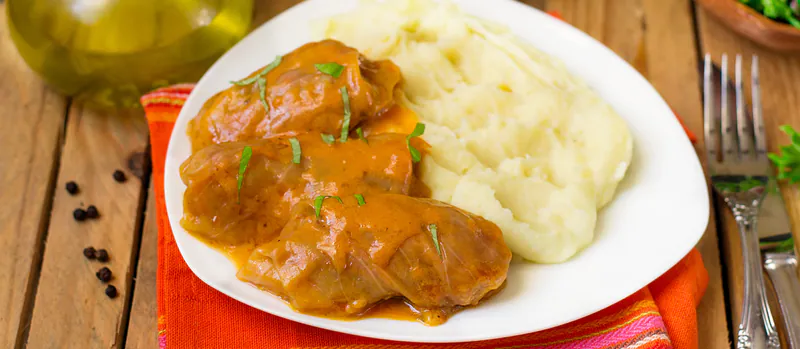
Kåldolmar (Swedish cabbage rolls)
Swedish · 2 h · 685 kcal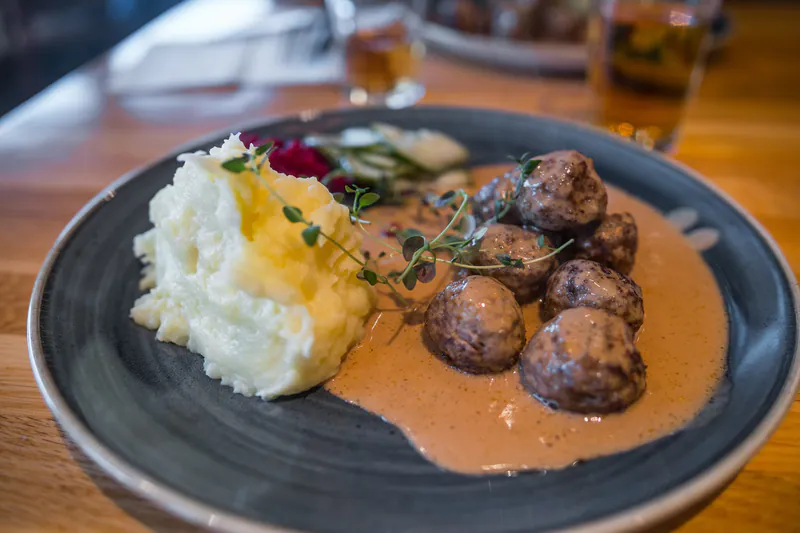
Swedish meatballs
Swedish · 55 min · 611 kcal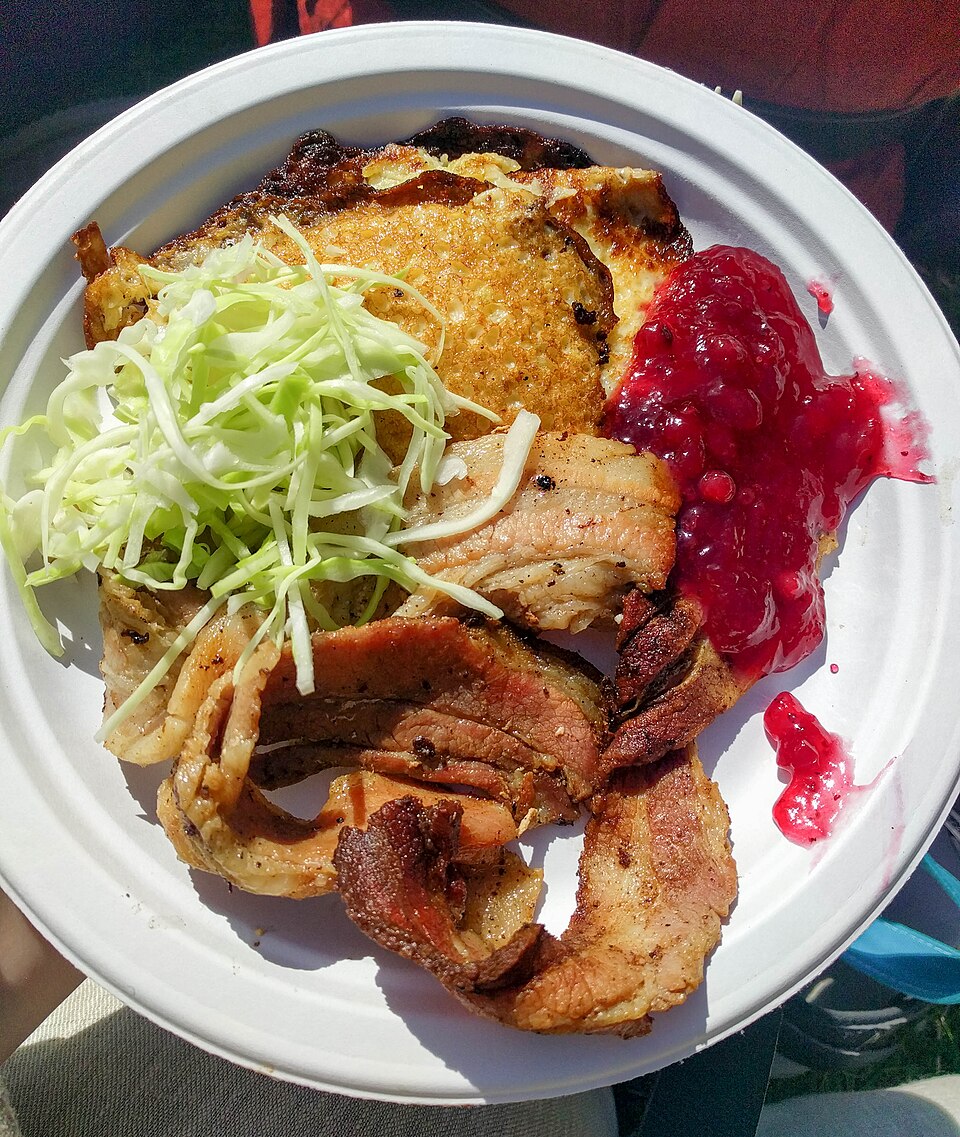
Raggmunk med fläsk
Swedish · 50 min · 698 kcal