
Flan mixto (Argentine flan with dulce de leche and cream)
Contains egg (no meat or fish)
Flan mixto
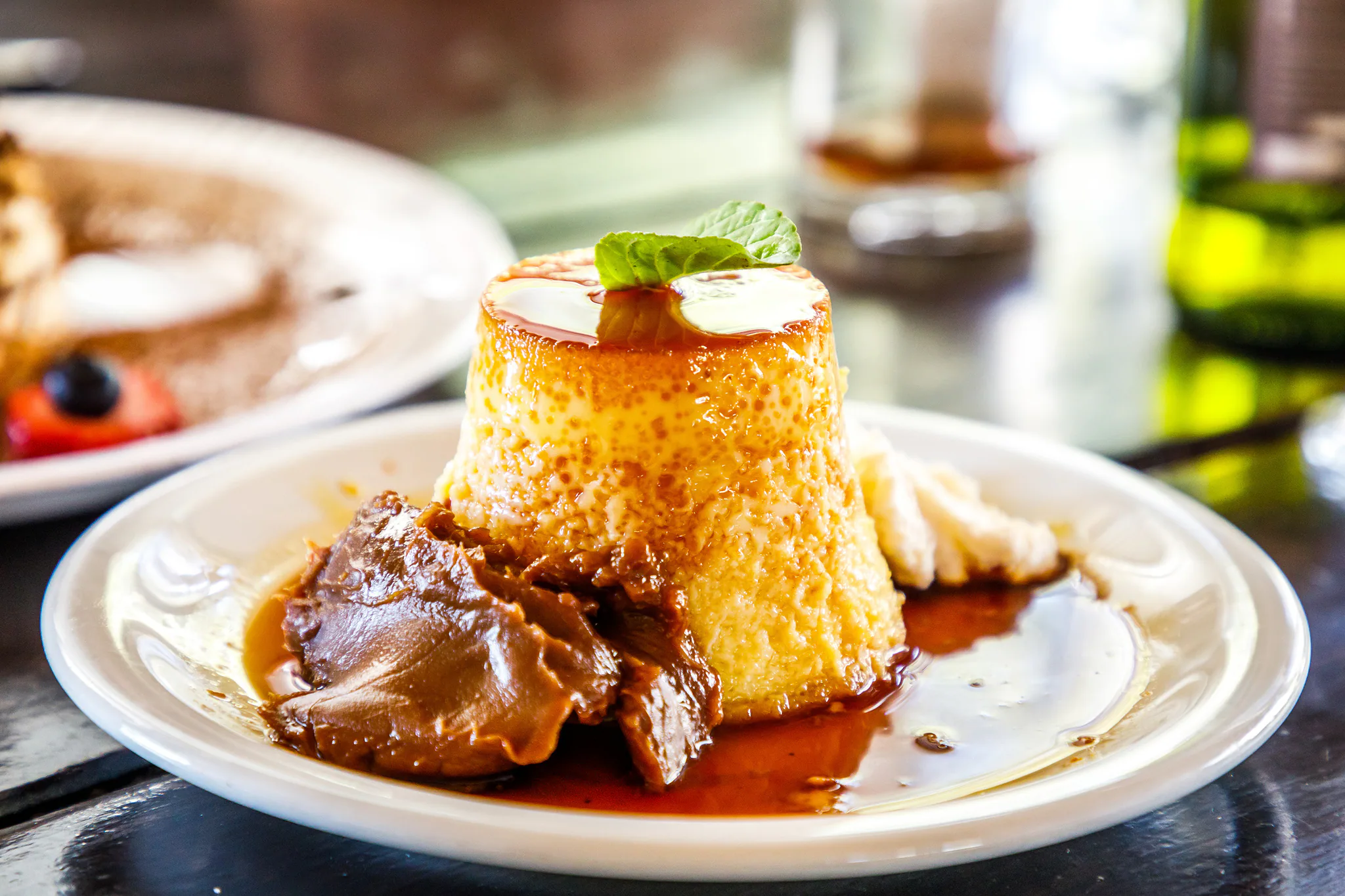
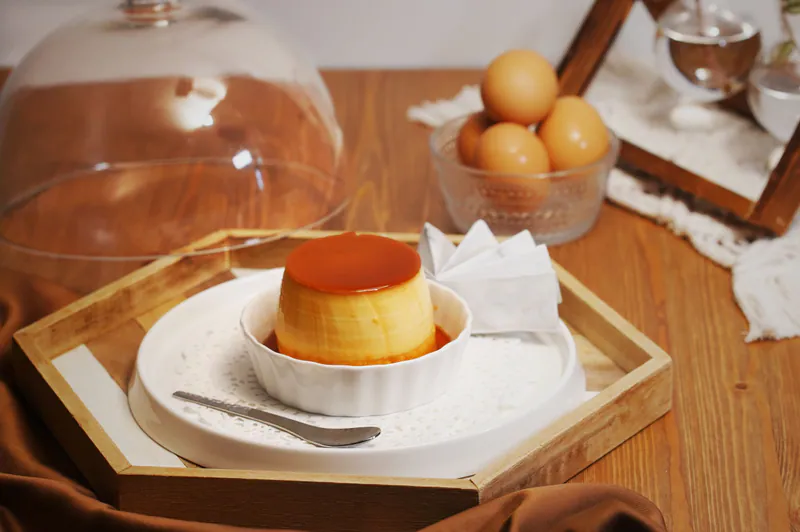
A firm, silky caramel egg custard served 'mixed': with a generous spoon of dulce de leche and a cloud of whipped cream on the side. The standard dessert order in any Argentine or Uruguayan parrilla.
Flan mixto (Argentine flan with dulce de leche and cream) is an Argentine dessert from Argentina, ready in about 5 hours 30 minutes and made with egg, milk and dulce de leche. It serves 8 and is rated easy to cook.
- Prep
- 20 min
- Cook
- 1 h 10 min
- Rest
- 4 h
- Total
- 5 h 30 min
- Serves
- 8
- Level
- Easy
- Calories
- 503
Includes cooling and at least 3 hours chilling; overnight is better.
Main ingredients
Ingredients
For the caramel
For the custard
To serve
Method
Caramel
10 minStep 1
Heat the oven (opens in a new tab) to 160 °C. Melt 150 g sugar (opens in a new tab) with the water in a saucepan (opens in a new tab) without stirring, swirling the pan, until it turns a deep amber. Immediately pour it into a 20–22 cm flan mould or round cake tin (opens in a new tab) and tilt to coat the base and sides.
- 10 min
- 160°C
- medium heat
- Saucepan (opens in a new tab)
- Cake tin (opens in a new tab)
Food safety: Caramel is extremely hot; keep children away and do not touch it.
Custard
1 h 21 minStep 2
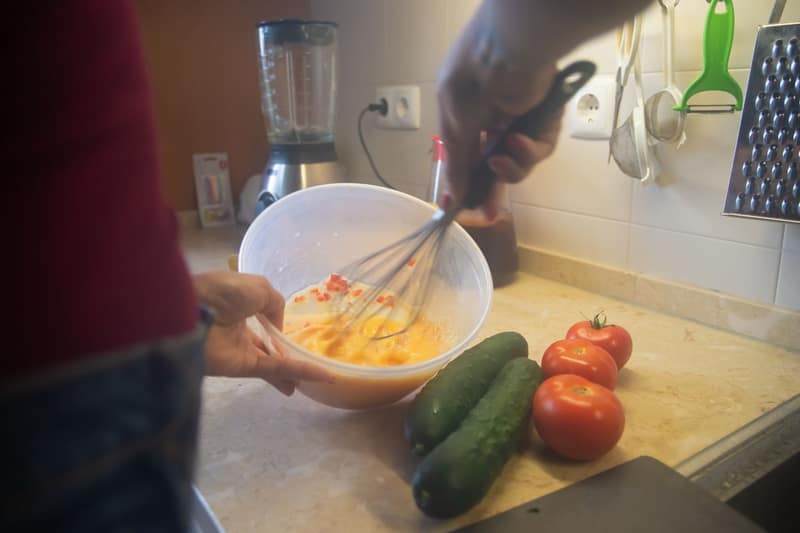
Heat the milk (opens in a new tab) with the vanilla (opens in a new tab) until warm. Whisk (opens in a new tab) the eggs (opens in a new tab) with 180 g sugar (opens in a new tab) just until combined, without making foam, then slowly whisk in the warm milk. Strain into the caramel-lined mould.
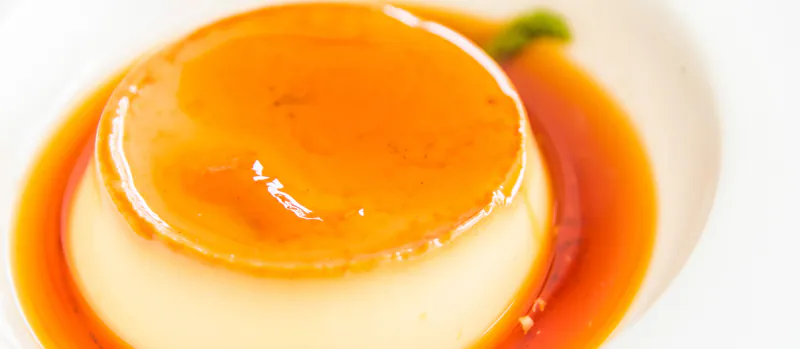
How it looks · Photo: Kampus Production on Pexels Step 3
Set the mould in a roasting pan (opens in a new tab), pour in hot water to come halfway up the sides and bake for 60–70 minutes, until set with a slight wobble in the centre and a knife inserted halfway comes out clean.
If the water boils, add a little cold water; boiling makes the flan full of holes.
Step 4
Cool, then chill for at least 3 hours. Run a knife around the edge, cover with a plate and turn out in one confident flip so the caramel sauce runs down the sides.
- 5 min
To serve
5 minStep 5
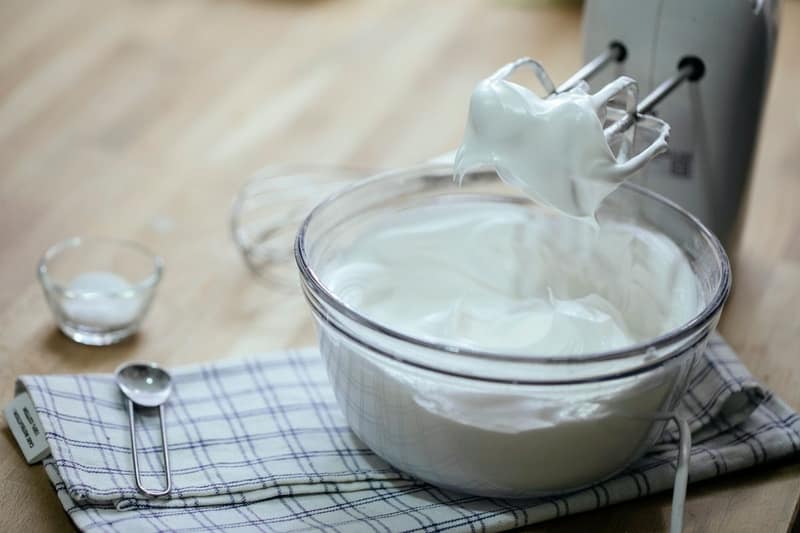
Whip the cream with the icing sugar (opens in a new tab) to soft peaks. Serve each slice with a spoon of dulce de leche (opens in a new tab) and a spoon of cream.
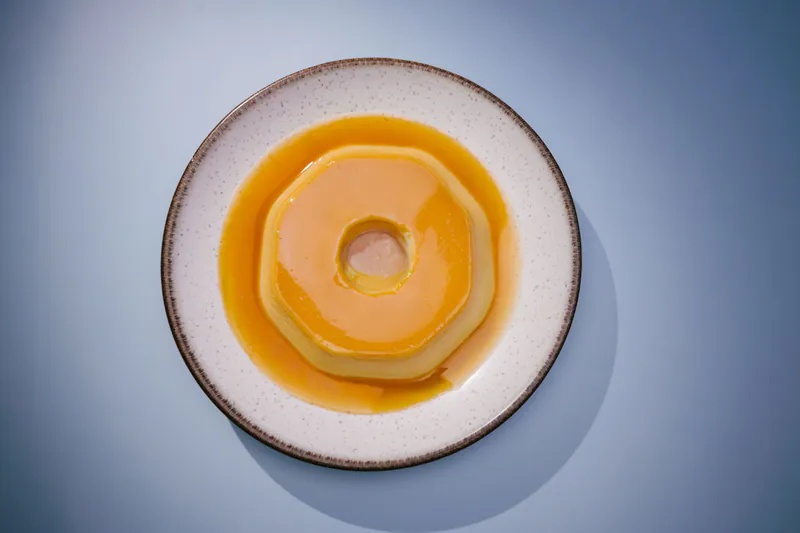
How it looks · Photo: Katerina Holmes on Pexels
At a glance
1 · Caramel in a pan
 Sugar
then heat
2 · Custard in a bowl
 Egg
- Sugar
 Milk
 Vanilla extract
then whip
3 · To serve in a bowl
 Dulce de leche
 Heavy cream
 Icing sugar
About this dish
- Origin
- Argentina · Commonly attributedFlan came with Spanish settlers; adding both dulce de leche and cream ('mixto') is a Río de la Plata custom shared with Uruguay.Also popular in UruguayMore food from Argentina
Argentina - Dish
- Dessert · Desserts · Puddings & custards
- Cooking method
- Oven-baked, Whipped
- Taste
- sweet, creamy, rich
- Diet
- Vegetarian (lacto-ovo) · No gluten ingredients · No nut ingredientsWorked out from the ingredients. How labels work
All labels
Vegetarian (lacto-ovo) · Eggetarian · Pescatarian · Flexitarian-friendly · No gluten ingredients · No nut ingredients · Pork-free · Beef-free · Low-sodium - Good for
- Make-ahead · Festive & celebration
- Cook more with
- Egg · Milk · Dulce de leche · Sugar · Vanilla extract · Heavy cream
- Techniques
- Roasting · Baking · Emulsification
Allergens
- Contains: Milkfrom milk, dulce de leche, heavy cream
- Contains: Eggsfrom egg
Based on typical versions of these ingredients and not verified allergen-free. Brands differ and cross-contact happens, so always check labels. For severe allergies, follow your clinician’s advice.
Nutrition
503 kcal per serving
Calculated1 serving ≈ 252 g · recipe makes 8
Where the energy comes from
- Protein 9%
- Carbohydrate 54%
- Fat 37%
| Nutrient | Per serving | Per 100 g* |
|---|---|---|
| Energy | 503 kcal | 200 kcal |
| Protein | 11.2 g | 4.5 g |
| Carbohydrate | 68.8 g | 27.4 g |
| Net carbohydrate | 68.8 g | 27.4 g |
| Sugars | 66.8 g | 26.5 g |
| Added sugars | 57.2 g | 22.7 g |
| Fibre | 0 g | 0 g |
| Fat | 20.7 g | 8.2 g |
| Saturated fat | 11.9 g | 4.7 g |
| Trans fat | — | — |
| Cholesterol | 195 mg | 78 mg |
| Sodium | 152 mg | 60 mg |
| Salt equivalent | 0.4 g | 0.2 g |
Vitamins & minerals per serving
- Potassium
- 343 mg
- Calcium
- 246 mg
- Iron
- 0.8 mg
- Magnesium
- 25 mg
- Vitamin A (RAE)
- 261 µg
- Vitamin C
- 1 mg
- Vitamin D
- 2.6 µg
- Vitamin B12
- 0.9 µg
- Folate (DFE)
- 28 µg
How these numbers were made
- Calculated from USDA FoodData Central (SR Legacy) per-100 g values and the listed quantities.
- *Per 100 g of combined raw ingredients; the cooked dish may weigh more or less.
- “—” means the value isn’t known for enough of the ingredients; it is never zero by default.
- Values are estimates for guidance, not for medical dosing. U.S. Department of Agriculture, Agricultural Research Service. FoodData Central, 2019. fdc.nal.usda.gov.
Good to know
Tips
- Argentine flan is firmer and more eggy than a French crème caramel; a few extra yolks make it richer still.
Common mistakes
- Whisking air into the custard, which leaves bubbles on top and holes inside.
Serve with
- Serve after an asado with coffee; at a parrilla ask for 'flan mixto' to get both toppings.
Food safety
- Keep egg custards refrigerated and eat within 4 days.
Storage
- Keeps 4 days covered in the fridge.
Variations
- Flan con dulce de leche: Only dulce de leche on the side, no cream.
- Flan de dulce de leche: Dulce de leche is whisked into the custard itself for a caramel-coloured flan.
Original editorial recipe · FriendsPantry editorial · source: TasteAtlas (dish facts) · Not yet independently reviewed · Added
Sauces, chutneys & dips for this dish
Recipe DNA
How this dish is built
Reviews & corrections
Reviews come from signed-in cooks and appear after a moderator checks them. We never show made-up ratings.
You might also like
Crème caramel
 French · 5 h 5 min · 254 kcal · Contains egg
Leche flan
 Filipino · 5 h 5 min · 335 kcal · Contains egg
Pudim de leite condensado
 Brazilian · 5 h 15 min · 289 kcal · Contains egg

Homemade dulce de leche
 Argentine · 2 h 55 min · 88 kcal · Vegetarian