
Feu (Lao beef noodle soup)
Non-vegetarian
ເຝີ · fœ̄
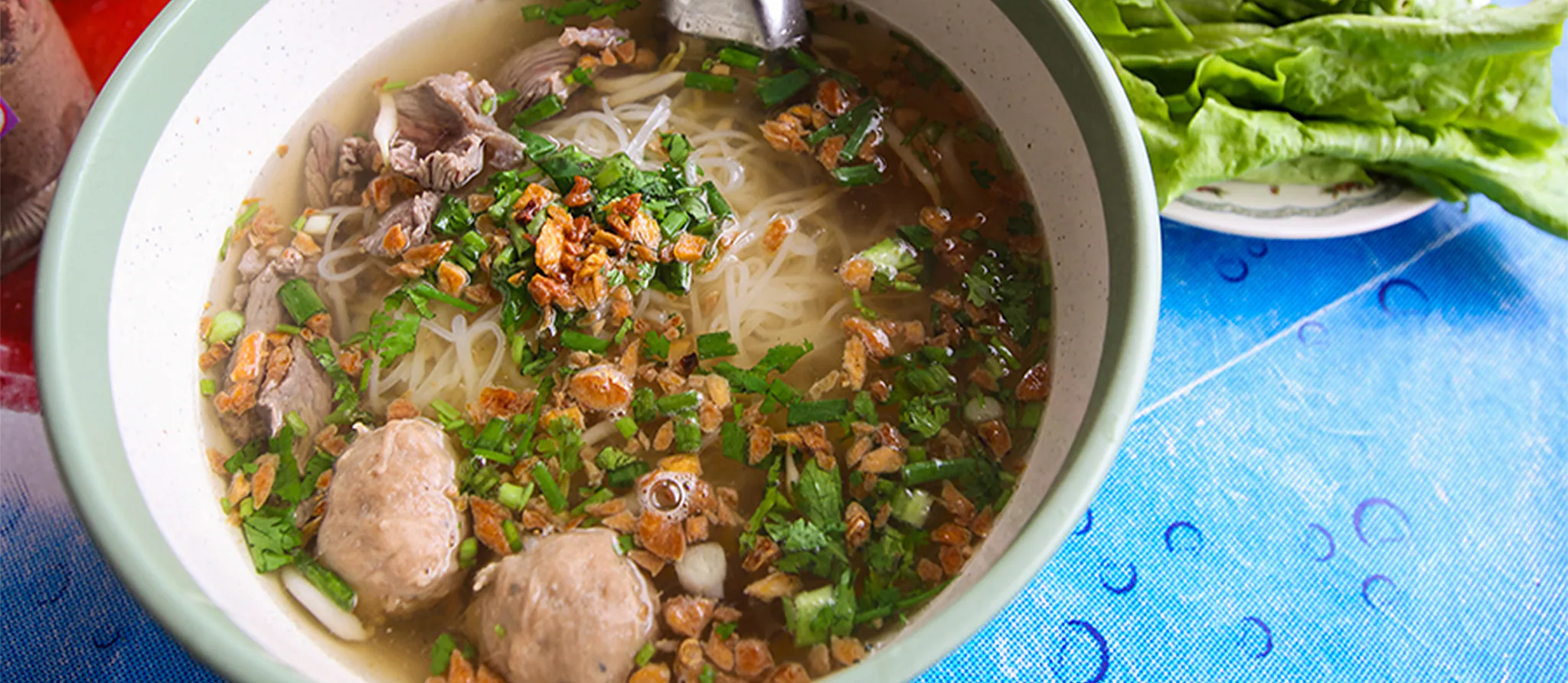
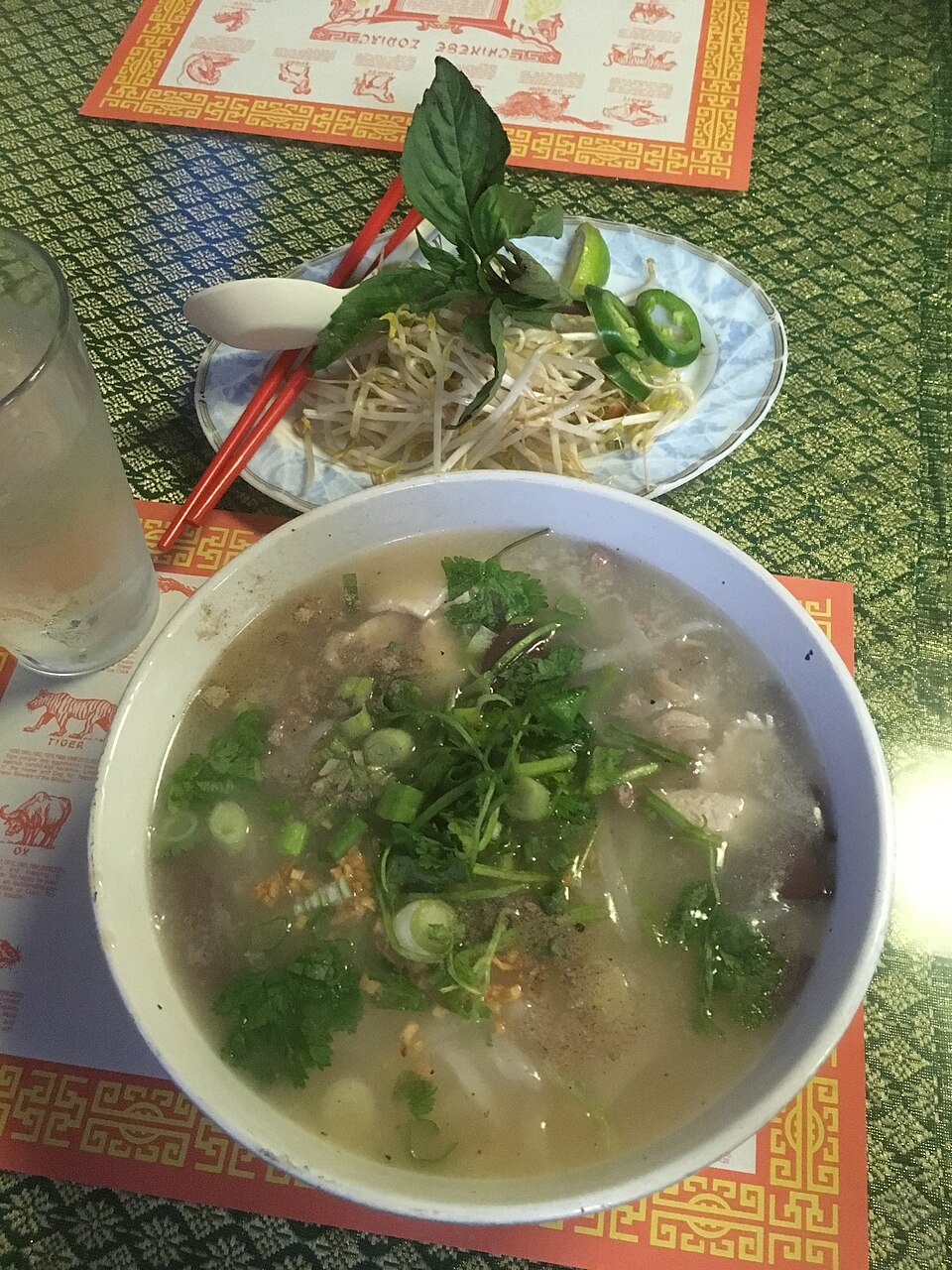
Lao rice-noodle soup: a clear beef broth scented with charred onion, ginger, galangal, lemongrass and star anise is poured boiling over noodles and paper-thin raw beef so it cooks in the bowl. Each diner adds a heap of fresh herbs, bean sprouts, long beans, lime, chilli and fish sauce to taste.
Feu (Lao beef noodle soup) is a Lao dish from Laos, ready in about 4 hours and made with beef shank (bone-in, cross-cut), rice noodles and beef sirloin steak. It serves 6 and is rated intermediate to cook.
- Prep
- 30 min
- Cook
- 3 h 30 min
- Total
- 4 h
- Serves
- 6
- Level
- Intermediate
- Calories
- 471
Main ingredients
Ingredients
For the broth
For the bowls
For the herb plate
Method
Broth
3 h 35 minStep 1
Blanch the beef shank (opens in a new tab): cover with cold water, boil hard for 5 minutes, drain and rinse the meat and pot.
- 15 min
- high heat
- Stockpot / large pot (opens in a new tab)
Food safety: Wash hands, boards and knives after handling raw meat, and keep it apart from salad and other ready-to-eat food.
Step 2
Char the onion (opens in a new tab) halves, ginger and garlic (opens in a new tab) head directly over a gas flame or in a dry heavy pan until blackened in places, about 8 minutes. Toast the star anise (opens in a new tab) and cinnamon in the pan for 1 minute.
- 10 min
- medium-high heat
- Saucepan (opens in a new tab)
Step 3
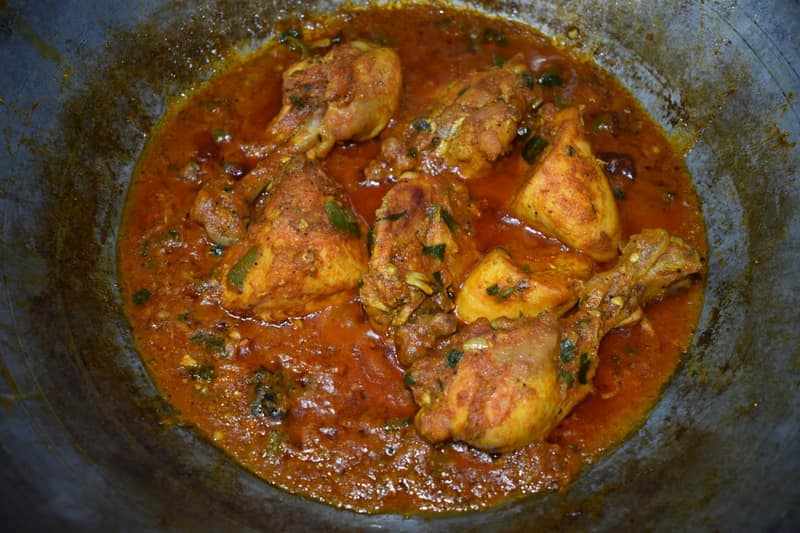
Return the beef to the pot with the 4 litres of water, the charred aromatics and spices, galangal (opens in a new tab), lemongrass (opens in a new tab) and lime (opens in a new tab) leaves. Bring just to the boil, skim, then simmer very gently, uncovered, for 3 hours. Season with the fish sauce (opens in a new tab), sugar (opens in a new tab) and salt in the last 30 minutes.
- 180 min
- low heat
A bare simmer keeps the broth clear.
How it looks · Photo: Bachir Mamud on Pexels Step 4
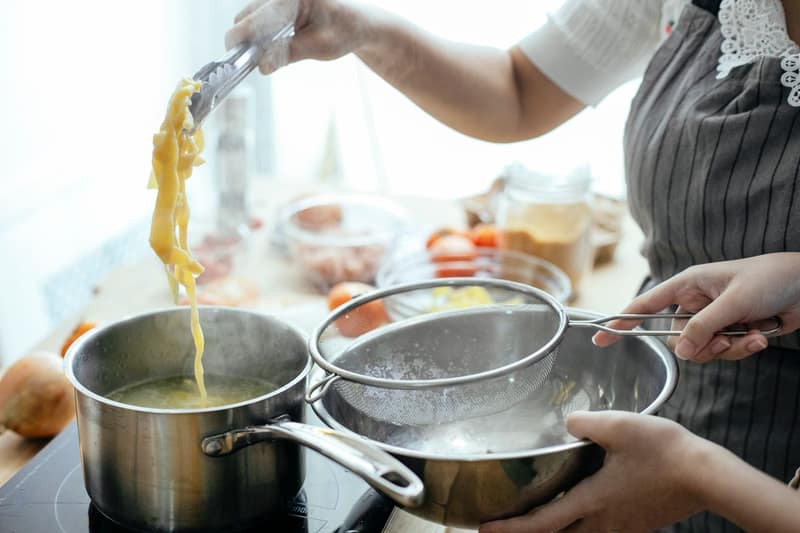
Strain the broth through a fine sieve. Pull the shank meat into pieces and keep it for the bowls. Keep the broth at a rolling boil.
How it looks · Photo: Katerina Holmes on Pexels
Herb plate
5 minStep 5
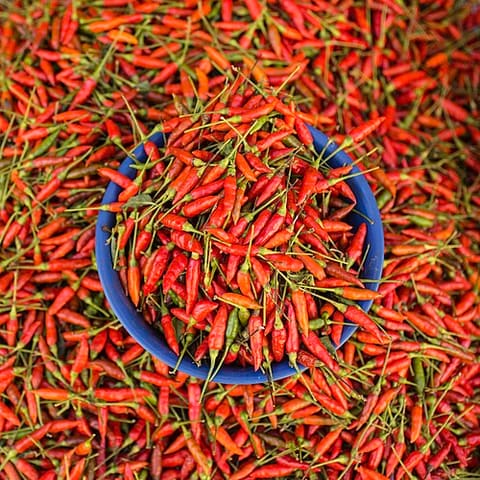
Arrange the herb plate: bean sprouts (opens in a new tab), basil (opens in a new tab), mint (opens in a new tab), long beans, lettuce (opens in a new tab), lime (opens in a new tab) wedges, sliced chilli and a little dish of fish sauce (opens in a new tab).
- 5 min
Bowls
5 minStep 6
Divide the warm noodles between deep bowls and top with the shank meat and the raw sliced beef in a single layer. Ladle (opens in a new tab) the boiling broth over so it cooks the beef, and scatter with spring onion (opens in a new tab) and coriander. Serve at once with the herb plate.
Food safety: The broth must be at a full boil when poured, so the thin raw beef cooks through in the bowl; if in doubt, dip the beef in the boiling broth for 20 seconds first.
At a glance
1 · Broth in a pot
 Beef shank (bone-in, cross-cut)
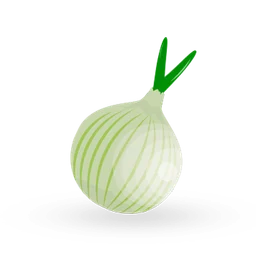 Onion
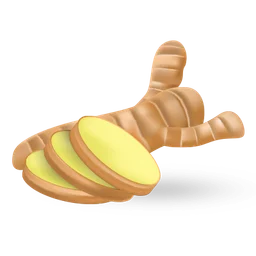 Fresh ginger
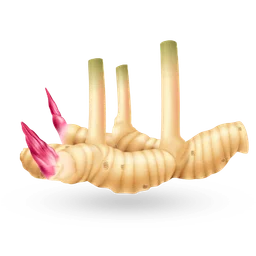 Galangal
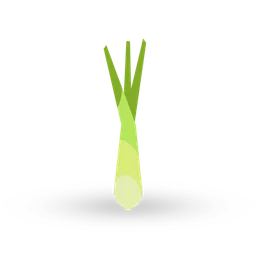 Lemongrass
 Garlic
 Star anise / anise
 Cinnamon stick
 Makrut lime leaves
 Fish sauce
 Sugar
 Salt
then arrange
2 · Herb plate in a bowl
 Bean sprouts
 Basil
 Mint
 Green beans
 Lettuce
 Lime
 Fresh red chilli
- Fish sauce
then divide
3 · Bowls in a pot
 Rice noodles
 Beef sirloin steak
- Spring onion
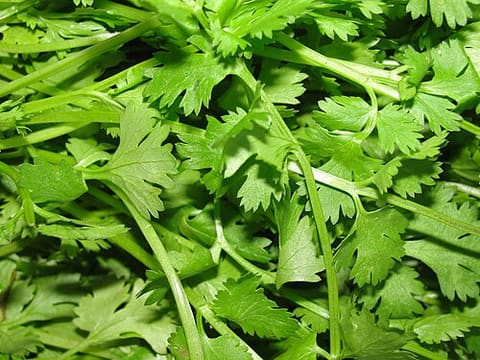 Coriander leaves
About this dish
- Origin
- Vientiane and nationwide, Laos · Commonly attributedBelieved to derive from Vietnamese phở; the Lao version is usually less sweet, more herbal, and served with a bigger plate of raw greens and condiments. Some cooks serve the broth and meat as a stew with sticky rice instead of noodles.Also popular in ThailandMore food from Laos
Laos - Dish
- Breakfast · Lunch · Noodle soups · Main courses · Breakfast dishes
- Cooking method
- Simmered, Boiled, Roasted
- Taste
- aromatic / warmly spiced, savoury, fresh, herby
- Diet
- No gluten ingredients · Dairy-free · No nut ingredients · High-proteinWorked out from the ingredients. How labels work
All labels
Non-vegetarian · No gluten ingredients · Dairy-free · Egg-free · No nut ingredients · Alcohol-free · Pork-free · High-protein · Low-fat · Calorie-conscious - Good for
- Batch cooking · Freezer-friendly
- Cook more with
- Beef shank (bone-in, cross-cut) · Rice noodles · Beef sirloin steak · Onion · Fresh ginger · Galangal
Allergens
- Contains: Fishfrom fish sauce
- May contain: Crustaceansfrom fish sauce
Based on typical versions of these ingredients and not verified allergen-free. Brands differ and cross-contact happens, so always check labels. For severe allergies, follow your clinician’s advice.
Nutrition
471 kcal per serving
Estimated1 serving ≈ 346 g · recipe makes 6
Where the energy comes from
- Protein 29%
- Carbohydrate 61%
- Fat 11%
| Nutrient | Per serving | Per 100 g* |
|---|---|---|
| Energy | 471 kcal | 136 kcal |
| Protein | 33.3 g | 9.6 g |
| Carbohydrate | 70.9 g | 20.5 g |
| Net carbohydrate | 66.4 g | 19.2 g |
| Sugars | — | — |
| Added sugars | 0.7 g | 0.2 g |
| Fibre | 4.5 g | 1.3 g |
| Fat | 5.5 g | 1.6 g |
| Saturated fat | 1.8 g | 0.5 g |
| Trans fat | — | — |
| Cholesterol | 56 mg | 16 mg |
| Sodium | 2141 mg | 618 mg |
| Salt equivalent | 5.4 g | 1.5 g |
Vitamins & minerals per serving
- Potassium
- 849 mg
- Calcium
- 120 mg
- Iron
- 5.5 mg
- Magnesium
- 89 mg
- Vitamin A (RAE)
- 42 µg
- Vitamin C
- 26 mg
- Vitamin D
- —
- Vitamin B12
- 2.8 µg
- Folate (DFE)
- 75 µg
How these numbers were made
- Calculated from USDA FoodData Central (SR Legacy) per-100 g values and the listed quantities.
- *Per 100 g of combined raw ingredients; the cooked dish may weigh more or less.
- Optional ingredients are not included: green beans, lettuce.
- Not counted (tiny amounts or “to taste”): makrut lime leaves.
- Galangal: Fresh ginger used as a stand-in: no galangal entry in FDC SR Legacy, and galangal is a closely related rhizome used in similar small amounts.
- Star anise / anise: Anise seed (FDC 171316) used as a stand-in for star anise.
- “—” means the value isn’t known for enough of the ingredients; it is never zero by default.
- Values are estimates for guidance, not for medical dosing. U.S. Department of Agriculture, Agricultural Research Service. FoodData Central, 2019. fdc.nal.usda.gov.
Good to know
Tips
- Lao cooks keep a pot of jeow (chilli paste) and a bottle of sweet chilli or shrimp paste on the table for adding to the broth.
Common mistakes
- Slicing the raw beef too thick: it stays raw in the bowl.
Serve with
- Serve with a basket of khao niao (sticky rice) and Lao iced coffee for breakfast.
Food safety
- Wash hands, boards and knives after handling raw meat, and keep it apart from salad and other ready-to-eat food.
- Cool large pots of soup or stew quickly (divide into shallow containers) and refrigerate within 2 hours; reheat until piping hot throughout.
Storage
- Broth keeps 4 days refrigerated or 3 months frozen; store noodles, meat and herbs separately.
Reheating
- Bring the broth back to a full boil before using.
Variations
- Feu without noodles: The broth and beef are served as a light stew to eat with sticky rice.
- Feu kai: A chicken version with a lighter broth of chicken bones.
Original editorial recipe · FriendsPantry editorial · source: TasteAtlas (dish facts) · Not yet independently reviewed · Added
Recipe DNA
How this dish is built
Built from the recipe’s own sections. Each band’s width is its share of the dish by weight. Choose a component to see what it does.
The liquid foundation
For the broth
- Beef shank (bone-in, cross-cut), bone-in, cross-cut1.5 kg · 400 g
- Water4 l · 0 g
- Onion, halved, skin on2 piece · 220 g
- Fresh ginger, halved lengthways50 g
- Galangal, sliced30 g
- Lemongrass, bruised and cut into lengths2 stalk · 40 g
- Garlic, whole head, halved across1 piece · 40 g
- Star anise / anise3 piece · 1.5 g
- Cinnamon stick1 piece · 3 g
- Makrut lime leaves, torn4 leaf · 1.2 g
- Fish sauce3 tbsp · 53 g
- Sugar1 tsp · 4.2 g
- Salt2 tsp · 12 g
Reviews & corrections
Reviews come from signed-in cooks and appear after a moderator checks them. We never show made-up ratings.
You might also like
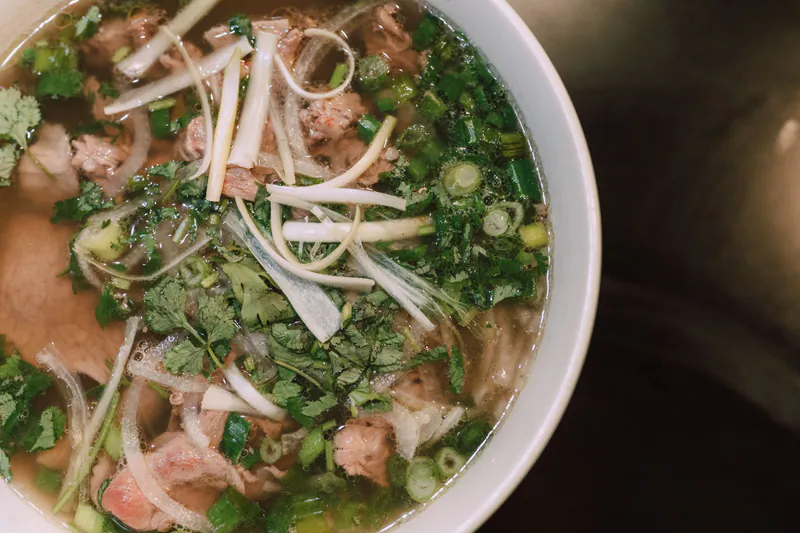
Phở bò (beef pho)
 Vietnamese · 1 h 15 min · 624 kcal
Khao piak sen
 Lao · 1 h 55 min · 715 kcal
Khao poon (Lao red curry noodle soup)
Lao · 1 h 40 min · 915 kcalSticky rice with jeow mak len
Lao · 50 min · 422 kcal