
Farinata di ceci (Ligurian chickpea flatbread)
Vegetarian
Farinata di ceci
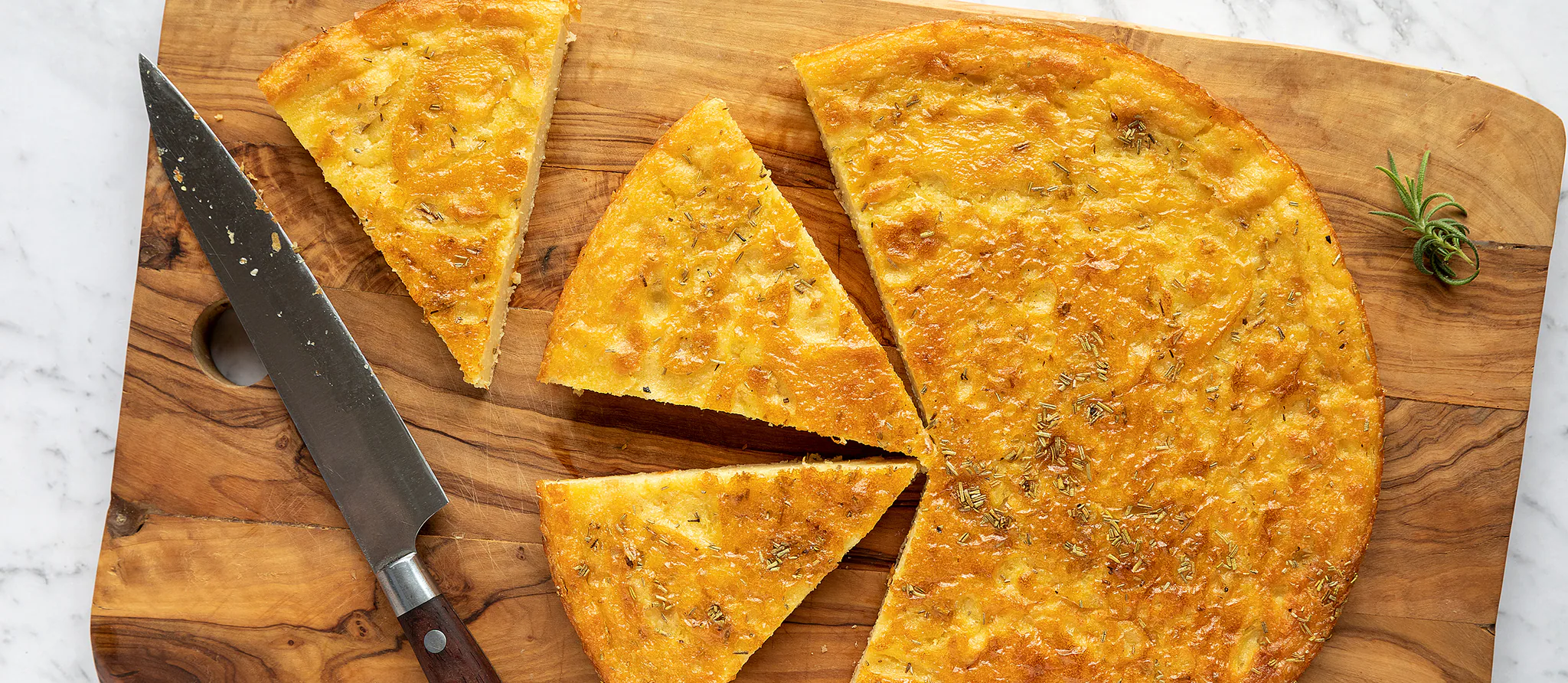
A thin, golden flatbread of nothing but chickpea flour, water, olive oil and salt, baked in a very hot oven until crisp at the edges and custardy inside. A Genoese street food, cut in wedges and eaten hot with black pepper and often rosemary.
Farinata di ceci (Ligurian chickpea flatbread) is an Italian bread from Italy, ready in about 4 hours 35 minutes and made with chickpea flour and olive oil. It serves 4 and is rated easy to cook.
- Prep
- 10 min
- Cook
- 25 min
- Rest
- 4 h
- Total
- 4 h 35 min
- Serves
- 4
- Level
- Easy
- Calories
- 335
Rest the batter 4–12 hours.
Main ingredients
Method
Step 1
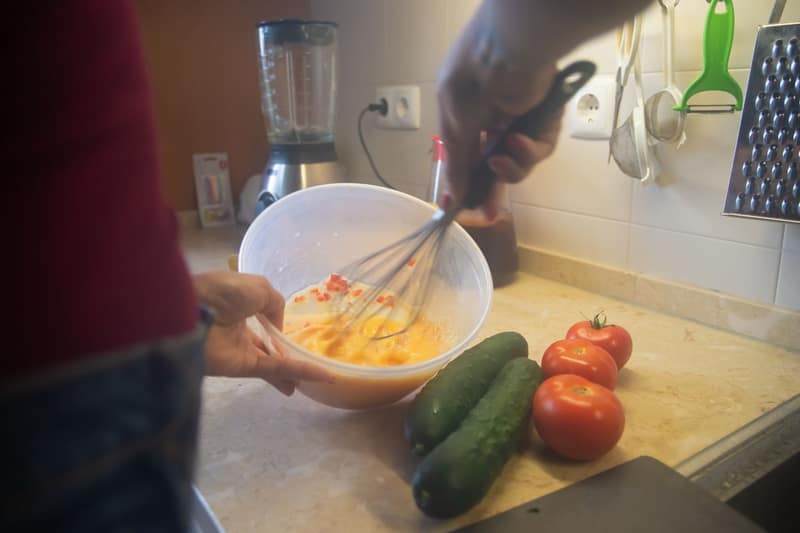
Whisk (opens in a new tab) the chickpea flour (opens in a new tab) into the water a little at a time until smooth and lump-free. Cover and leave at room temperature for at least 4 hours, or up to 12, skimming off any foam that rises.
The rest lets the flour hydrate fully and gives a creamier inside.
How it looks · Photo: Kampus Production on Pexels Step 2
Heat the oven (opens in a new tab) to its maximum (250–275 °C) with a 30 cm cast-iron pan or round metal baking tin inside for 10 minutes. Stir the salt and 2 tbsp of the olive oil (opens in a new tab) into the batter.
Step 3
Carefully take out the hot pan, pour in the remaining oil and swirl. Pour in the batter (it should be no more than 5 mm deep), scatter with rosemary (opens in a new tab) and stir lightly with a fork so oil and batter marble together.
- 2 min
Food safety: The pan and oil are extremely hot; use thick oven gloves.
How it looks · Photo: Klaus Nielsen on Pexels Step 4
Bake on the top shelf for 15–20 minutes, then finish under the grill for 1–2 minutes until the top is golden with darker blistered spots and the edge is crisp.
- 20 min
- 260°C
- Oven (opens in a new tab)
How it looks · Photo: Malte Luk on Pexels
At a glance
 Chickpea flour
 Salt
 Olive oil
 Rosemary (fresh)
 Black pepper
About this dish
- Origin
- Liguria (Genoa), Italy · Well documentedChickpea batters baked in oil go back to antiquity; Genoese legend dates farinata to 1284 and the Battle of Meloria. The same dish is cecina in Tuscany, socca in Nice and fainá in Argentina and Uruguay.Also popular in France, Argentina, UruguayMore food from Italy
Italy - Dish
- Snack · Lunch · Breads & flatbreads · Street food · Appetizers & starters
- Cooking method
- Oven-baked
- Taste
- nutty, savoury, earthy, peppery
- Diet
- Vegan · No gluten ingredients · Dairy-free · No nut ingredientsWorked out from the ingredients. How labels work
All labels
Vegan · Plant-based · Vegetarian (lacto-ovo) · Eggetarian · Lacto-vegetarian · Ovo-vegetarian · Pescatarian · Flexitarian-friendly · Whole-food focused · No gluten ingredients · Dairy-free · Egg-free · No nut ingredients · No added sugar · Alcohol-free · Pork-free · Beef-free · Mediterranean-style · Carb-conscious - Good for
- Budget-friendly · Street food
- Cook more with
- Chickpea flour
Allergens
None of the 14 major allergens appear in the listed ingredients.
Based on typical versions of these ingredients and not verified allergen-free. Brands differ and cross-contact happens, so always check labels. For severe allergies, follow your clinician’s advice.
Nutrition
335 kcal per serving
Calculated1 serving ≈ 218 g · recipe makes 4
Where the energy comes from
- Protein 13%
- Carbohydrate 35%
- Fat 52%
| Nutrient | Per serving | Per 100 g* |
|---|---|---|
| Energy | 335 kcal | 154 kcal |
| Protein | 11.2 g | 5.2 g |
| Carbohydrate | 29.1 g | 13.4 g |
| Net carbohydrate | 23.6 g | 10.9 g |
| Sugars | 5.4 g | 2.5 g |
| Added sugars | 0 g | 0 g |
| Fibre | 5.5 g | 2.5 g |
| Fat | 19.3 g | 8.9 g |
| Saturated fat | 2.5 g | 1.2 g |
| Trans fat | — | — |
| Cholesterol | 0 mg | 0 mg |
| Sodium | 618 mg | 284 mg |
| Salt equivalent | 1.5 g | 0.7 g |
Vitamins & minerals per serving
- Potassium
- 427 mg
- Calcium
- 39 mg
- Iron
- 2.6 mg
- Magnesium
- 87 mg
- Vitamin A (RAE)
- 1 µg
- Vitamin C
- 0 mg
- Vitamin D
- 0 µg
- Vitamin B12
- 0 µg
- Folate (DFE)
- 219 µg
How these numbers were made
- Calculated from USDA FoodData Central (SR Legacy) per-100 g values and the listed quantities.
- *Per 100 g of combined raw ingredients; the cooked dish may weigh more or less.
- Optional ingredients are not included: rosemary (fresh).
- “—” means the value isn’t known for enough of the ingredients; it is never zero by default.
- Values are estimates for guidance, not for medical dosing. U.S. Department of Agriculture, Agricultural Research Service. FoodData Central, 2019. fdc.nal.usda.gov.
Good to know
Tips
- A thin layer is essential; use two pans if yours is small.
Common mistakes
- Baking in an oven that is not hot enough, which gives a pale, rubbery flatbread.
Serve with
- Eat hot on its own, or as Genoese do with soft stracchino (crescenza) cheese and a spoon of pesto.
- In Argentina, fainá is laid on top of a slice of pizza (a caballo).
Storage
- Best eaten straight from the oven; leftovers keep 1 day in the fridge.
Reheating
- Re-crisp in a hot dry pan or oven for a few minutes.
Variations
- Cecina (Italy): The Tuscan name for the same flatbread, sold in Livorno and Pisa, often inside a roll (cinque e cinque).
- Socca (France): Nice's version, cooked in large copper pans in wood-fired ovens.
- Fainá (Argentina): Brought to Argentina and Uruguay by Genoese emigrants and eaten with pizza.
- Farinata with onions or artichokes: Ligurian farinata is sometimes topped with sliced onion, artichokes or whitebait before baking.
History
Genoese tradition tells of sailors returning from the Battle of Meloria in 1284 whose spilt chickpea flour and oil, soaked in seawater, dried in the sun into the first farinata. The story is legend, but chickpea batters baked in oil are recorded since Roman times.
Confidence: Origin disputed
Original editorial recipe · FriendsPantry editorial · source: TasteAtlas (dish facts) · Not yet independently reviewed · Added
Sauces, chutneys & dips for this dish
Recipe DNA
How this dish is built
Grouped by each ingredient’s role in the dish. Each band’s width is its share of the dish by weight. Choose a component to see what it does.
Reviews & corrections
Reviews come from signed-in cooks and appear after a moderator checks them. We never show made-up ratings.
You might also like
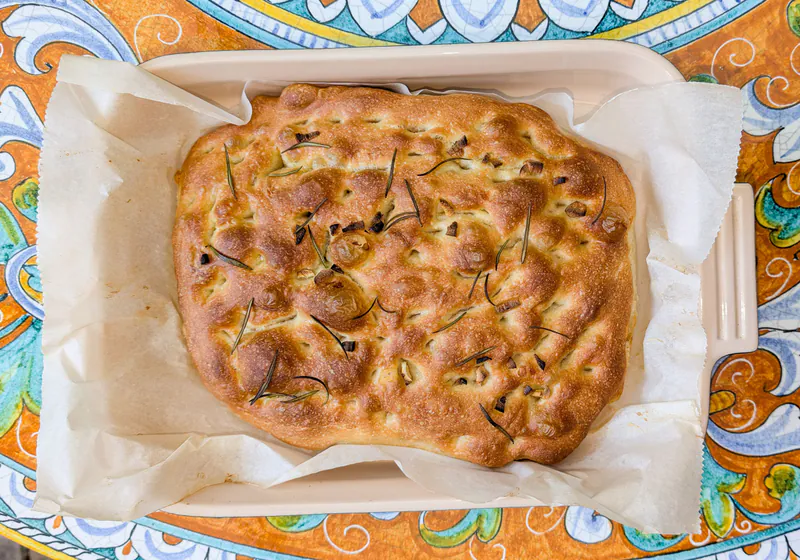
Focaccia
 Italian · 3 h 10 min · 319 kcal · Vegan
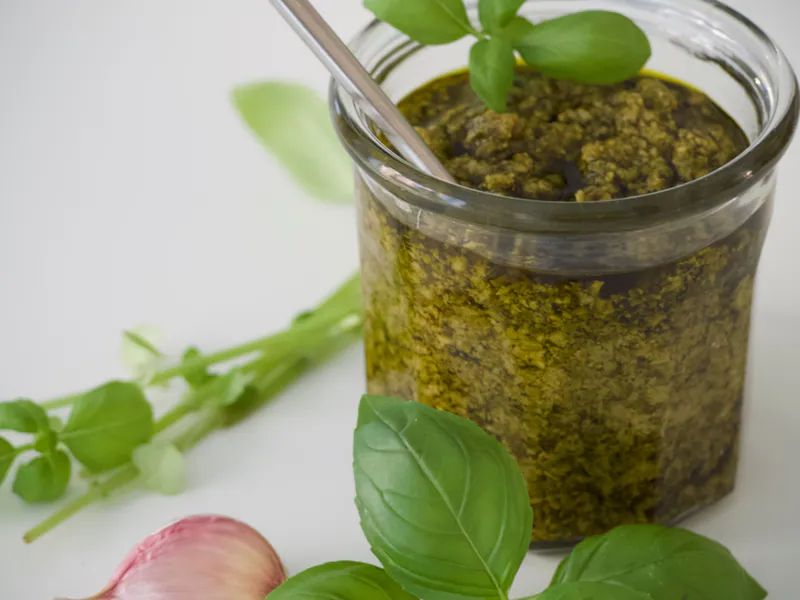
Pesto alla genovese
Italian · 25 min · 183 kcal · Vegetarian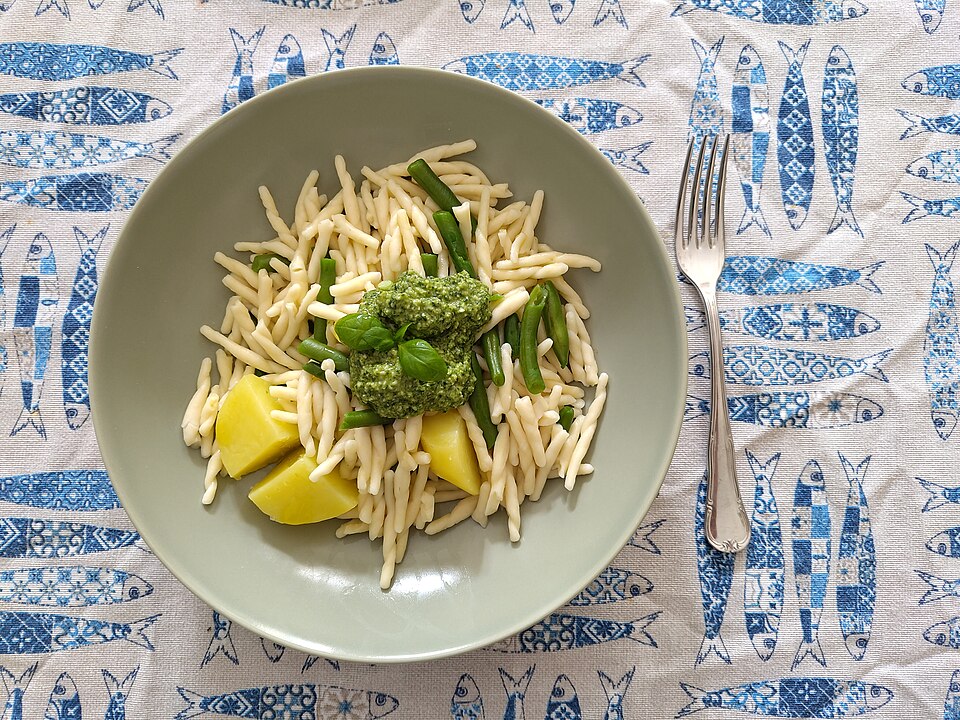
Trofie al pesto with potatoes and green beans
Italian · 40 min · 733 kcal · Vegetarian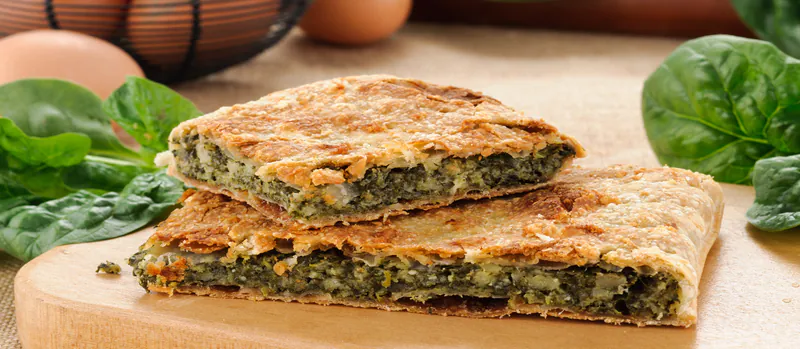
Erbazzone reggiano (Reggio Emilia greens and Parmigiano pie)
Italian · 2 h 15 min · 336 kcal