
 Nigerian · West African · Side dishes
Eba (Nigerian gari swallow)
Vegetarian
Ẹ̀bà
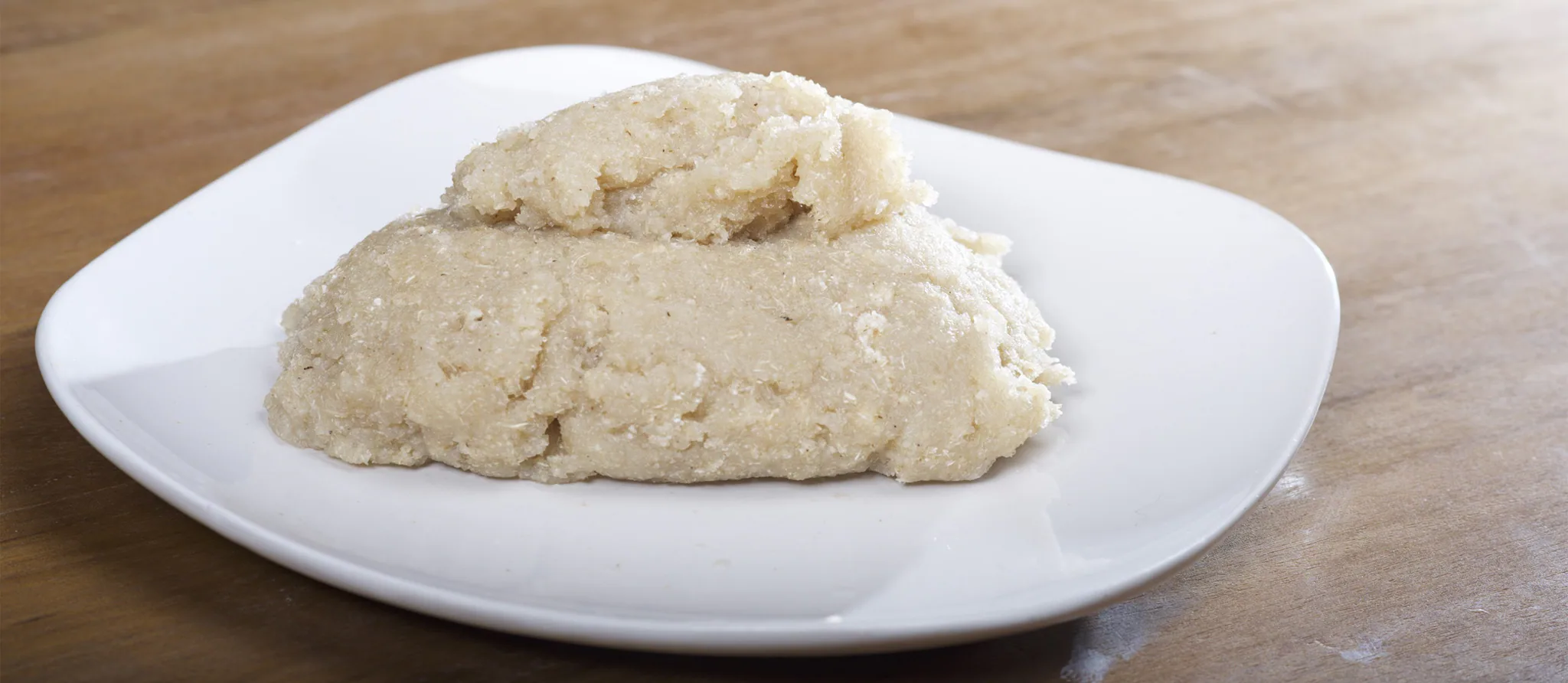
A smooth, stretchy dough made by stirring toasted, fermented cassava granules (gari) into just-boiled water and turning it vigorously until firm. Nigeria's quickest 'swallow', pinched off by hand and used to scoop up soups and stews.
Eba (Nigerian gari swallow) is a Nigerian side dish, ready in about 10 minutes and made with gari (toasted fermented cassava granules) and water. It serves 3 and is rated beginner to cook.
- Prep
- 2 min
- Cook
- 8 min
- Total
- 10 min
- Serves
- 3
- Level
- Beginner
- Calories
- 298
Main ingredients

Method
Step 1
Bring the water to a rolling boil and pour about 450 ml of it into a heavy pot or heatproof bowl, keeping the rest hot.
- 4 min
- high heat
- Kettle (opens in a new tab)
- Saucepan (opens in a new tab)
Step 2
Sprinkle the gari (opens in a new tab) evenly over the surface of the hot water, without stirring, until it covers the water. Leave for 1–2 minutes so the granules absorb the water and swell.
- 2 min
Step 3
With a sturdy wooden spoon (opens in a new tab) or spatula, stir and then fold and press the mixture vigorously against the side of the pot, turning it over on itself, for 2–3 minutes until it forms a smooth, elastic, lump-free dough. Add a splash of the reserved hot water if it is too stiff.
The harder and faster you turn, the smoother the eba.
Step 4
Wet your hands or a bowl and shape the eba into smooth balls. Wrap in cling film or serve straight away with soup.
- 1 min
About this dish
- Origin
- Southern Nigeria, Nigeria · Well documentedCassava reached West Africa via Portuguese traders in the 16th century; fermenting, pressing and roasting it into gari made it safe and long-keeping. Eba is eaten across Nigeria, Ghana, Benin and Togo.Also popular in Ghana, Benin, Togo, CameroonMore food from Nigeria
Nigeria - Dish
- Lunch · Dinner · Side dishes
- Cooking method
- Boiled
- Taste
- sour, mild
- Diet
- Vegan · No gluten ingredients · Dairy-free · No nut ingredientsWorked out from the ingredients. How labels work
All labels
Vegan · Plant-based · Vegetarian (lacto-ovo) · Eggetarian · Lacto-vegetarian · Ovo-vegetarian · Pescatarian · Flexitarian-friendly · No gluten ingredients · Dairy-free · Egg-free · No nut ingredients · No added sugar · Alcohol-free · Pork-free · Beef-free · Low-fat · Low-sodium · DASH-style - Good for
- Everyday · Budget-friendly · Minimal cleanup
- Cook more with
- Gari (toasted fermented cassava granules)
- Techniques
- Boiling
Allergens
None of the 14 major allergens appear in the listed ingredients.
Based on typical versions of these ingredients and not verified allergen-free. Brands differ and cross-contact happens, so always check labels. For severe allergies, follow your clinician’s advice.
Nutrition
298 kcal per serving
Estimated1 serving ≈ 267 g · recipe makes 3
Where the energy comes from
- Protein 0%
- Carbohydrate 100%
- Fat 0%
| Nutrient | Per serving | Per 100 g* |
|---|---|---|
| Energy | 298 kcal | 112 kcal |
| Protein | 0.2 g | 0.1 g |
| Carbohydrate | 73.9 g | 27.7 g |
| Net carbohydrate | 73.2 g | 27.4 g |
| Sugars | 2.8 g | 1 g |
| Added sugars | 0 g | 0 g |
| Fibre | 0.8 g | 0.3 g |
| Fat | 0 g | 0 g |
| Saturated fat | 0 g | 0 g |
| Trans fat | — | — |
| Cholesterol | 0 mg | 0 mg |
| Sodium | 5 mg | 2 mg |
| Salt equivalent | 0 g | 0 g |
Vitamins & minerals per serving
- Potassium
- 9 mg
- Calcium
- 35 mg
- Iron
- 1.3 mg
- Magnesium
- 5 mg
- Vitamin A (RAE)
- 0 µg
- Vitamin C
- 0 mg
- Vitamin D
- 0 µg
- Vitamin B12
- 0 µg
- Folate (DFE)
- 3 µg
How these numbers were made
- Calculated from USDA FoodData Central (SR Legacy) per-100 g values and the listed quantities.
- *Per 100 g of combined raw ingredients; the cooked dish may weigh more or less.
- Gari (toasted fermented cassava granules): Dry pearl tapioca (FDC 169717) used as a stand-in; gari is dried, toasted cassava and similarly almost pure starch.
- “—” means the value isn’t known for enough of the ingredients; it is never zero by default.
- Values are estimates for guidance, not for medical dosing. U.S. Department of Agriculture, Agricultural Research Service. FoodData Central, 2019. fdc.nal.usda.gov.
Good to know
Tips
- For softer eba, use more water; firm eba holds its shape better with very slippery soups such as okra or ogbono.
- Some cooks pour the gari into boiling water on the stove and turn it over low heat, which gives a slightly firmer result.
Common mistakes
- Stirring as soon as the gari goes in, which creates lumps.
- Using water that is only warm; the eba will be grainy and fall apart.
Serve with
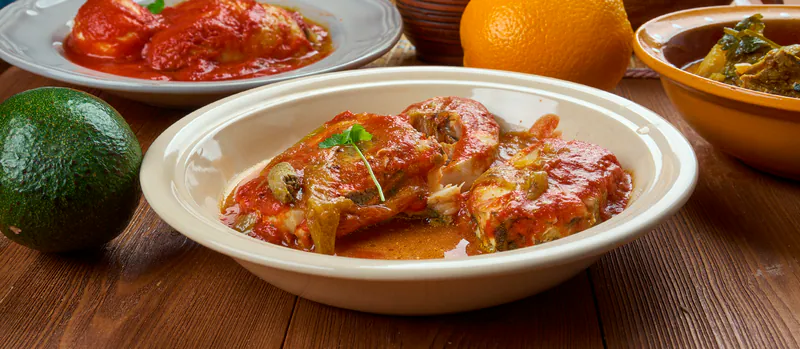
- Serve with egusi soup, efo riro, okra soup, ogbono or banga soup: pinch off a piece, roll it into a ball, make a dent with your thumb and scoop up the soup.
Food safety
- Use gari from a trusted source: properly fermented and roasted cassava is safe, but raw or poorly processed cassava contains natural cyanide compounds.
Storage
- Best eaten fresh. Wrapped tightly, it keeps a few hours at room temperature.
Reheating
- Microwave wrapped in cling film with a sprinkle of water for 1–2 minutes.
Variations
- Yellow eba: Made with yellow gari, which is fried with palm oil; richer and popular in the Niger Delta.
- Gari soakings: Not a swallow at all: dry gari soaked in cold water with sugar, milk and groundnuts as a snack.
Original editorial recipe · FriendsPantry editorial · source: TasteAtlas (dish facts) · Not yet independently reviewed · Added
Recipe DNA
How this dish is built
Grouped by each ingredient’s role in the dish. Each band’s width is its share of the dish by weight. Choose a component to see what it does.
Reviews & corrections
Reviews come from signed-in cooks and appear after a moderator checks them. We never show made-up ratings.
You might also like
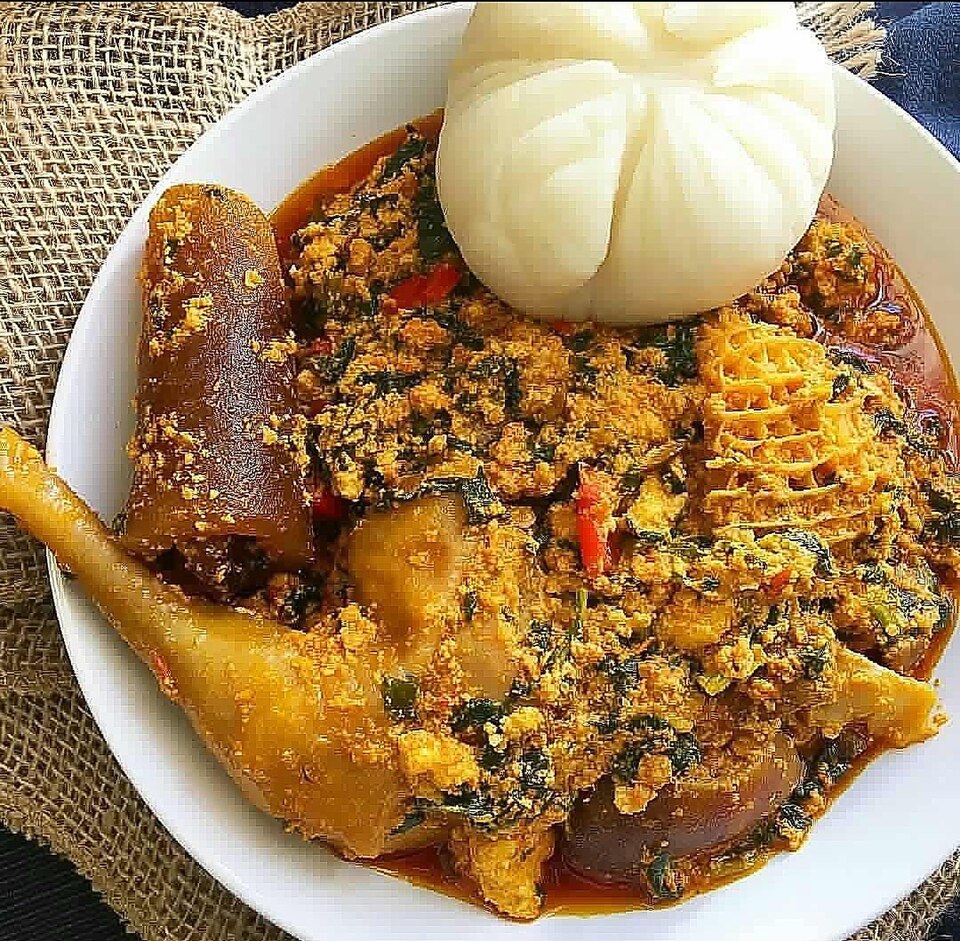
Egusi soup
Nigerian · 1 h 40 min · 577 kcal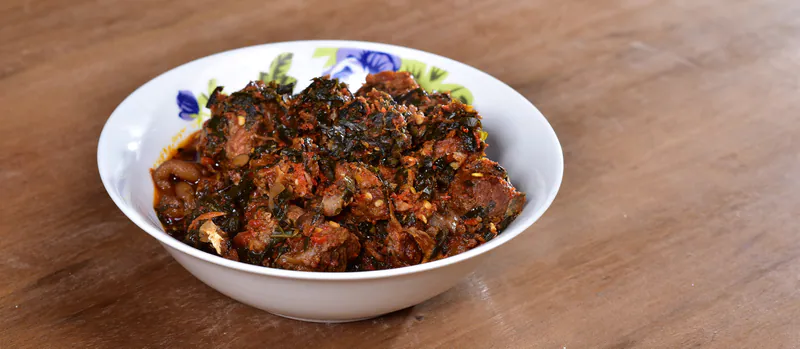
Efo riro
Nigerian · 1 h 35 min · 402 kcal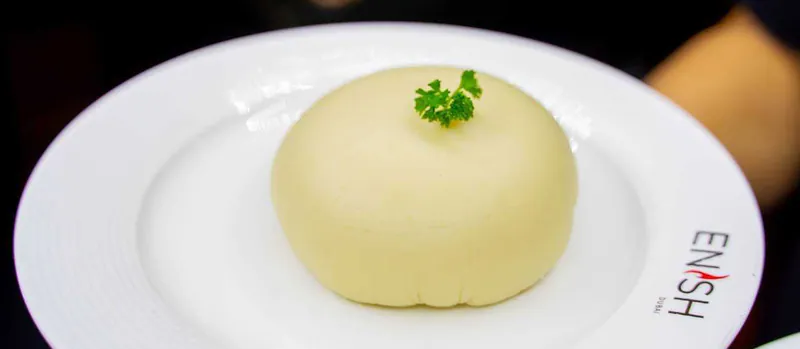
Pounded yam
Nigerian · 40 min · 295 kcal · Vegan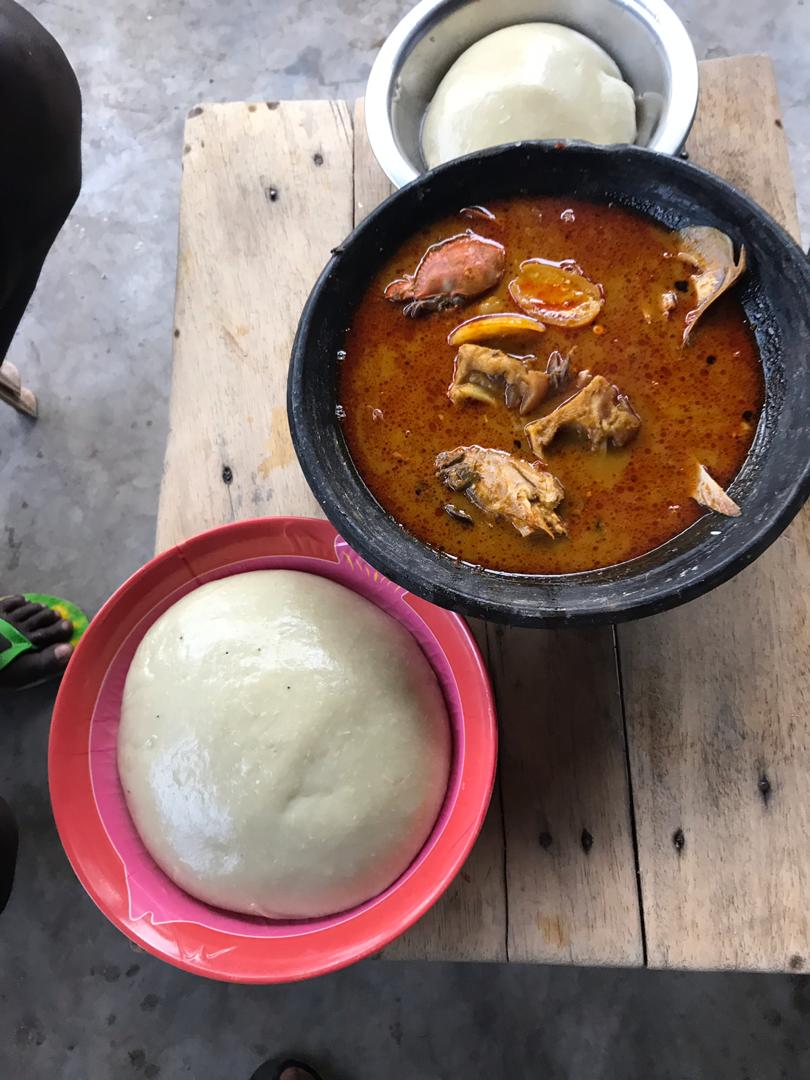
Fufu (cassava and plantain)
 Ghanaian · 45 min · 390 kcal · Vegan