
 Austrian · Balkan · Polish · Cakes
Cremeschnitte (vanilla cream slice)
Contains egg (no meat or fish)
Cremeschnitte
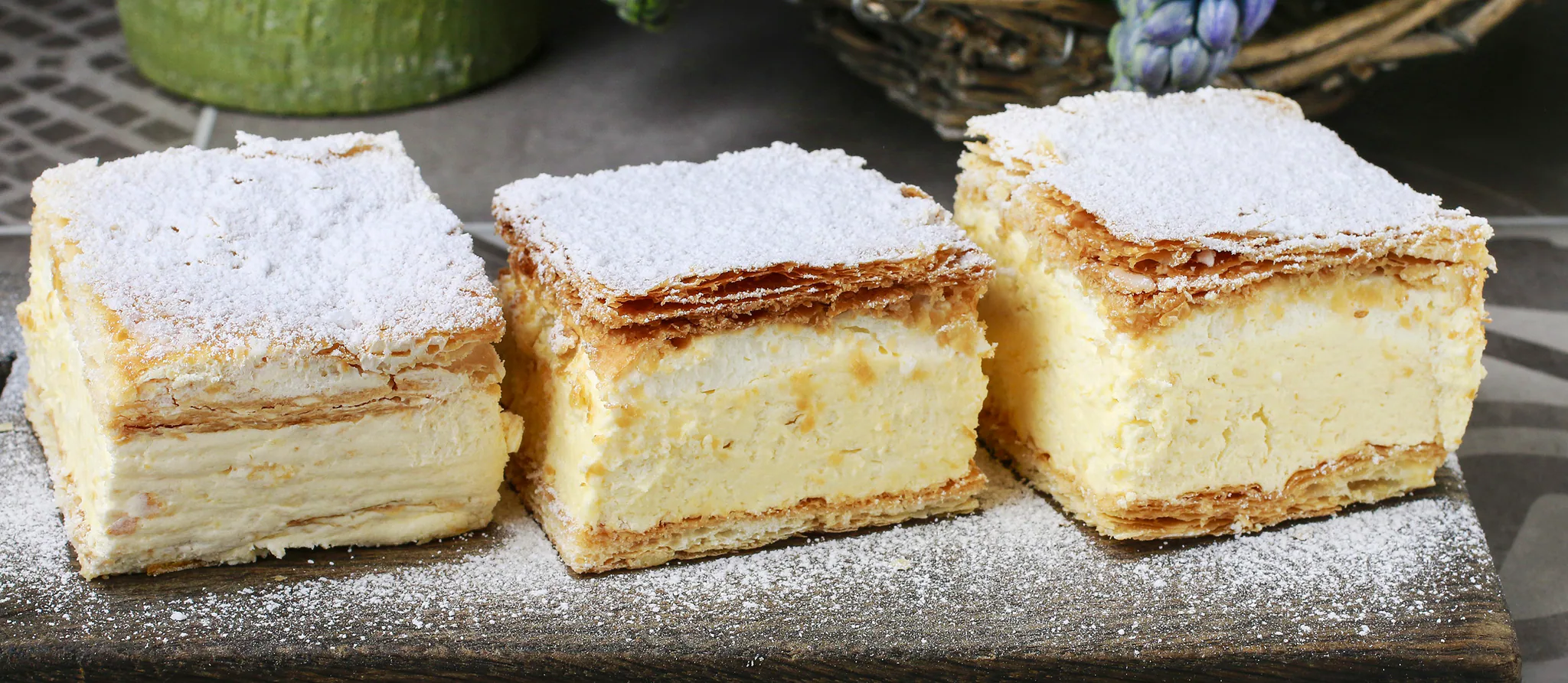
Two crisp sheets of puff pastry sandwiching a tall, wobbly layer of thick vanilla custard, finished with a thin layer of whipped cream and a heavy dusting of icing sugar. A pastry-shop classic of the former Austro-Hungarian lands, from Vienna to Zagreb, Bled and Kraków.
Cremeschnitte (vanilla cream slice) is an Austrian cake, ready in about 5 hours 5 minutes and made with all-butter puff pastry, milk and egg yolk. It serves 12 and is rated intermediate to cook.
- Prep
- 30 min
- Cook
- 35 min
- Rest
- 4 h
- Total
- 5 h 5 min
- Serves
- 12
- Level
- Intermediate
- Calories
- 502
Main ingredients
Ingredients
For the pastry
For the vanilla custard
For the cream layer
To finish
Method
Pastry
27 minStep 1
Heat the oven (opens in a new tab) to 200 °C. Lay each puff pastry (opens in a new tab) sheet on a baking tray lined with paper, prick it all over with a fork and cover with a second sheet of paper and another tray so it rises evenly and stays flat. Bake for 15 minutes, remove the top tray and bake 5–8 minutes more until deep golden and crisp. Cool, then trim both sheets to fit a 20 × 30 cm tin.
Pressing the pastry flat gives the neat, even layers you see in pastry shops.
Step 2
Line the tin with baking paper or cling film and lay one pastry sheet in the bottom, smooth side down.
Vanilla custard
15 minStep 3
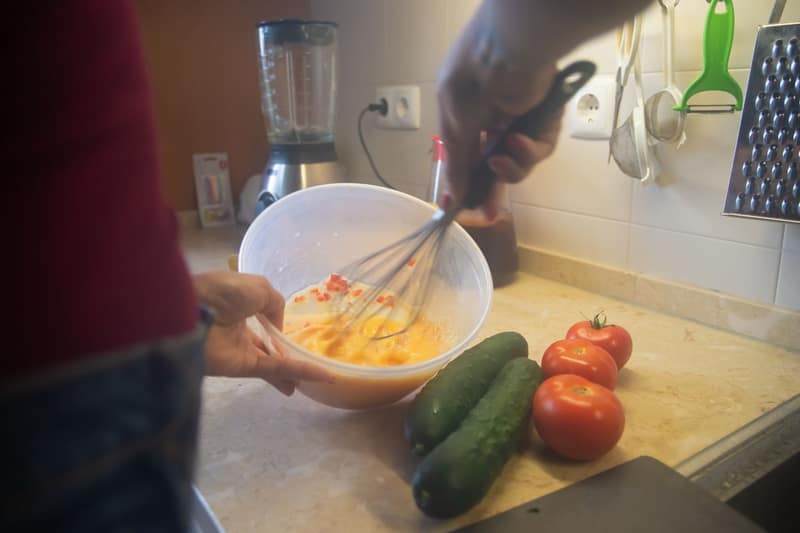
Whisk (opens in a new tab) the egg yolks (opens in a new tab), sugar (opens in a new tab), cornstarch (opens in a new tab), vanilla (opens in a new tab), salt and about 250 ml of the cold milk (opens in a new tab) to a smooth paste. Bring the remaining milk almost to the boil in a large saucepan (opens in a new tab).
- 6 min
- medium heat
- Saucepan (opens in a new tab)
- Whisk (opens in a new tab)
- Mixing bowl (opens in a new tab)
How it looks · Photo: Kampus Production on Pexels Step 4
Pour the yolk mixture into the hot milk (opens in a new tab) in a steady stream, whisking constantly. Keep whisking over medium heat until the custard thickens heavily and a few large bubbles plop on the surface; let it bubble for 1 minute so the starch cooks out. Take off the heat and whisk (opens in a new tab) in the butter (opens in a new tab).
- 6 min
- medium heat
- Whisk (opens in a new tab)
Scrape the corners of the pan constantly with the whisk or the custard will catch and turn lumpy.
Step 5
Pour the hot custard straight onto the pastry base and level it. Leave to cool for 20 minutes, then press cling film onto the surface and chill for at least 3 hours, until set firm.
- 3 min
Food safety: Custard and cream fillings are ideal for bacterial growth: cool them quickly, keep the finished cake refrigerated and eat it within 2 days.
Cream layer
4 minStep 6
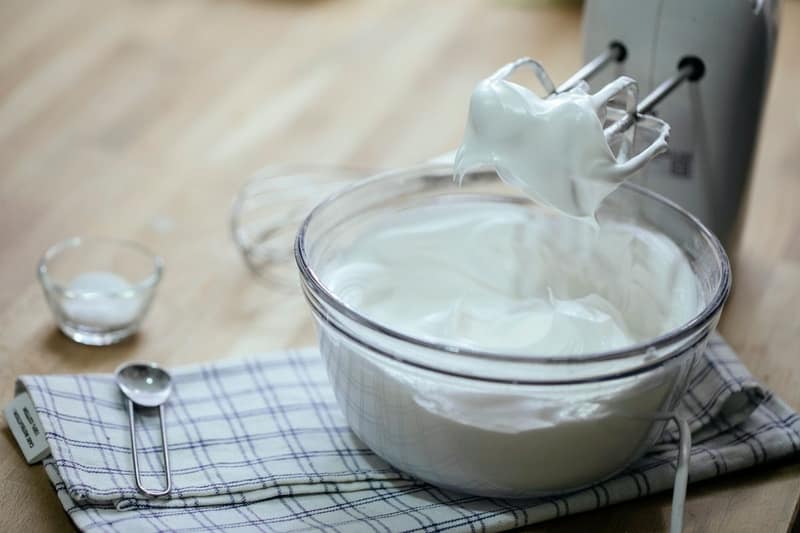
If using, whip the cream to soft peaks and spread it thinly over the set custard.
How it looks · Photo: Katerina Holmes on Pexels
To finish
6 minStep 7
Cut the second pastry sheet into 12 portions before laying it on top, smooth side up; this lets you cut neat slices without squashing the custard. Dust thickly with icing sugar (opens in a new tab), then cut through the custard with a hot, wet knife.
At a glance
1 · Pastry in a bowl
- All-butter puff pastry
then whisk
2 · Vanilla custard in a bowl
 Milk
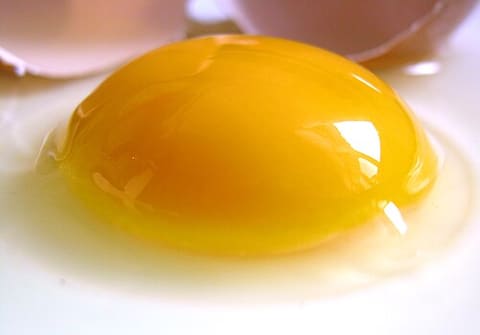 Egg yolk
 Sugar
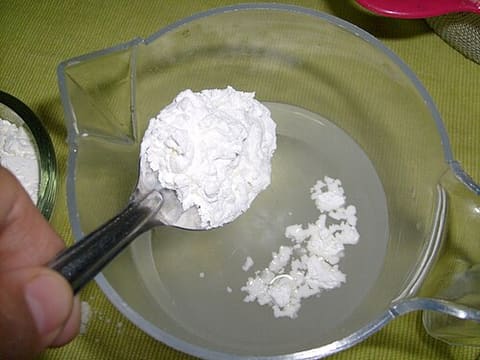 Cornstarch
 Vanilla extract
 Salt
 Butter
then whip
3 · Cream layer in a bowl
 Heavy cream
then cut
4 · To finish in a bowl
 Icing sugar
About this dish
- Origin
- Austria and the former Austro-Hungarian lands, Austria · Commonly attributedUsually traced to Habsburg-era Vienna; the Polish name napoleonka points to a link with the French mille-feuille, and every country of the region claims its own version.Also popular in Germany, Croatia, Slovenia, Serbia, Bosnia and Herzegovina, Poland, Hungary, Slovakia, CzechiaMore food from Austria
Austria - Dish
- Dessert · Snack · Cakes · Pastries · Desserts
- Cooking method
- Oven-baked, Simmered, Whipped
- Taste
- sweet, creamy, buttery
- Diet
- Vegetarian (lacto-ovo) · No nut ingredientsWorked out from the ingredients. How labels work
All labels
Vegetarian (lacto-ovo) · Eggetarian · Pescatarian · Flexitarian-friendly · No nut ingredients · Pork-free · Beef-free · Low-sodium - Good for
- Make-ahead · Festive & celebration
- Cook more with
- All-butter puff pastry · Milk · Egg yolk · Sugar · Cornstarch · Vanilla extract
- Techniques
- Baking · Simmering · Emulsification
Allergens
- Contains: Milkfrom all-butter puff pastry, milk, butter, heavy cream
- Contains: Eggsfrom egg yolk
- Contains: Wheatfrom all-butter puff pastry
- Contains: Glutenfrom all-butter puff pastry
Based on typical versions of these ingredients and not verified allergen-free. Brands differ and cross-contact happens, so always check labels. For severe allergies, follow your clinician’s advice.
Nutrition
502 kcal per serving
Estimated1 serving ≈ 180 g · recipe makes 12
Where the energy comes from
- Protein 7%
- Carbohydrate 43%
- Fat 50%
| Nutrient | Per serving | Per 100 g* |
|---|---|---|
| Energy | 502 kcal | 280 kcal |
| Protein | 8.4 g | 4.7 g |
| Carbohydrate | 53.8 g | 30 g |
| Net carbohydrate | 53 g | 29.5 g |
| Sugars | 23.1 g | 12.9 g |
| Added sugars | 18.3 g | 10.2 g |
| Fibre | 0.9 g | 0.5 g |
| Fat | 28.1 g | 15.7 g |
| Saturated fat | 9.1 g | 5.1 g |
| Trans fat | — | — |
| Cholesterol | 137 mg | 76 mg |
| Sodium | 205 mg | 114 mg |
| Salt equivalent | 0.5 g | 0.3 g |
Vitamins & minerals per serving
- Potassium
- 160 mg
- Calcium
- 118 mg
- Iron
- 1.7 mg
- Magnesium
- 18 mg
- Vitamin A (RAE)
- 100 µg
- Vitamin C
- 0 mg
- Vitamin D
- —
- Vitamin B12
- 0.6 µg
- Folate (DFE)
- 87 µg
How these numbers were made
- Calculated from USDA FoodData Central (SR Legacy) per-100 g values and the listed quantities.
- *Per 100 g of combined raw ingredients; the cooked dish may weigh more or less.
- Optional ingredients are not included: heavy cream.
- All-butter puff pastry: Frozen puff pastry (FDC 172790). Shop-bought puff pastry varies; some brands use vegetable fat.
- “—” means the value isn’t known for enough of the ingredients; it is never zero by default.
- Values are estimates for guidance, not for medical dosing. U.S. Department of Agriculture, Agricultural Research Service. FoodData Central, 2019. fdc.nal.usda.gov.
Good to know
Tips
- Pre-cutting the top layer of pastry is the pastry-shop trick for clean slices.
- Wipe and re-wet the knife between every cut.
Common mistakes
- Stopping before the custard boils: it will not set and the slices collapse.
- Assembling with warm pastry, which turns soggy.
Serve with
- Serve chilled in tall squares with coffee.
- In Bled, the kremna rezina is eaten as a perfect 7 cm cube on a plate with a fork.
Food safety
- Custard and cream fillings are ideal for bacterial growth: cool them quickly, keep the finished cake refrigerated and eat it within 2 days.
Storage
- Keep covered in the fridge for up to 2 days; the pastry slowly softens.
Variations
- Blejska kremna rezina (Slovenia): The Lake Bled version: a very tall custard layer topped with whipped cream under a sugar-dusted pastry lid.
- Samoborska kremšnita (Croatia): Croatian kremšnita from Samobor, with a lighter custard lifted with beaten egg white.
- Kremówka / napoleonka (Poland): The Polish version, often with custard enriched with butter and sometimes a splash of spirit.
- Krémes (Hungary): The Hungarian cousin with an airy, gelatine-set cream lightened with meringue — see its own recipe.
How is cremeschnitte different from mille-feuille?
A French mille-feuille usually has three layers of pastry and two of pastry cream; cremeschnitte has just two pastry sheets with one much deeper layer of custard.
Original editorial recipe · FriendsPantry editorial · source: TasteAtlas (dish facts) · Not yet independently reviewed · Added
Recipe DNA
How this dish is built
Built from the recipe’s own sections. Each band’s width is its share of the dish by weight. Choose a component to see what it does.
Reviews & corrections
Reviews come from signed-in cooks and appear after a moderator checks them. We never show made-up ratings.
You might also like
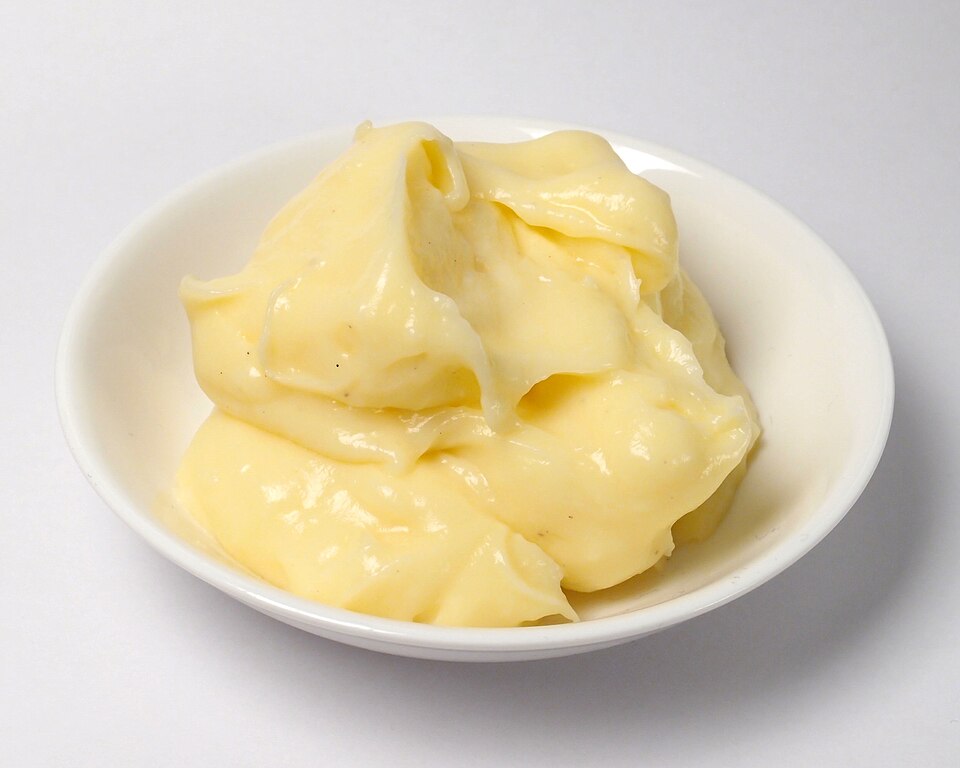
Crème pâtissière (pastry cream)
 French · 2 h 15 min · 171 kcal · Contains egg
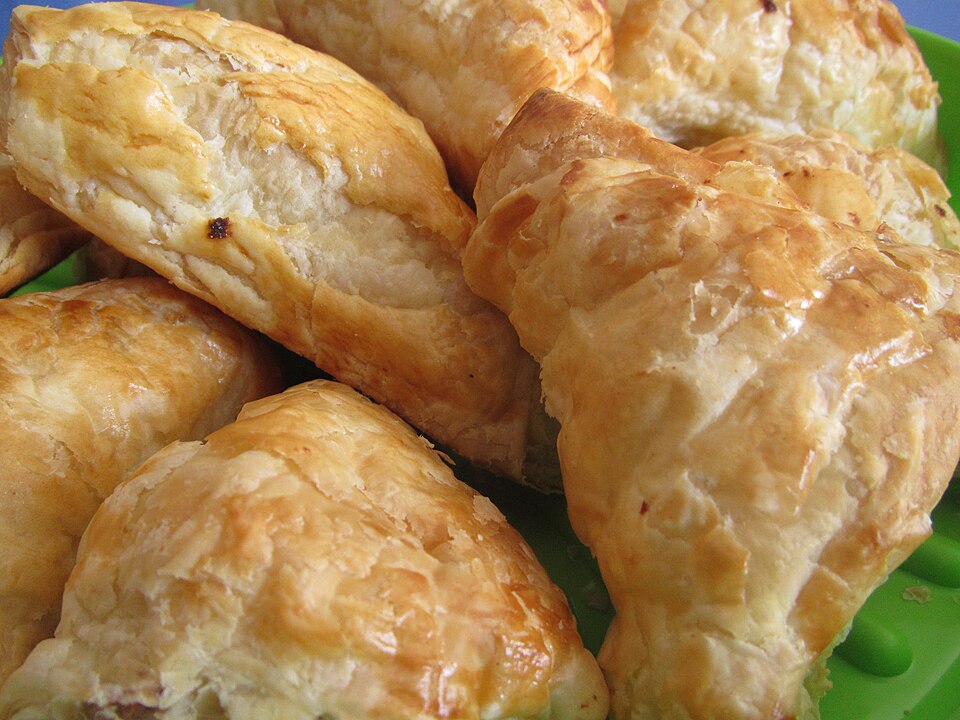
Rough puff pastry
 British · 2 h 20 min · 338 kcal · Vegetarian
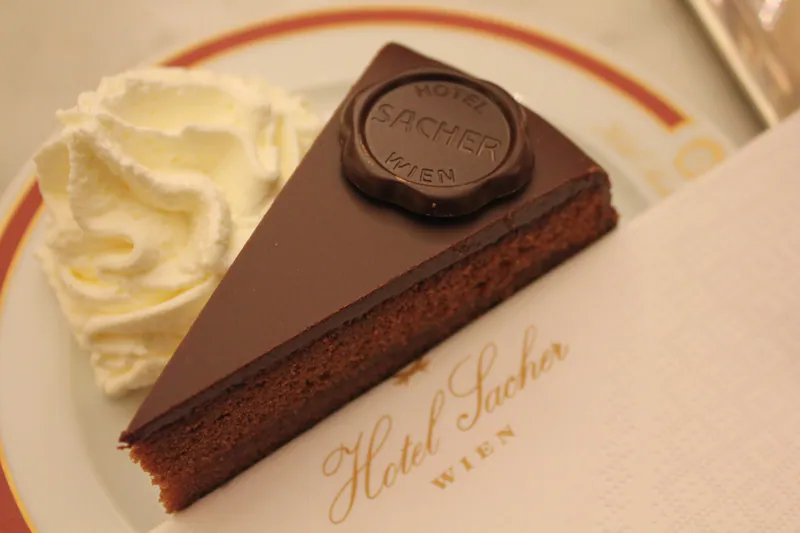
Sachertorte
Austrian · 3 h 40 min · 490 kcal · Contains egg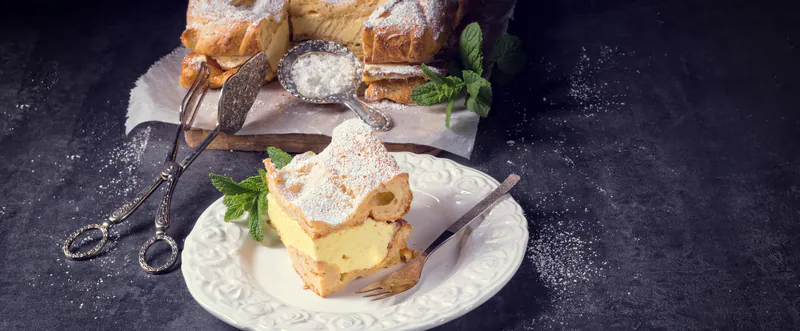
Karpatka (Polish Carpathian cream cake)
 Polish · 5 h 40 min · 406 kcal · Contains egg