
Budae jjigae (army base stew)
Non-vegetarian
부대찌개 · budae jjigae
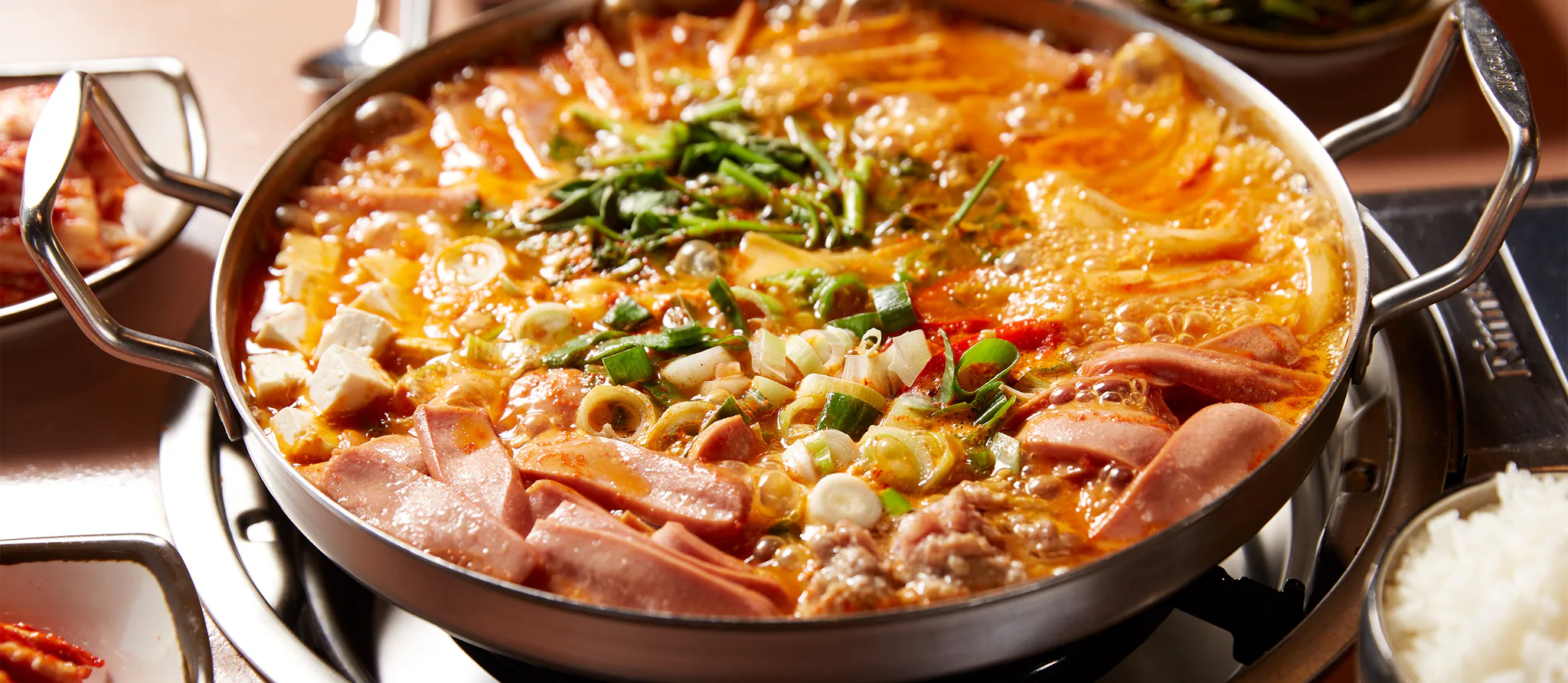
A bubbling, spicy hot pot of luncheon meat, sausages, kimchi, tofu and baked beans, finished with instant noodles and a slice of melting cheese. Born from scarcity after the Korean War and now a beloved comfort food.
Budae jjigae (army base stew) is a Korean stew from South Korea, ready in about 30 minutes and made with canned luncheon meat, pork sausage and kimchi. It serves 3 and is rated easy to cook.
- Prep
- 15 min
- Cook
- 15 min
- Total
- 30 min
- Serves
- 3
- Level
- Easy
- Calories
- 740
Main ingredients
Method
Step 1
Mix the chilli flakes (opens in a new tab), gochujang (opens in a new tab), soy sauce (opens in a new tab), garlic (opens in a new tab) and sugar (opens in a new tab) into a paste.
- 2 min
Step 2
Arrange the luncheon meat (opens in a new tab), sausages (opens in a new tab), kimchi (opens in a new tab), tofu (opens in a new tab), onion (opens in a new tab), a spoonful of tinned beans in tomato sauce (opens in a new tab) and the spring onion (opens in a new tab) in sections in a wide shallow pot. Spoon the paste into the middle.
Step 3
Pour in the stock, bring to a boil and simmer until the kimchi (opens in a new tab) softens and the broth turns red.
- 8 min
- medium-high heat
Step 4
Add the noodles and cheese and cook until the noodles are just tender. Serve from the pot at the table.
- 3 min
- medium-high heat
How it looks · Photo: Gianpiero Ferraro on Pexels
At a glance
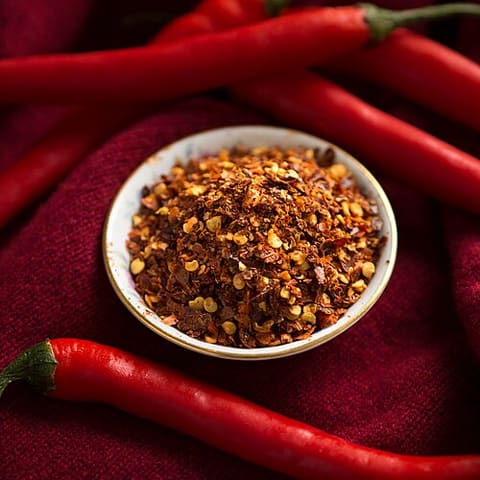 Red chilli flakes
 Gochujang
 Soy sauce
 Garlic
 Sugar
 Canned luncheon meat
- Pork sausage
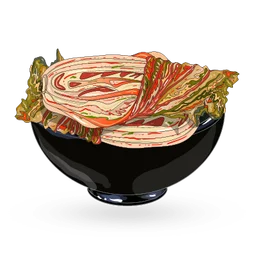 Kimchi
 Tofu
 Onion
 Baked beans (canned)
- Spring onion
 Chicken stock
 Ramen noodles
 Cheddar
About this dish
- Origin
- Uijeongbu, South Korea · Well documentedDeveloped near US army bases in the 1950s using surplus processed meats.More food from South Korea
South Korea - Dish
- Lunch · Dinner · Stews & braises · Main courses
- Cooking method
- Simmered, Boiled
- Taste
- spicy (chilli heat), savoury, salty, rich
- Diet
- No nut ingredients · High-proteinWithout the optional extras: Dairy-freeWorked out from the ingredients. How labels work
All labels
Non-vegetarian · Egg-free · No nut ingredients · Alcohol-free · Beef-free · High-protein - Good for
- One-pot · Everyday
- Cook more with
- Pork sausage · Kimchi · Red chilli flakes · Soy sauce · Garlic · Sugar
Allergens
- Contains, can be adapted: Milkfrom cheddar
- May contain: Eggsfrom ramen noodles
- Contains: Fishfrom kimchi
- Contains: Crustaceansfrom kimchi
- Contains: Wheatfrom gochujang, soy sauce, pork sausage, ramen noodles
- Contains: Glutenfrom gochujang, soy sauce, pork sausage, ramen noodles
- Contains: Soyfrom gochujang, soy sauce, tofu, ramen noodles
- May contain: Celeryfrom chicken stock
- May contain: Sulphitesfrom pork sausage
Based on typical versions of these ingredients and not verified allergen-free. Brands differ and cross-contact happens, so always check labels. For severe allergies, follow your clinician’s advice.
Nutrition
740 kcal per serving
Estimated1 serving ≈ 592 g · recipe makes 3
Where the energy comes from
- Protein 20%
- Carbohydrate 26%
- Fat 54%
| Nutrient | Per serving | Per 100 g* |
|---|---|---|
| Energy | 740 kcal | 125 kcal |
| Protein | 37.9 g | 6.4 g |
| Carbohydrate | 48.9 g | 8.3 g |
| Net carbohydrate | 42.3 g | 7.1 g |
| Sugars | — | — |
| Added sugars | 2.2 g | 0.4 g |
| Fibre | 6.6 g | 1.1 g |
| Fat | 45.5 g | 7.7 g |
| Saturated fat | 14.9 g | 2.5 g |
| Trans fat | — | — |
| Cholesterol | 90 mg | 15 mg |
| Sodium | 2600 mg | 439 mg |
| Salt equivalent | 6.5 g | 1.1 g |
Vitamins & minerals per serving
- Potassium
- 1103 mg
- Calcium
- 410 mg
- Iron
- 7.8 mg
- Magnesium
- 90 mg
- Vitamin A (RAE)
- —
- Vitamin C
- 8 mg
- Vitamin D
- —
- Vitamin B12
- 0.8 µg
- Folate (DFE)
- —
How these numbers were made
- Calculated from USDA FoodData Central (SR Legacy) per-100 g values and the listed quantities.
- *Per 100 g of combined raw ingredients; the cooked dish may weigh more or less.
- Optional ingredients are not included: gochujang, cheddar.
- Red chilli flakes: Ground cayenne (FDC 170932) used as a stand-in for dried chilli flakes such as pul biber or Aleppo pepper.
- “—” means the value isn’t known for enough of the ingredients; it is never zero by default.
- Values are estimates for guidance, not for medical dosing. U.S. Department of Agriculture, Agricultural Research Service. FoodData Central, 2019. fdc.nal.usda.gov.
Good to know
Tips
- Add more stock as you eat — the broth reduces and gets saltier.
Common mistakes
- Using the instant-noodle seasoning packet — with the luncheon meat and kimchi, the stew becomes far too salty.
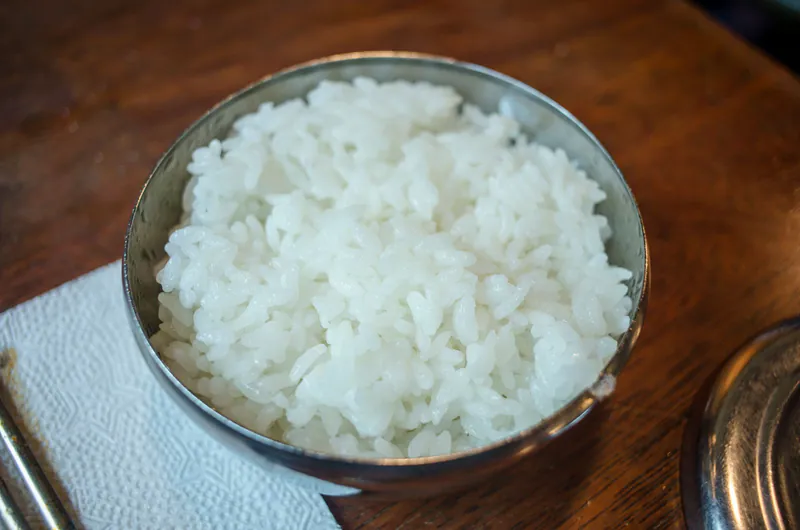
Food safety
- Simmer until the sausages are piping hot all the way through.
- Refrigerate leftovers within 2 hours and reheat to a full boil.
Storage
- Best eaten from the pot. Leftovers (without the noodles if possible) keep 2 days in the fridge.
Original editorial recipe · FriendsPantry editorial · Not yet independently reviewed · Added
Recipe DNA
How this dish is built
Built from the recipe’s own sections. Each band’s width is its share of the dish by weight. Choose a component to see what it does.
What the dish is built around
Main ingredient
- Canned luncheon meat, sliced200 g
- Pork sausage, frankfurters, sliced on the diagonal150 g
- Kimchi, chopped200 g
- Tofu, sliced150 g
- Baked beans (canned)3 tbsp · 47 g
- Ramen noodles, one block of instant noodles (seasoning packet discarded)100 g
- Cheddar, one slice (optional)20 g
Reviews & corrections
Reviews come from signed-in cooks and appear after a moderator checks them. We never show made-up ratings.
You might also like
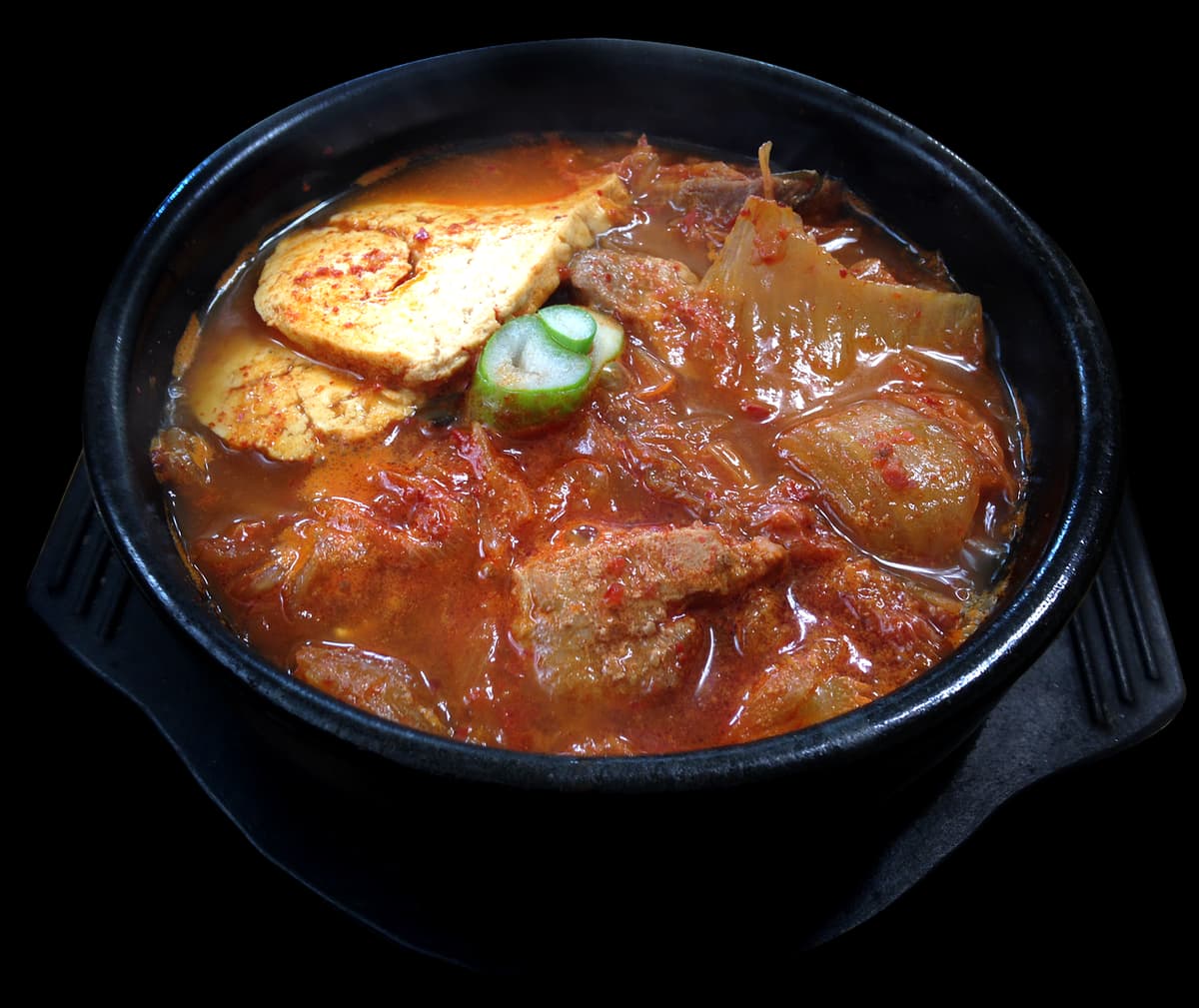
Kimchi jjigae
 Korean · 40 min · 426 kcal
Sundubu jjigae
Korean · 30 min · 508 kcal
Dakgalbi
Korean · 1 h 10 min · 349 kcal
Jeyuk bokkeum
Korean · 45 min · 409 kcal