
Bánh bao (Vietnamese steamed buns)
Non-vegetarian
Bánh bao
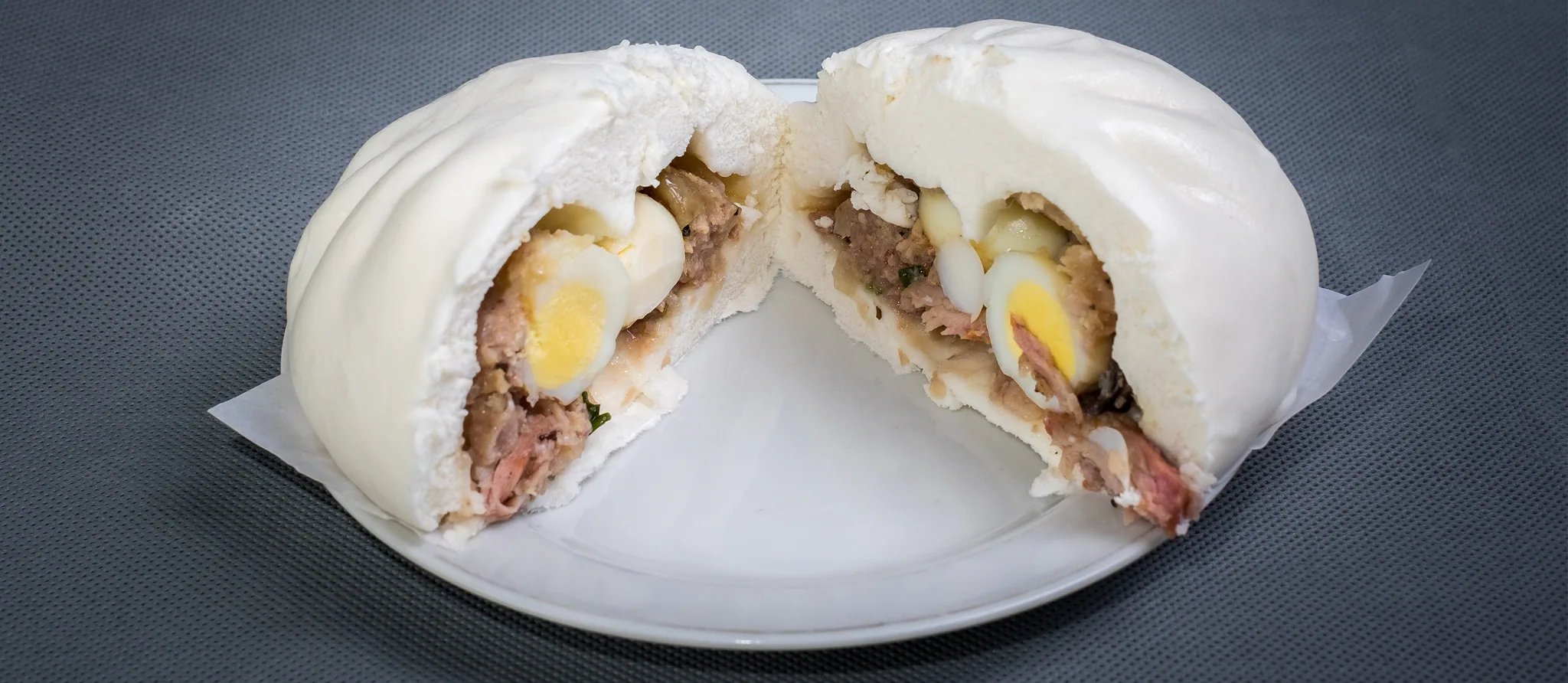
Soft, snow-white yeasted buns wrapped around a savoury filling of seasoned minced pork, wood ear mushroom and onion, with a piece of boiled egg and Chinese sausage hidden in the middle. A Vietnamese take on Chinese baozi, sold warm from steamers as breakfast or a snack.
Bánh bao (Vietnamese steamed buns) is a Vietnamese dumpling dish, ready in about 2 hours 40 minutes and made with all-purpose flour, ground pork and egg. It serves 8 and is rated intermediate to cook.
- Prep
- 50 min
- Cook
- 30 min
- Rest
- 1 h 20 min
- Total
- 2 h 40 min
- Serves
- 8
- Level
- Intermediate
- Calories
- 482
Main ingredients
Ingredients
For the dough
For the filling
For the centres
Method
Dough
12 minStep 1
Whisk the flour, sugar (opens in a new tab), yeast, baking powder (opens in a new tab) and salt in a bowl. Add the milk (opens in a new tab) and oil and knead for 8–10 minutes to a very smooth, soft dough. Cover and leave in a warm place for about 1 hour, until doubled.
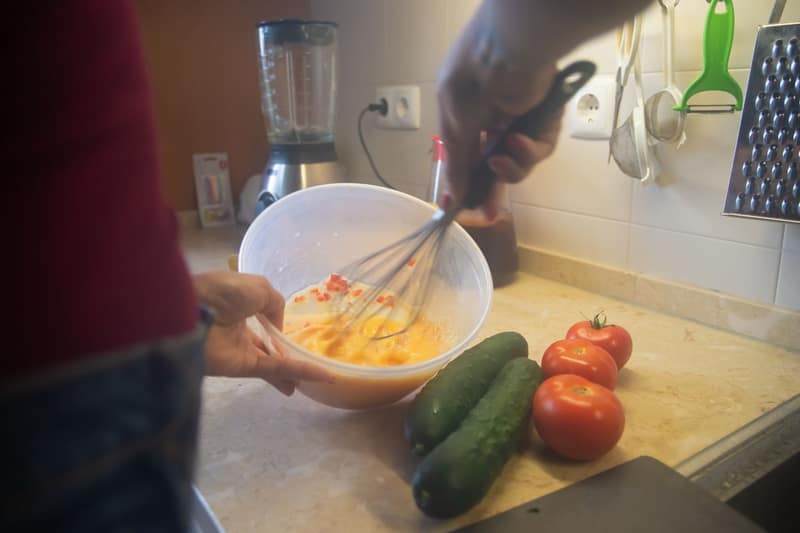
How it looks · Photo: Kampus Production on Pexels
Filling
18 minStep 2
Mix the pork with the wood ear (opens in a new tab), glass noodles (opens in a new tab), onion (opens in a new tab), garlic (opens in a new tab), spring onion (opens in a new tab), fish sauce (opens in a new tab), oyster sauce (opens in a new tab), sugar (opens in a new tab) and pepper (opens in a new tab). Stir firmly in one direction for a minute until sticky. Divide into 8 portions and chill while you prepare the dough.
- 10 min
Food safety: Wash hands, boards and knives after handling raw meat, and keep it apart from salad and other ready-to-eat food.
Step 3
Knock the dough back and divide it into 8 pieces. Roll each into a 13 cm round, thinner at the edges than in the centre.
Centres
37 minStep 4
Place a portion of filling in the centre of a round, press in half an egg (opens in a new tab) and a slice or two of sausage and cover with a little more filling. Gather the edges up in small pleats and twist to seal at the top. Set each bun on a 10 cm square of baking paper.
- 15 min
Step 5
Leave the buns to rise, covered, for 20 minutes, until slightly puffy.
Step 6
Bring water to a boil in the base of a steamer (opens in a new tab). Steam the buns over medium-high heat, spaced apart, for 15–18 minutes, until the filling is cooked through. Turn off the heat and leave the lid on for 5 minutes before lifting it, so the buns do not wrinkle.
- 22 min
- medium-high heat
- Steamer (opens in a new tab)
Food safety: Cook pork until it reaches at least 63 °C in the centre (71 °C for minced pork) and refrigerate leftovers within 2 hours.
Wrap the steamer lid in a cloth so condensation does not drip onto the buns.
At a glance
1 · Dough in a bowl
 All-purpose flour
 Sugar
 Instant yeast
 Baking powder
 Salt
 Milk
 Neutral vegetable oil
then mix
2 · Filling in a bowl
 Ground pork
 Wood ear mushrooms
 Glass noodles
 Onion
 Garlic
- Spring onion
 Fish sauce
 Oyster sauce
- Sugar
 Black pepper
then place
3 · Centres in a pan
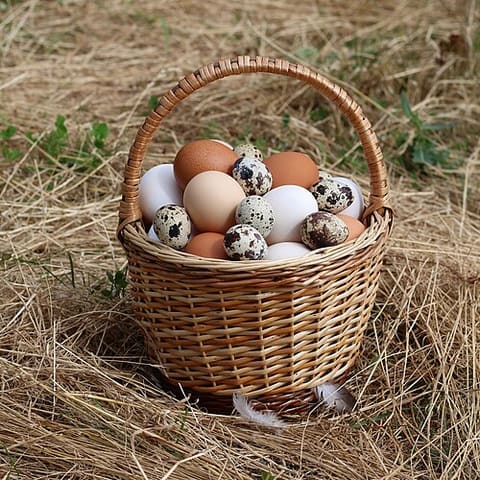 Egg
 Chinese sausage (lap cheong)
About this dish
- Origin
- Vietnam · Well documentedAdapted from the Chinese baozi brought by Cantonese and Hainanese migrants; the Vietnamese version is larger, sweeter in the dough and usually holds a whole or half egg and lạp xưởng sausage.More food from Vietnam
Vietnam - Dish
- Breakfast · Snack · Dumplings · Street food · Breads & flatbreads · Breakfast dishes
- Cooking method
- Steamed
- Taste
- savoury, sweet, umami, mild
- Diet
- No nut ingredients · High-proteinWith the listed swaps: Dairy-freeWorked out from the ingredients. How labels work
All labels
Non-vegetarian · Flexitarian-friendly · No nut ingredients · Beef-free · High-protein · Calorie-conscious - Good for
- Freezer-friendly · Make-ahead · Portable / lunchbox
- Cook more with
- All-purpose flour · Ground pork · Egg · Sugar · Instant yeast · Baking powder
- Techniques
- Steaming · Kneading · Fermentation
Allergens
- Contains, can be adapted: Milkfrom milk
- Contains: Eggsfrom egg
- Contains: Fishfrom fish sauce
- May contain: Crustaceansfrom fish sauce, oyster sauce
- Contains: Molluscsfrom oyster sauce
- Contains: Wheatfrom all-purpose flour, baking powder, oyster sauce, chinese sausage (lap cheong)
- Contains: Glutenfrom all-purpose flour, baking powder, oyster sauce, chinese sausage (lap cheong)
- May contain: Soyfrom oyster sauce, chinese sausage (lap cheong)
- May contain: Sulphitesfrom chinese sausage (lap cheong)
Based on typical versions of these ingredients and not verified allergen-free. Brands differ and cross-contact happens, so always check labels. For severe allergies, follow your clinician’s advice.
Nutrition
482 kcal per serving
Estimated1 serving ≈ 201 g · recipe makes 8
Where the energy comes from
- Protein 17%
- Carbohydrate 43%
- Fat 40%
| Nutrient | Per serving | Per 100 g* |
|---|---|---|
| Energy | 482 kcal | 240 kcal |
| Protein | 20.7 g | 10.3 g |
| Carbohydrate | 50.9 g | 25.4 g |
| Net carbohydrate | 48.9 g | 24.4 g |
| Sugars | — | — |
| Added sugars | — | — |
| Fibre | 2 g | 1 g |
| Fat | 21.3 g | 10.6 g |
| Saturated fat | 6.8 g | 3.4 g |
| Trans fat | — | — |
| Cholesterol | 140 mg | 70 mg |
| Sodium | 730 mg | 364 mg |
| Salt equivalent | 1.8 g | 0.9 g |
Vitamins & minerals per serving
- Potassium
- 360 mg
- Calcium
- 137 mg
- Iron
- 3.6 mg
- Magnesium
- 36 mg
- Vitamin A (RAE)
- 56 µg
- Vitamin C
- 2 mg
- Vitamin D
- —
- Vitamin B12
- 1 µg
- Folate (DFE)
- 189 µg
How these numbers were made
- Calculated from USDA FoodData Central (SR Legacy) per-100 g values and the listed quantities.
- *Per 100 g of combined raw ingredients; the cooked dish may weigh more or less.
- Optional ingredients are not included: glass noodles.
- Wood ear mushrooms: Jew's ear, raw (FDC 169237); quantities are given as rehydrated weight, which is close to the fresh mushroom.
- Chinese sausage (lap cheong): Dry/hard pork salami (FDC 172938) used as a stand-in; lap cheong is similarly fatty and cured but sweeter.
- “—” means the value isn’t known for enough of the ingredients; it is never zero by default.
- Values are estimates for guidance, not for medical dosing. U.S. Department of Agriculture, Agricultural Research Service. FoodData Central, 2019. fdc.nal.usda.gov.
Good to know
Tips
- Boil the eggs for 9 minutes and cool them in cold water so they peel cleanly.
Common mistakes
- Lifting the lid as soon as the heat goes off — the sudden temperature change collapses and wrinkles the buns.
Serve with
- Eat warm, as they are, with a coffee or soy milk for breakfast.
- Serve with a dish of soy sauce and fresh chilli for dipping.
Food safety
- Cook pork until it reaches at least 63 °C in the centre (71 °C for minced pork) and refrigerate leftovers within 2 hours.
Storage
- Keeps 2 days in the fridge, or freeze cooked buns for up to 2 months.
Reheating
- Steam from chilled for 8 minutes or from frozen for 15 minutes, until piping hot in the centre.
Variations
- Bánh bao chay: A plain, slightly sweet bun with no filling, eaten with savoury dishes.
- Bánh bao kim sa: Filled with a molten salted-egg-yolk custard.
Original editorial recipe · FriendsPantry editorial · source: TasteAtlas (dish facts) · Not yet independently reviewed · Added
Recipe DNA
How this dish is built
Built from the recipe’s own sections. Each band’s width is its share of the dish by weight. Choose a component to see what it does.
Structure
For the dough
- All-purpose flour400 g
- Sugar60 g
- Instant yeast7 g
- Baking powder2 tsp · 8.9 g
- Salt0.25 tsp · 1.5 g
- Milk, lukewarm220 ml · 227 g
- Neutral vegetable oil2 tbsp · 27 g
Reviews & corrections
Reviews come from signed-in cooks and appear after a moderator checks them. We never show made-up ratings.
You might also like
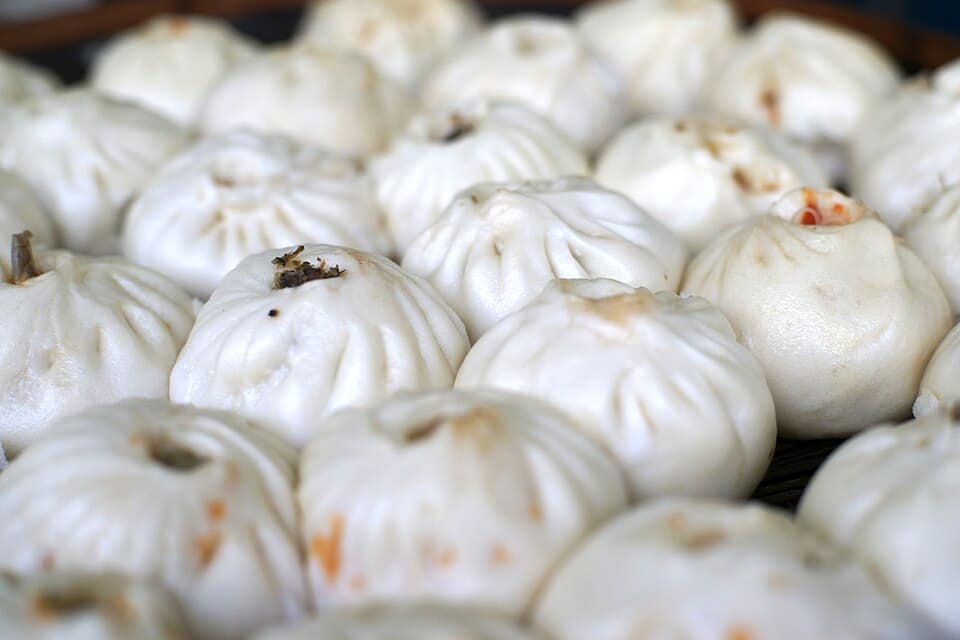
Pork baozi (steamed pork buns)
 Chinese · 2 h 25 min · 244 kcal
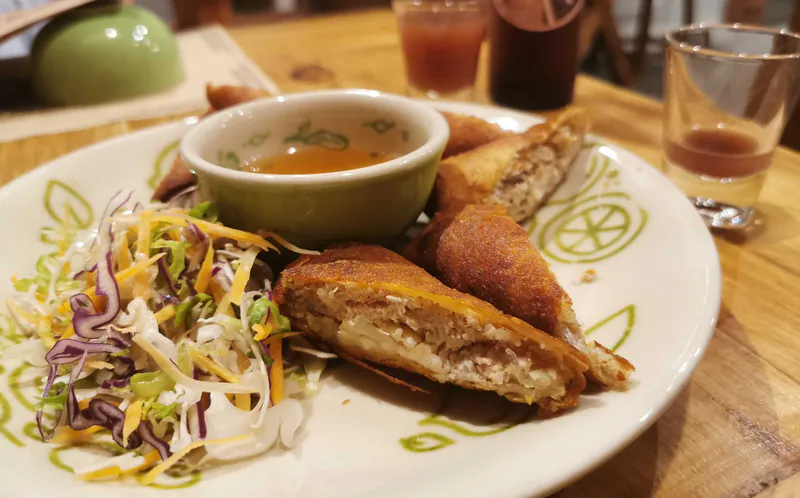
Chả giò (fried spring rolls)
 Vietnamese · 1 h 15 min · 616 kcal
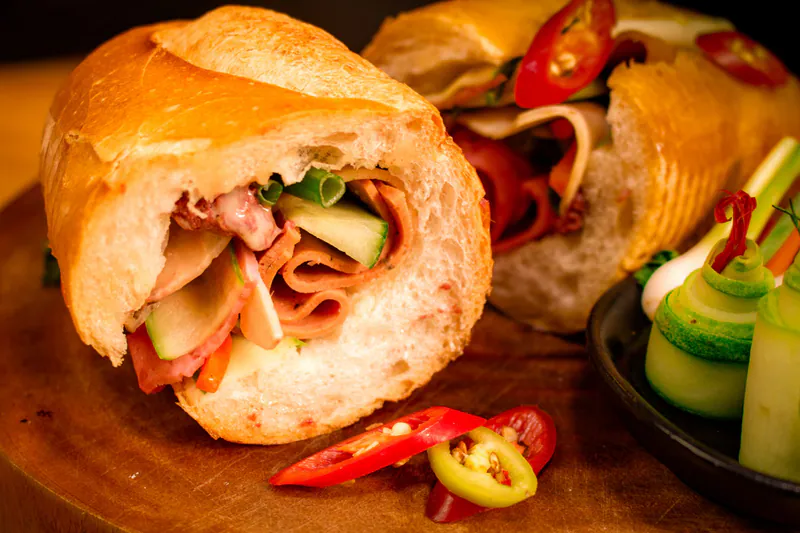
Bánh mì thịt nướng
Vietnamese · 1 h 40 min · 656 kcal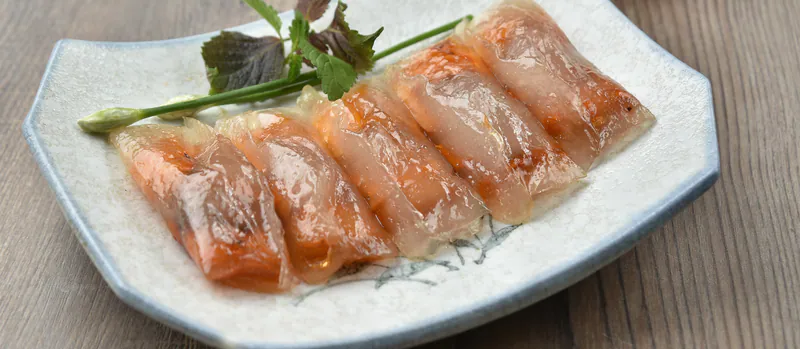
Bánh bột lọc (Huế tapioca dumplings with shrimp and pork)
Vietnamese · 1 h 25 min · 745 kcal