
 Syrian · Levantine · Middle Eastern · Desserts
Ashta (Levantine clotted cream)
Vegetarian
قشطة · qashṭa
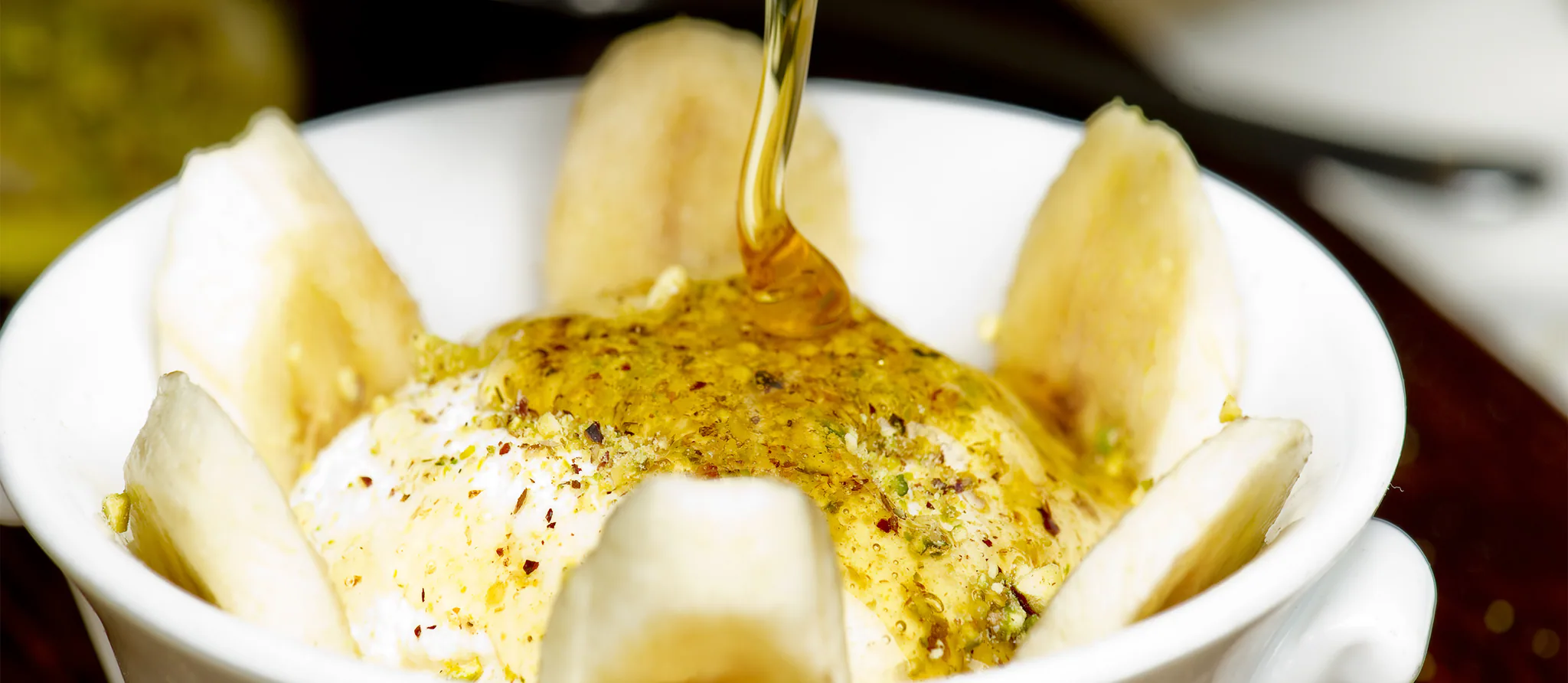
Thick, snowy clotted cream made by gently heating rich milk until soft curds form, then draining and perfuming them with orange blossom and rose water. Eaten with honey and pistachios or used to fill Arab sweets such as qatayef and knafeh.
Ashta (Levantine clotted cream) is a Syrian dessert, ready in about 2 hours 55 minutes and made with milk and heavy cream. It serves 4 and is rated easy to cook.
- Prep
- 5 min
- Cook
- 20 min
- Rest
- 2 h 30 min
- Total
- 2 h 55 min
- Serves
- 4
- Level
- Easy
- Calories
- 383
Main ingredients
Method
Ashta
26 minStep 1
Heat the milk (opens in a new tab), cream and sugar (opens in a new tab) in a heavy pan over medium-low heat, stirring now and then, until it reaches about 85 °C and is steaming with small bubbles at the edge.
- 15 min
- medium-low heat
- Saucepan (opens in a new tab)
- Food thermometer (opens in a new tab)
Step 2
Lower the heat, drizzle in the lemon juice (opens in a new tab) and stir very gently once or twice. Keep it barely trembling for 3–4 minutes as soft, creamy curds rise and gather. Turn off the heat and leave for 10 minutes.
- 5 min
- low heat
Add the lemon a little at a time and stop as soon as curds form; too much makes the ashta sour and grainy.
Step 3
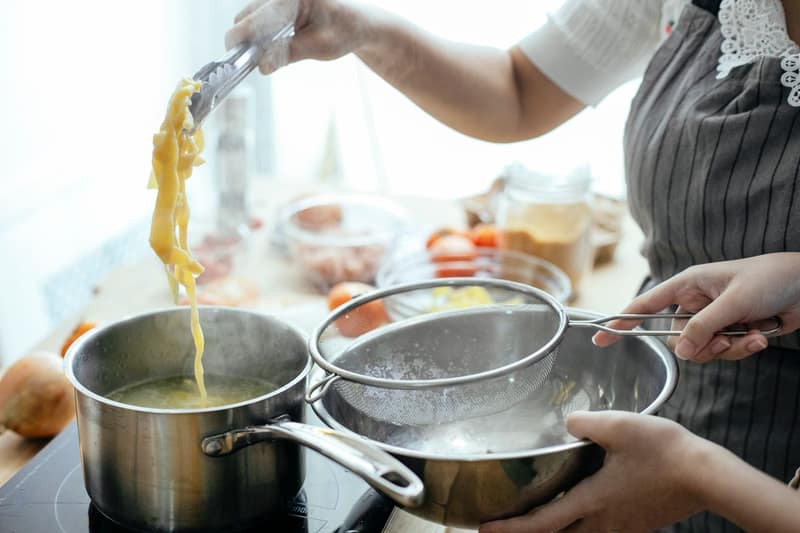
Lift the curds with a slotted spoon (opens in a new tab) into a sieve lined with fine cloth and drain for 20–30 minutes, until thick but still moist.
How it looks · Photo: Katerina Holmes on Pexels Step 4
Transfer to a bowl, stir in the orange blossom and rose water (opens in a new tab) and beat lightly until smooth and spreadable. Cover and chill for at least 2 hours.
To serve
2 minStep 5
Serve in a shallow dish drizzled with honey (opens in a new tab) and sprinkled with pistachios (opens in a new tab), or use as a filling.
- 2 min
How it looks · Photo: Willians Huerta on Pexels
At a glance
1 · Ashta in a pan
 Milk
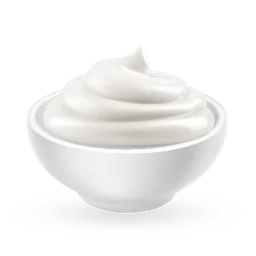 Heavy cream
 Sugar
 Lemon juice
 Orange blossom water
 Rose water
then serve
2 · To serve in a bowl
 Honey
 Pistachios
About this dish
- Origin
- Syria and the Levant, Syria · Well documentedMade across Syria, Lebanon, Palestine, Jordan and Egypt; sweet shops make it by slowly skimming cream from simmering milk, while modern home cooks often thicken milk with cornflour and bread.Also popular in Lebanon, Palestine, Jordan, EgyptMore food from Syria
Syria - Dish
- Dessert · Breakfast · Desserts · Puddings & custards
- Cooking method
- Simmered
- Taste
- creamy, sweet, aromatic / warmly spiced, rich
- Diet
- Vegetarian (lacto-ovo) · No gluten ingredients · Low-carbWithout the optional extras: No nut ingredientsWorked out from the ingredients. How labels work
All labels
Vegetarian (lacto-ovo) · Eggetarian · Lacto-vegetarian · Pescatarian · Flexitarian-friendly · No gluten ingredients · Egg-free · Alcohol-free · Pork-free · Beef-free · Low-carb · Low-sodium - Good for
- Make-ahead
- Cook more with
- Milk · Heavy cream · Sugar · Lemon juice · Orange blossom water · Rose water
- Techniques
- Simmering
Allergens
- Contains: Milkfrom milk, heavy cream
- Contains, can be adapted: Tree nutsfrom pistachios
Based on typical versions of these ingredients and not verified allergen-free. Brands differ and cross-contact happens, so always check labels. For severe allergies, follow your clinician’s advice.
Nutrition
383 kcal per serving
Estimated1 serving ≈ 333 g · recipe makes 4
Where the energy comes from
- Protein 10%
- Carbohydrate 18%
- Fat 72%
| Nutrient | Per serving | Per 100 g* |
|---|---|---|
| Energy | 383 kcal | 115 kcal |
| Protein | 9.9 g | 3 g |
| Carbohydrate | 17.8 g | 5.4 g |
| Net carbohydrate | 17.8 g | 5.3 g |
| Sugars | 18.2 g | 5.5 g |
| Added sugars | 3.1 g | 0.9 g |
| Fibre | 0 g | 0 g |
| Fat | 30.9 g | 9.3 g |
| Saturated fat | 19.2 g | 5.8 g |
| Trans fat | — | — |
| Cholesterol | 96 mg | 29 mg |
| Sodium | 128 mg | 38 mg |
| Salt equivalent | 0.3 g | 0.1 g |
Vitamins & minerals per serving
- Potassium
- 407 mg
- Calcium
- 333 mg
- Iron
- 0.1 mg
- Magnesium
- 31 mg
- Vitamin A (RAE)
- 375 µg
- Vitamin C
- 3 mg
- Vitamin D
- 4.3 µg
- Vitamin B12
- 1.3 µg
- Folate (DFE)
- 17 µg
How these numbers were made
- Calculated from USDA FoodData Central (SR Legacy) per-100 g values and the listed quantities.
- *Per 100 g of combined raw ingredients; the cooked dish may weigh more or less.
- Optional ingredients are not included: honey, pistachios.
- Orange blossom water: Water (FDC 174158); orange flower water is a distillate with negligible nutrients.
- Rose water: Water (FDC 174158); rose water is a distillate with negligible nutrients.
- “—” means the value isn’t known for enough of the ingredients; it is never zero by default.
- Values are estimates for guidance, not for medical dosing. U.S. Department of Agriculture, Agricultural Research Service. FoodData Central, 2019. fdc.nal.usda.gov.
Good to know
Tips
- Save the whey for making bread or soaking bulgur.
- For a firmer filling for qatayef, drain the curds longer.
Common mistakes
- Boiling the milk hard after adding the lemon, which makes tough, rubbery curds.
Serve with
- Spread on warm bread with honey or apricot jam for breakfast.
- Spoon onto fruit salad, or use to fill qatayef, knafeh or znoud el sit.
Food safety
- Fresh dairy desserts are perishable: keep ashta chilled and do not leave it out for more than 2 hours.
Storage
- Keeps 3 days, covered, in the fridge.
Variations
- Quick ashta: Milk and cream thickened on the stove with cornflour and a few slices of crustless white bread, then flavoured with blossom waters; the common modern home method.
- Ashta skimmed from simmering milk: The slow traditional method: the skin of cream that forms on barely simmering milk is lifted off repeatedly and collected.
Original editorial recipe · FriendsPantry editorial · source: TasteAtlas (dish facts) · Not yet independently reviewed · Added
Recipe DNA
How this dish is built
Built from the recipe’s own sections. Each band’s width is its share of the dish by weight. Choose a component to see what it does.
Accompaniments
To serve
- Honey (optional)4 tbsp · 84 g
- Pistachios, finely chopped (optional)20 g
Reviews & corrections
Reviews come from signed-in cooks and appear after a moderator checks them. We never show made-up ratings.
You might also like
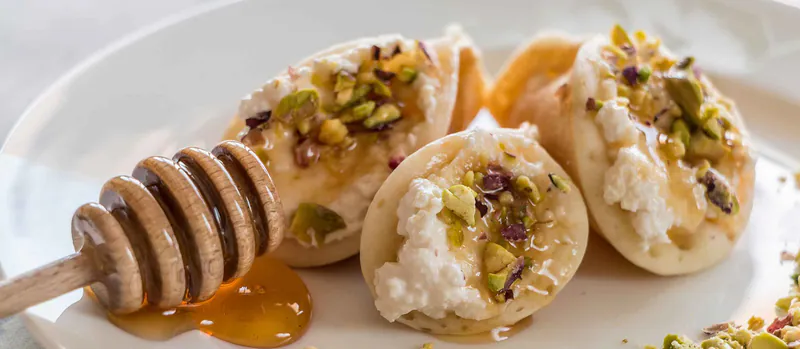
Qatayef (Ramadan stuffed pancakes)
 Egyptian · 2 h · 494 kcal · Vegetarian
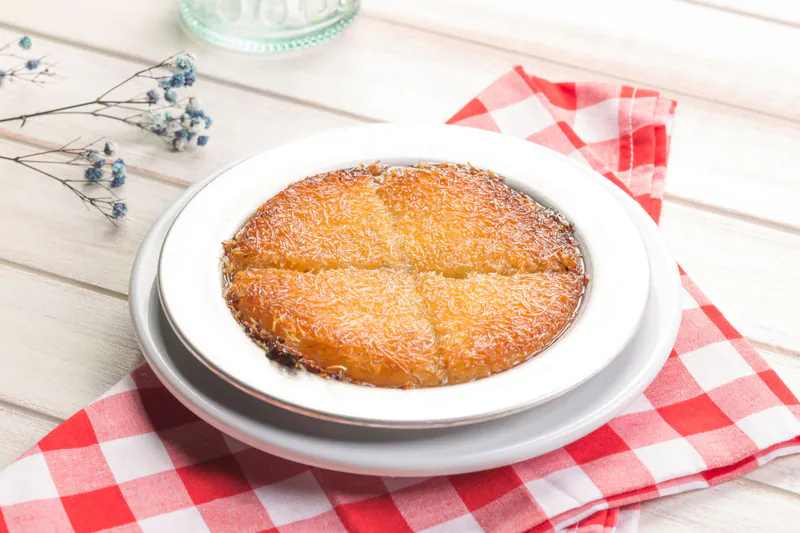
Knafeh
 Palestinian · 1 h 20 min · 436 kcal · Vegetarian
Ma'amoul with dates
Levantine · 2 h 8 min · 148 kcal · Vegetarian

Znoud el sit (cream-filled fried filo rolls)
 Lebanese · 3 h 15 min · 391 kcal · Vegetarian