
 Spanish · Mediterranean · Rice dishes
Arroz marinero (Spanish brothy seafood rice)
Non-vegetarian
Arroz marinero · arroz marinero
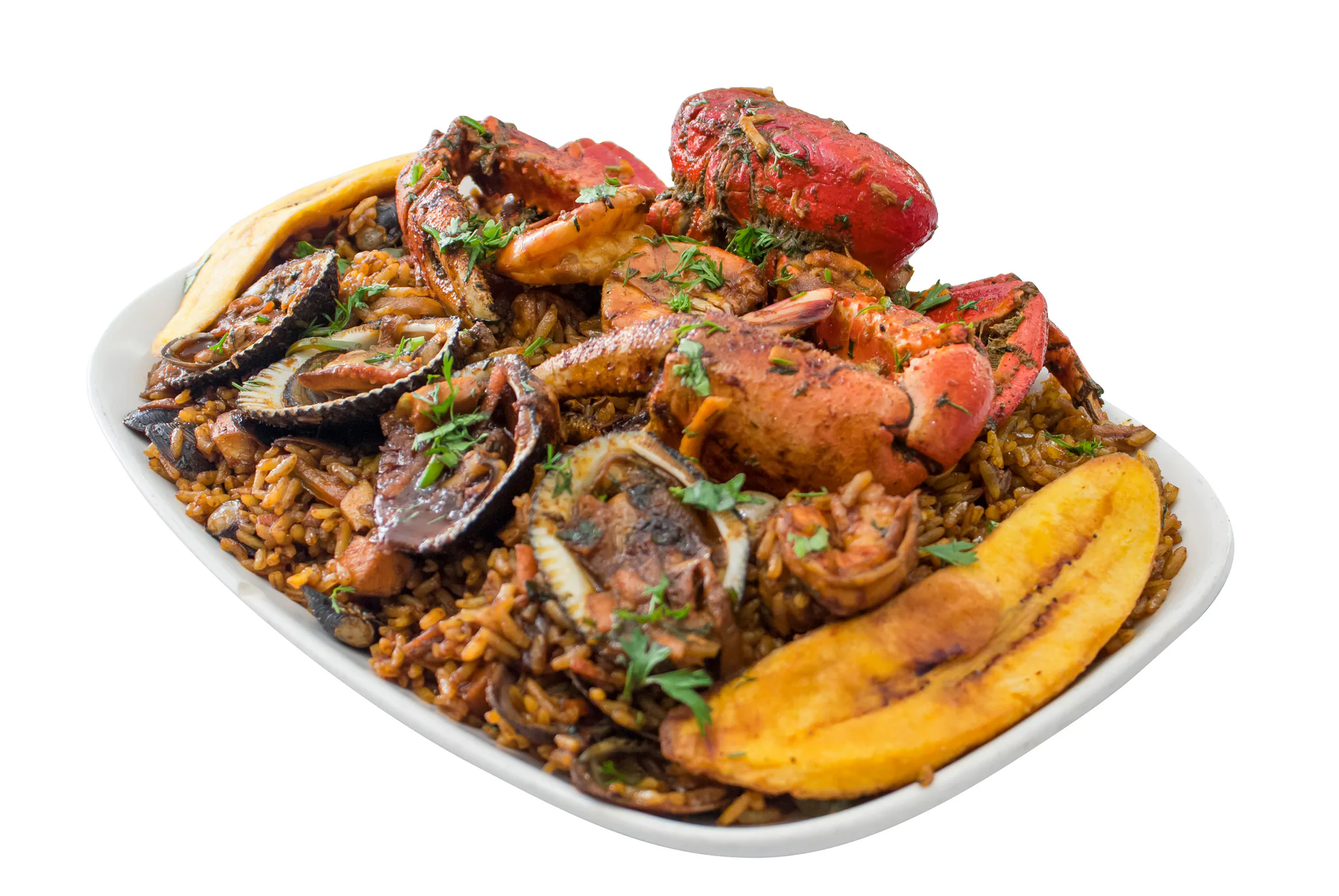
Short-grain rice simmered in a deep pot of saffron fish stock with a sofrito of onion, peppers, tomato and garlic, then finished with prawns, squid, mussels and clams. Unlike paella it is served loose and brothy, eaten with a spoon straight away.
Arroz marinero (Spanish brothy seafood rice) is a Spanish rice dish from Spain, ready in about 1 hour 12 minutes and made with fish stock, short-grain rice and prawns / shrimp. It serves 4 and is rated intermediate to cook.
- Prep
- 30 min
- Cook
- 40 min
- Rest
- 2 min
- Total
- 1 h 12 min
- Serves
- 4
- Level
- Intermediate
- Calories
- 903
Main ingredients
Ingredients
For the broth
For the sofrito
For the rice
For the seafood
To finish
Method
Broth
6 minStep 1
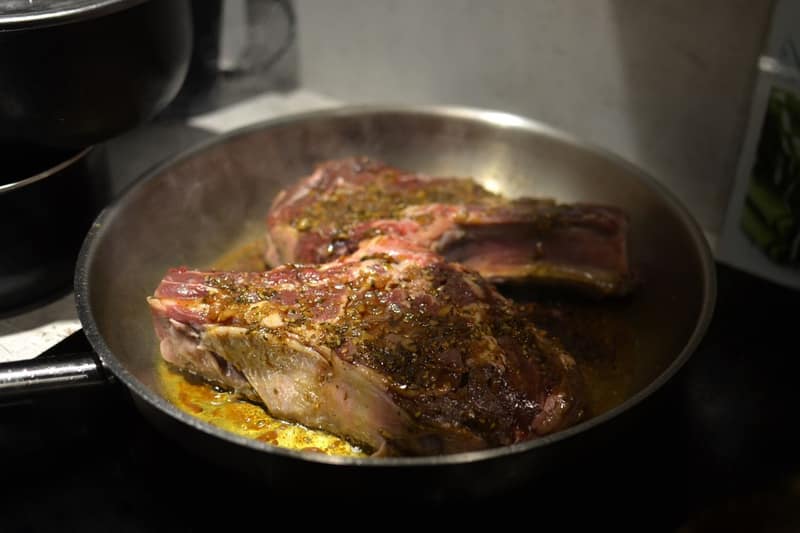
Keep the stock hot in a saucepan (opens in a new tab) with the saffron (opens in a new tab). Heat the oil in a wide, heavy casserole and sear the prawns (opens in a new tab) for 1 minute per side; lift out. Add the squid (opens in a new tab) and fry for 2 minutes.
How it looks · Photo: Skylar Kang on Pexels
Sofrito
18 minStep 2
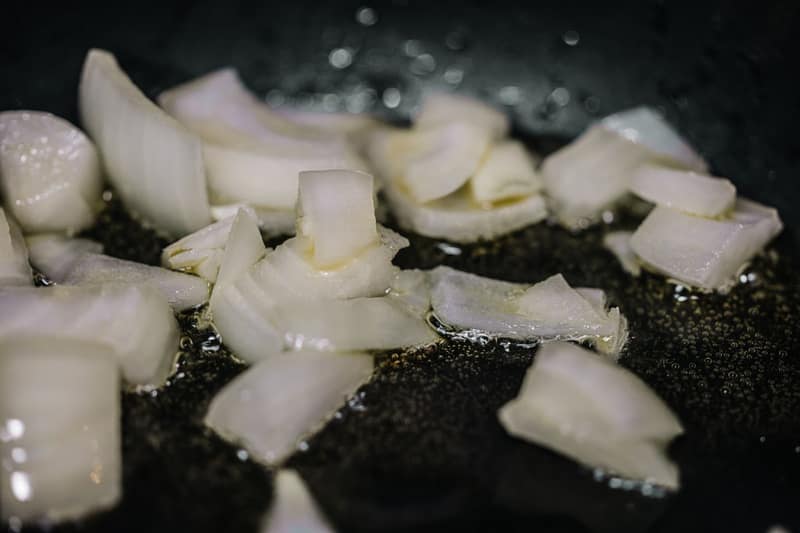
Add the onion (opens in a new tab) and both peppers and cook over medium heat until soft and sweet, 10 minutes. Add the garlic (opens in a new tab) for 1 minute, then the grated tomato (opens in a new tab), and cook until it darkens and thickens, 6–8 minutes. Stir in the pimentón (opens in a new tab) for a few seconds, then the wine, and let it bubble away.
- 18 min
- medium heat
- Wooden spoon (opens in a new tab)
How it looks · Photo: Magda Ehlers on Pexels
Rice
10 minStep 3
Stir in the rice to coat it in the sofrito, then pour in about 1.3 litres of the hot stock and season with salt. Simmer briskly for 10 minutes, stirring once or twice.
- 10 min
- medium-high heat
- Ladle (opens in a new tab)
Seafood
8 minStep 4
Add the mussels (opens in a new tab) and clams (opens in a new tab), pushing them into the rice, and simmer for 5 minutes more, adding stock as needed so the rice stays loose and soupy. Lay the prawns (opens in a new tab) on top for the last 2–3 minutes. Discard any shellfish that stay closed.
- 8 min
- medium heat
Food safety: Discard mussels and clams that are cracked or stay open when tapped before cooking, and any that do not open once cooked.
The rice should be just tender with a slight bite, in plenty of broth; it keeps absorbing liquid off the heat.
To finish
2 minStep 5
Take off the heat, rest for 2 minutes, scatter with parsley (opens in a new tab) and serve at once in deep plates with lemon (opens in a new tab) wedges.
- 2 min

How it looks · Photo: Klaus Nielsen on Pexels
At a glance
1 · Broth in a pot
 Fish stock
 Saffron
then add
2 · Sofrito in a pan
 Olive oil
 Onion
 Green bell pepper
- Red bell pepper
 Garlic
 Tomato
 Paprika
 Dry white wine
then stir
3 · Rice in a pot
 Short-grain rice
 Salt
then add
4 · Seafood in a pan
 Squid
 Prawns / shrimp
 Mussels
 Clams
then take
5 · To finish in a pan
 Parsley
 Lemon
About this dish
- Origin
- Spain's Mediterranean and Atlantic coasts, Spain · Commonly attributedFishermen's rices of this kind are made along the whole Spanish coast; the soupy (caldoso) and creamy (meloso) versions are especially popular in Murcia, Andalusia and Galicia. Portugal's arroz de marisco is a close cousin.Also popular in PortugalMore food from Spain
Spain - Dish
- Lunch · Rice dishes · Main courses
- Cooking method
- Simmered, Sautéed
- Taste
- savoury, umami, aromatic / warmly spiced, fresh
- Diet
- Pescatarian · No gluten ingredients · Dairy-free · No nut ingredients · High-proteinWithout the optional extras: Alcohol-freeWorked out from the ingredients. How labels work
All labels
Pescatarian · Non-vegetarian · No gluten ingredients · Dairy-free · Egg-free · No nut ingredients · No added sugar · Pork-free · Beef-free · High-protein · Low-fat - Good for
- One-pot · Festive & celebration
- Cook more with
- Fish stock · Short-grain rice · Prawns / shrimp · Saffron · Onion · Green bell pepper
Allergens
- Contains: Fishfrom fish stock
- Contains: Crustaceansfrom fish stock, prawns / shrimp
- Contains: Molluscsfrom squid, mussels, clams
- May contain: Celeryfrom fish stock
- Contains, can be adapted: Sulphitesfrom dry white wine
Based on typical versions of these ingredients and not verified allergen-free. Brands differ and cross-contact happens, so always check labels. For severe allergies, follow your clinician’s advice.
Nutrition
903 kcal per serving
Calculated1 serving ≈ 1058 g · recipe makes 4
Where the energy comes from
- Protein 33%
- Carbohydrate 41%
- Fat 26%
| Nutrient | Per serving | Per 100 g* |
|---|---|---|
| Energy | 903 kcal | 85 kcal |
| Protein | 74.5 g | 7 g |
| Carbohydrate | 90.8 g | 8.6 g |
| Net carbohydrate | — | — |
| Sugars | — | — |
| Added sugars | 0 g | 0 g |
| Fibre | — | — |
| Fat | 26.1 g | 2.5 g |
| Saturated fat | 4.4 g | 0.4 g |
| Trans fat | — | — |
| Cholesterol | 397 mg | 38 mg |
| Sodium | 2178 mg | 206 mg |
| Salt equivalent | 5.4 g | 0.5 g |
Vitamins & minerals per serving
- Potassium
- 1903 mg
- Calcium
- 202 mg
- Iron
- 9 mg
- Magnesium
- 186 mg
- Vitamin A (RAE)
- —
- Vitamin C
- —
- Vitamin D
- —
- Vitamin B12
- —
- Folate (DFE)
- —
How these numbers were made
- Calculated from USDA FoodData Central (SR Legacy) per-100 g values and the listed quantities.
- *Per 100 g of combined raw ingredients; the cooked dish may weigh more or less.
- Optional ingredients are not included: dry white wine.
- “—” means the value isn’t known for enough of the ingredients; it is never zero by default.
- Values are estimates for guidance, not for medical dosing. U.S. Department of Agriculture, Agricultural Research Service. FoodData Central, 2019. fdc.nal.usda.gov.
Good to know
Tips
- Add the remaining stock just before serving if the rice has drunk up the broth; it should be soupy.
Common mistakes
- Letting it stand before serving: brothy rice turns stodgy within minutes.
Serve with
- Serve with alioli, crusty bread and a chilled Albariño or Verdejo.
Food safety
- Discard mussels and clams that are cracked or stay open when tapped before cooking, and any that do not open once cooked.
- Cooked rice can carry Bacillus cereus spores that survive cooking; cool leftover rice quickly and refrigerate it within an hour.
Storage
- Best eaten immediately; leftovers keep 1 day refrigerated.
Reheating
- Reheat with extra stock until piping hot; the texture will be softer.
Variations
- Arroz meloso de marisco: Cooked with less stock until creamy, between a paella and a soup.
- Arroz de marisco (Portugal) (Portugal): The Portuguese cousin, also brothy, often with coriander and a little chilli.
Original editorial recipe · FriendsPantry editorial · source: TasteAtlas (dish facts) · Not yet independently reviewed · Added
Recipe DNA
How this dish is built
Built from the recipe’s own sections. Each band’s width is its share of the dish by weight. Choose a component to see what it does.
The liquid foundation
For the broth
- Fish stock, hot1.6 l · 1600 g
- Saffron, crumbled into the hot stock1 pinch · 0.1 g
Reviews & corrections
Reviews come from signed-in cooks and appear after a moderator checks them. We never show made-up ratings.
You might also like
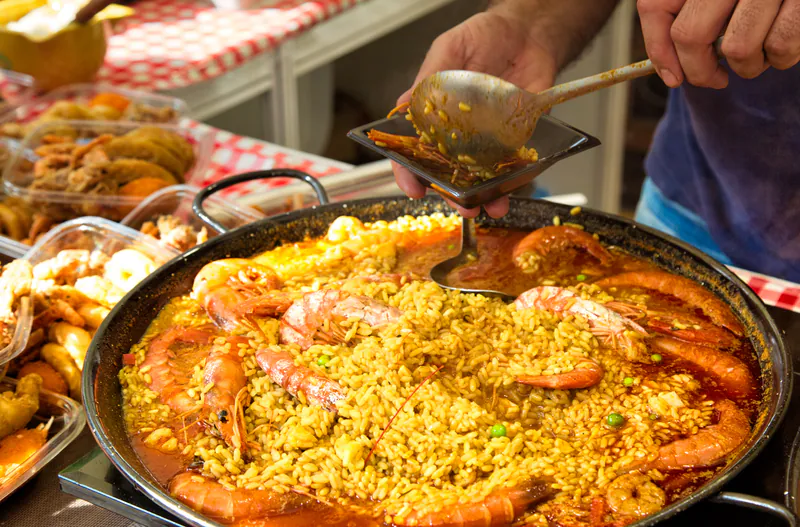
Paella de mariscos (seafood paella)
Spanish · 1 h 15 min · 954 kcal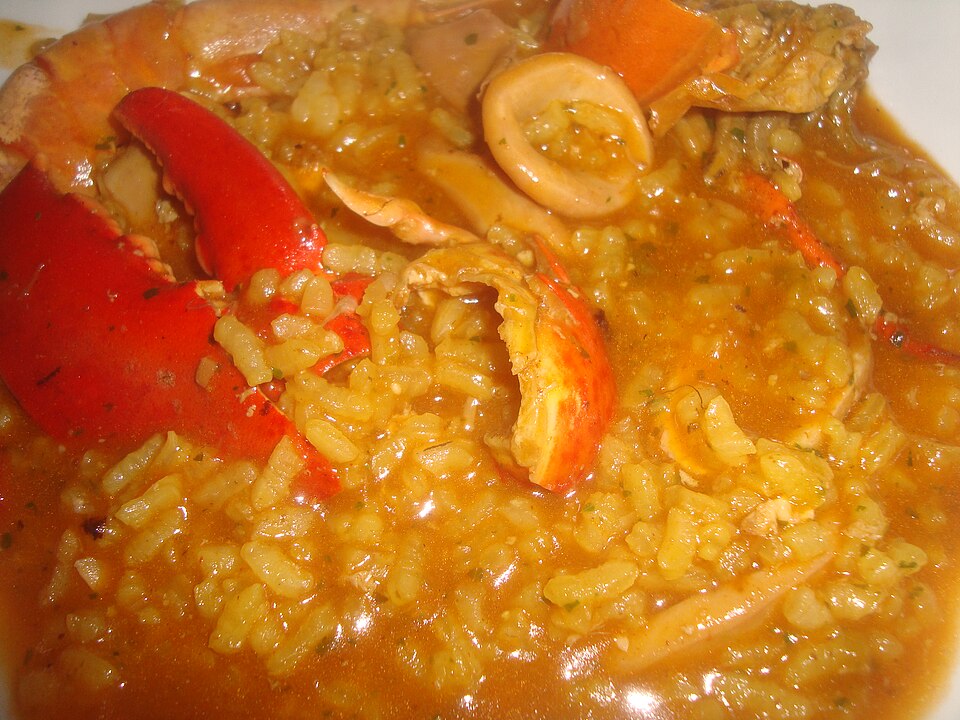
Arroz de marisco
 Portuguese · 1 h · 651 kcal
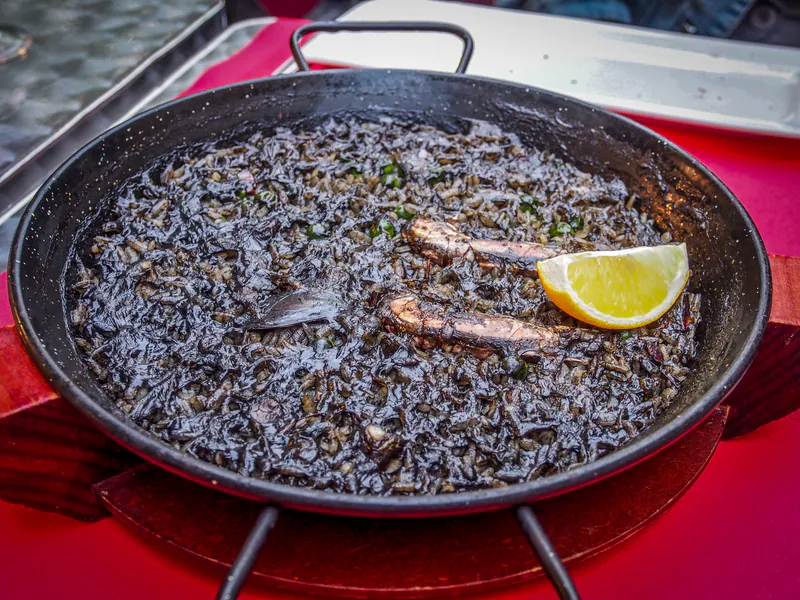
Arròs negre (black rice with cuttlefish)
Spanish · 1 h 20 min · 950 kcal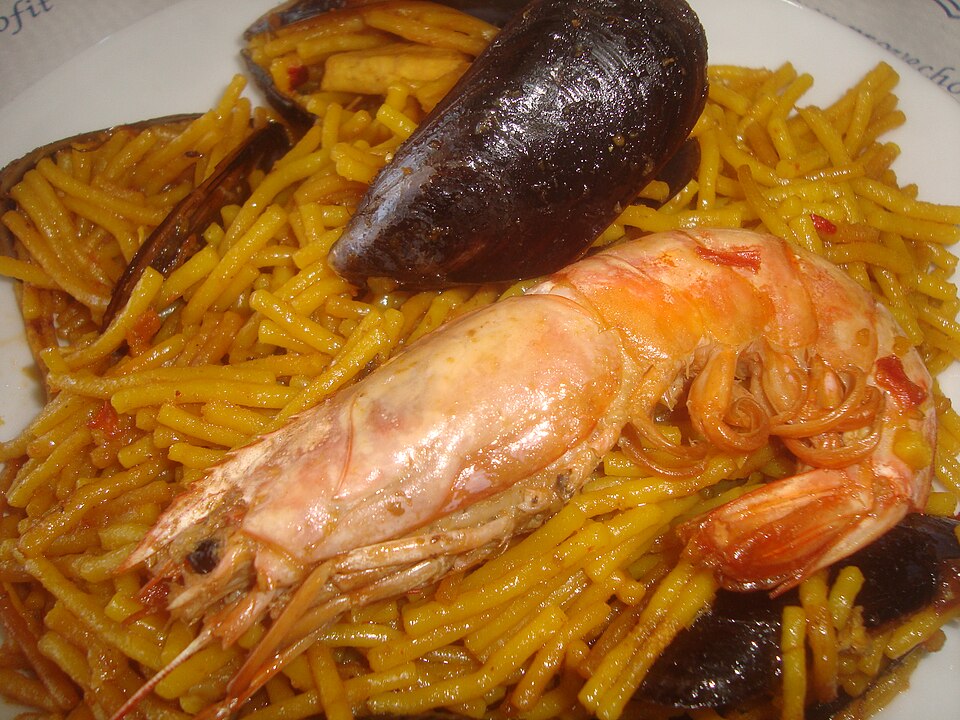
Fideuà (Valencian seafood noodles)
Spanish · 1 h 5 min · 854 kcal