
Adobong baboy (Filipino pork adobo)
Non-vegetarian
Adobong baboy
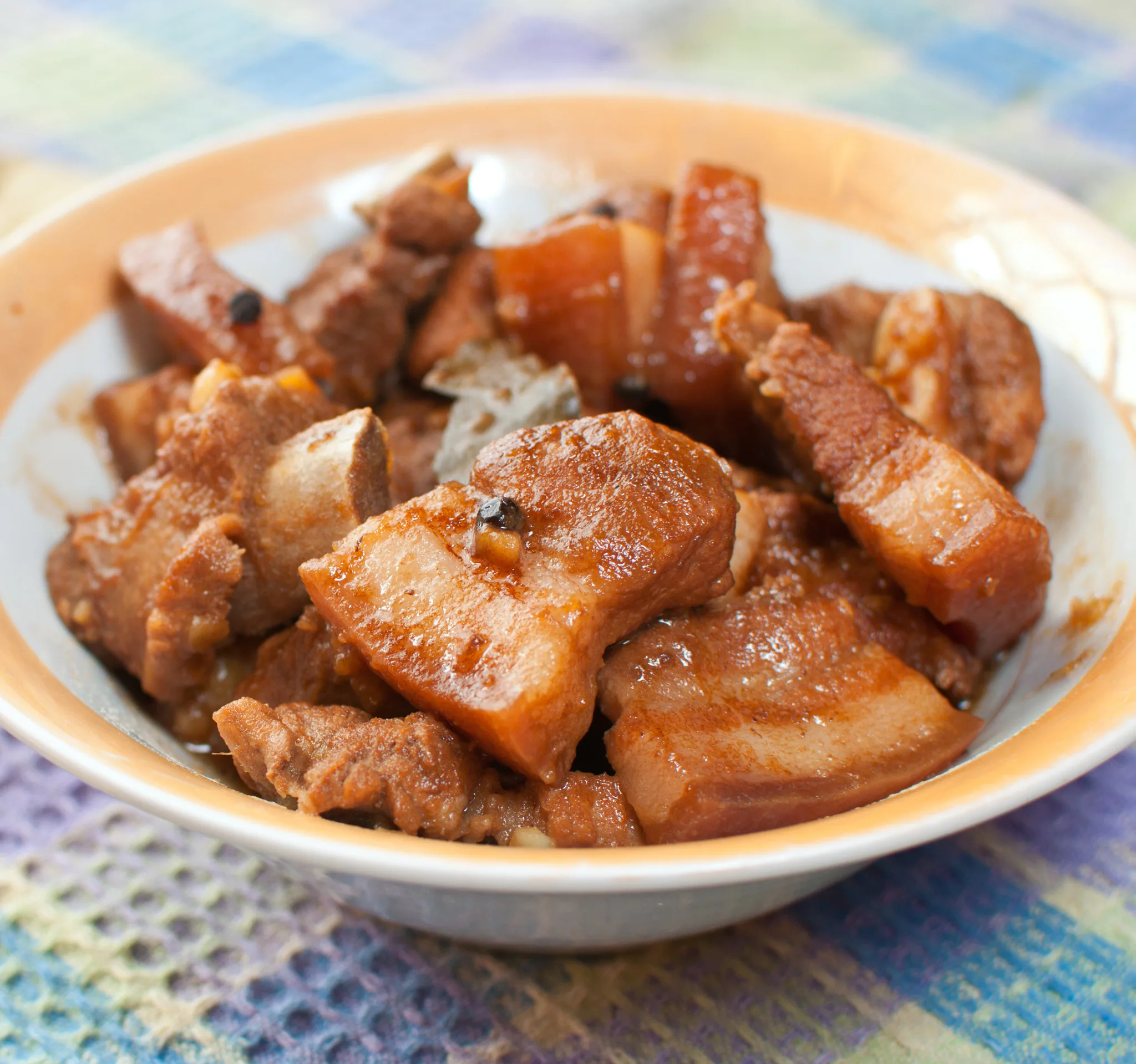
Cubes of pork belly marinated in soy sauce and garlic, browned, then braised with vinegar, bay leaves and whole peppercorns until tender and coated in a glossy, tangy-salty sauce. One of the Philippines' best-loved everyday dishes, always eaten with rice.
Adobong baboy (Filipino pork adobo) is a Filipino stew from Philippines, ready in about 2 hours and made with pork belly, soy sauce and white vinegar. It serves 4 and is rated easy to cook.
- Prep
- 15 min
- Cook
- 1 h 15 min
- Rest
- 30 min
- Total
- 2 h
- Serves
- 4
- Level
- Easy
- Calories
- 1747
Main ingredients


Ingredients
For the marinade
For the braise
To serve
Method
Marinade
3 minStep 1
Mix the pork with the soy sauce (opens in a new tab) and garlic (opens in a new tab) and marinate for 30 minutes at room temperature, or up to overnight in the fridge.
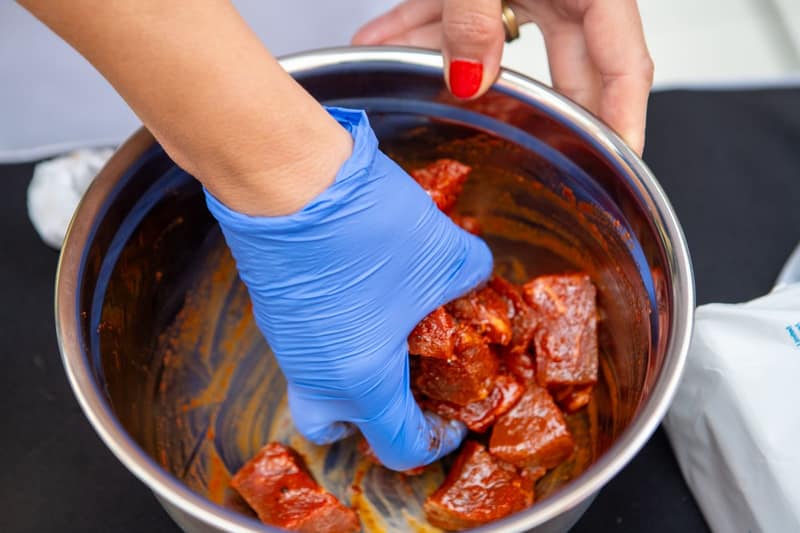
How it looks · Photo: Ip Photographer on Pexels
Braise
1 h 18 minStep 2
Lift the pork out of the marinade (keep the marinade). Heat the oil in a heavy pot and brown the pork in batches over high heat until golden on all sides. Return all the pork to the pot.
Step 3
Add the reserved marinade and garlic (opens in a new tab), the water, bay leaves (opens in a new tab), peppercorns (opens in a new tab) and sugar. Bring to the boil and simmer for 5 minutes.
- 6 min
- medium heat
Step 4
Pour in the vinegar and let it boil for 2–3 minutes without stirring, so the sharp raw smell cooks off. Then cover and simmer gently, stirring occasionally, until the pork is very tender, 45–50 minutes.
- 50 min
- low heat
Filipino cooks say not to stir straight after adding vinegar; it keeps the adobo from tasting raw and sour.
Step 5
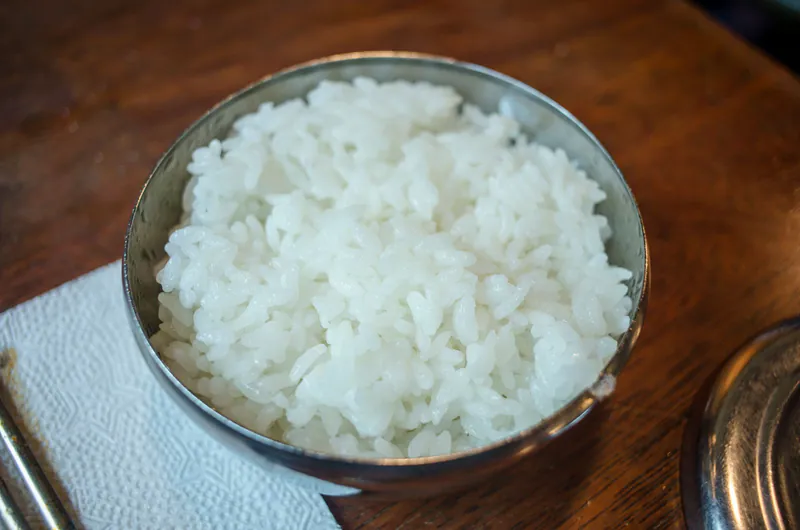
Uncover and simmer until the sauce reduces and turns glossy and the fat begins to sizzle, about 10 minutes. Taste and add salt if needed. Serve with steamed rice.
- 10 min
- medium heat
- Rice cooker (opens in a new tab)
Food safety: Cooked rice can carry Bacillus cereus spores that survive cooking; cool leftover rice quickly and refrigerate it within an hour.
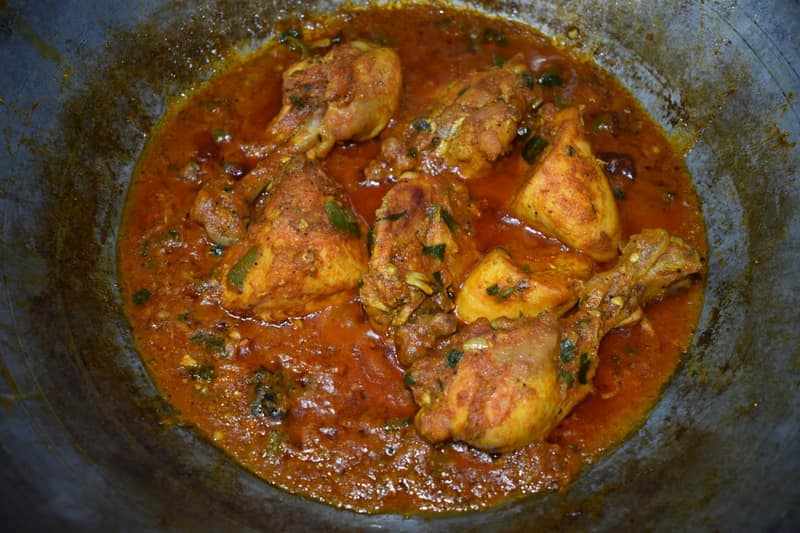
How it looks · Photo: Bachir Mamud on Pexels
At a glance
1 · Marinade in a bowl
 Pork belly
 Soy sauce
 Garlic
then lift
2 · Braise in a pan
 Neutral vegetable oil
 Bay leaves
 Black peppercorns
 Brown sugar
 White vinegar
 Salt
About this dish
- Origin
- Philippines · Well documentedAdobo is a pre-colonial vinegar-braising method that took a Spanish name; soy sauce came through Chinese influence. Every region and family has its own ratio.Also popular in United StatesMore food from Philippines
Philippines - Dish
- Lunch · Dinner · Stews & braises · Main courses
- Cooking method
- Marinated / cured, Braised, Pan-fried
- Taste
- tangy, salty, garlicky, savoury
- Diet
- Dairy-free · No nut ingredients · High-proteinWorked out from the ingredients. How labels work
All labels
Non-vegetarian · Dairy-free · Egg-free · No nut ingredients · Alcohol-free · Beef-free · High-protein - Good for
- Everyday · One-pot · Make-ahead · Uses leftovers
- Cook more with
- Pork belly · Soy sauce · White vinegar · Garlic · Bay leaves · Black peppercorns
- Techniques
- Pan-frying · Boiling · Simmering · Braising · Marinating
Allergens
- Contains: Wheatfrom soy sauce
- Contains: Glutenfrom soy sauce
- Contains: Soyfrom soy sauce
Based on typical versions of these ingredients and not verified allergen-free. Brands differ and cross-contact happens, so always check labels. For severe allergies, follow your clinician’s advice.
Nutrition
1747 kcal per serving
Calculated1 serving ≈ 498 g · recipe makes 4
Where the energy comes from
- Protein 8%
- Carbohydrate 21%
- Fat 71%
| Nutrient | Per serving | Per 100 g* |
|---|---|---|
| Energy | 1747 kcal | 351 kcal |
| Protein | 34.1 g | 6.9 g |
| Carbohydrate | 89.6 g | 18 g |
| Net carbohydrate | 87.6 g | 17.6 g |
| Sugars | 3.7 g | 0.7 g |
| Added sugars | 3.3 g | 0.7 g |
| Fibre | 2.1 g | 0.4 g |
| Fat | 136.9 g | 27.5 g |
| Saturated fat | 48.8 g | 9.8 g |
| Trans fat | — | — |
| Cholesterol | 180 mg | 36 mg |
| Sodium | 2276 mg | 458 mg |
| Salt equivalent | 5.7 g | 1.1 g |
Vitamins & minerals per serving
- Potassium
- 792 mg
- Calcium
- 90 mg
- Iron
- 6.5 mg
- Magnesium
- 67 mg
- Vitamin A (RAE)
- 8 µg
- Vitamin C
- 5 mg
- Vitamin D
- —
- Vitamin B12
- 2.1 µg
- Folate (DFE)
- 395 µg
How these numbers were made
- Calculated from USDA FoodData Central (SR Legacy) per-100 g values and the listed quantities.
- *Per 100 g of combined raw ingredients; the cooked dish may weigh more or less.
- “—” means the value isn’t known for enough of the ingredients; it is never zero by default.
- Values are estimates for guidance, not for medical dosing. U.S. Department of Agriculture, Agricultural Research Service. FoodData Central, 2019. fdc.nal.usda.gov.
Good to know
Tips
- For adobo with crisp edges, lift the cooked pork out and fry it in a little of its own fat, then pour the reduced sauce back over.
- Adobo tastes even better the next day.
Common mistakes
- Reducing the sauce too far, which leaves it overly salty — stop while it still coats the meat generously.
Serve with
- Serve with plenty of steamed rice or garlic fried rice (sinangag) and a fried egg.
Food safety
- Cooked rice can carry Bacillus cereus spores that survive cooking; cool leftover rice quickly and refrigerate it within an hour.
Storage
- Keeps 5 days in the fridge (the vinegar helps) and freezes for 3 months.
Reheating
- Reheat in a pan with a splash of water until piping hot.
Variations
- Adobong puti: 'White' adobo made without soy sauce, using salt and vinegar only.
- Adobo sa gata: Finished with coconut milk, as cooked in Bicol and Southern Luzon.
- Chicken and pork adobo: Chicken pieces are braised together with the pork.
Original editorial recipe · FriendsPantry editorial · source: TasteAtlas (dish facts) · Not yet independently reviewed · Added
Recipe DNA
How this dish is built
Built from the recipe’s own sections. Each band’s width is its share of the dish by weight. Choose a component to see what it does.
Seasons and tenderises before cooking
For the marinade
- Pork belly, skin on, in 4 cm cubes1 kg · 1000 g
- Soy sauce120 ml · 138 g
- Garlic, crushed12 clove · 48 g
Reviews & corrections
Reviews come from signed-in cooks and appear after a moderator checks them. We never show made-up ratings.
You might also like
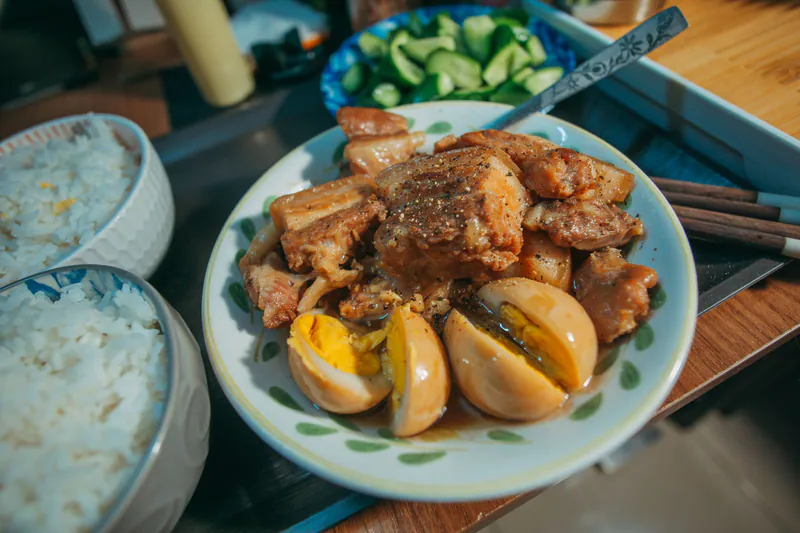
Chicken adobo
 Filipino · 1 h 30 min · 529 kcal
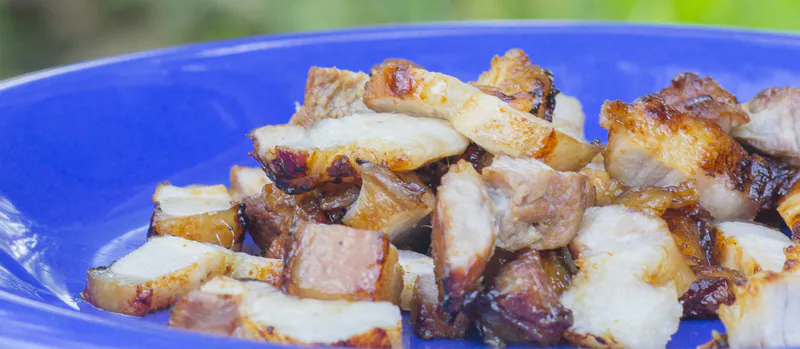
Lechon kawali (Filipino crispy fried pork belly)
Filipino · 3 h 30 min · 1434 kcal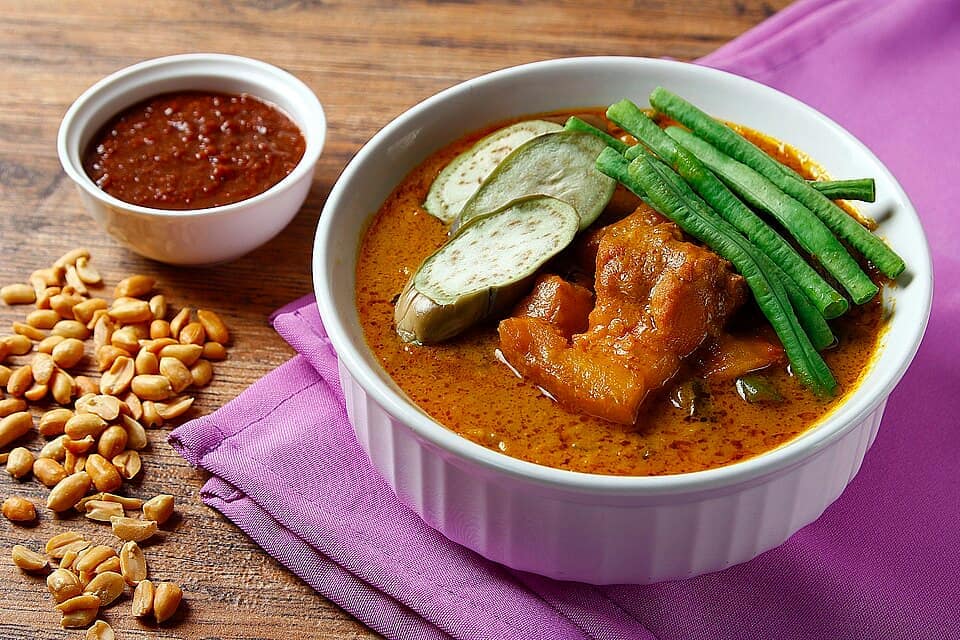
Kare-kare
Filipino · 3 h 5 min · 441 kcal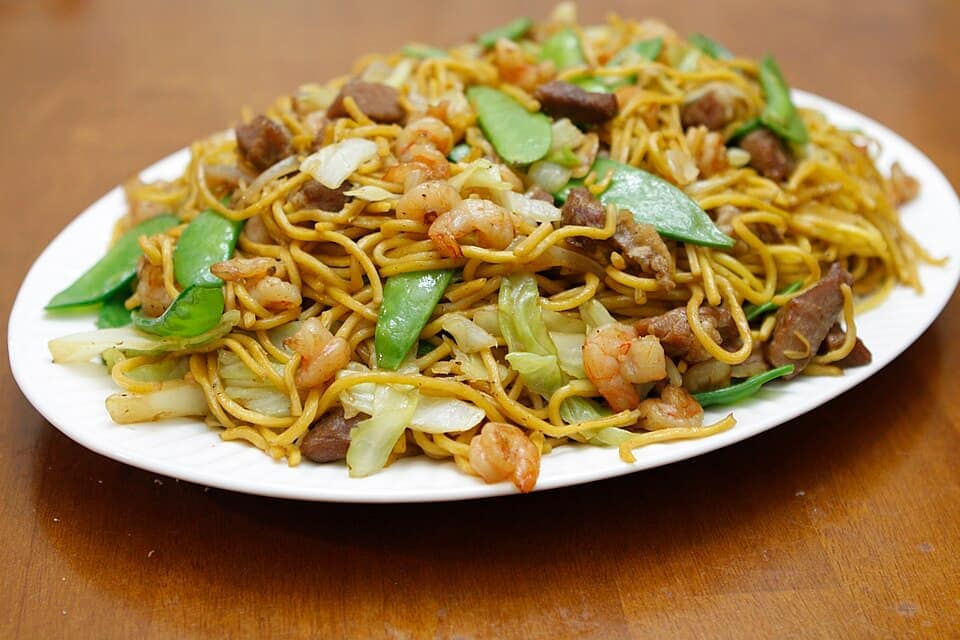
Pancit canton
Filipino · 35 min · 394 kcal