
Ground spices
Sumac
Rhus coriaria
Coarse, deep-red ground berry with a bright lemony tartness, sprinkled over salads, kebabs and onions.
Also called: sumak, summaq
- Fruity & sour
- Citrus & bright
- No heat
Flavour and aroma
tart, lemony, fruity, slightly astringent. Tart, fruity, lemony.
- Heat
- No heat
- Forms
- ground
How to use it
use raw
Sprinkle on at the end over salads, kebabs, hummus, eggs and rice; heat dulls its sourness and colour.
soak
For a sour liquid, soak 2 tablespoons in 250 ml warm water for 15–20 minutes, then strain through a fine sieve; use in place of lemon juice in stews and dressings.
crush · Dry grinding technique
Rub into sliced onions with salt and leave 10 minutes to soften them for kebab salads.
- Fattoush and onion-parsley salads
- Sprinkled on kebabs and grilled meats
- Musakhan chicken
- Za'atar blend
- Hummus and labneh garnish
Identifying good quality
A coarse, slightly moist, deep crimson to purple powder made from the dried berries. It should taste clearly sour and fruity. Brown, dusty sumac is old. Many brands add salt; check the label before seasoning.
- Not to be confused with Red chilli flakes: Sumac is purple-red and sour with no heat; chilli flakes are brighter red and hot.
Origin and history
Origin: The Mediterranean, the Middle East and Iran (Rhus coriaria).. Grown and used: Grown and wild-harvested in Turkey, Iran, Syria, Lebanon and Sicily; used across the Levant, Turkey, Iran, Iraq and the Gulf..
Sumac was used as a souring agent in the Middle East before lemons were common there, and Greek writers such as Dioscorides mention it. Medieval Arabic cookbooks include sumac-soured stews called summāqiyya. Today it is essential to za'atar, fattoush, musakhan and the onion salad served with kebabs.
Well documented
In masalas, pastes and sauces
Recipes with sumac
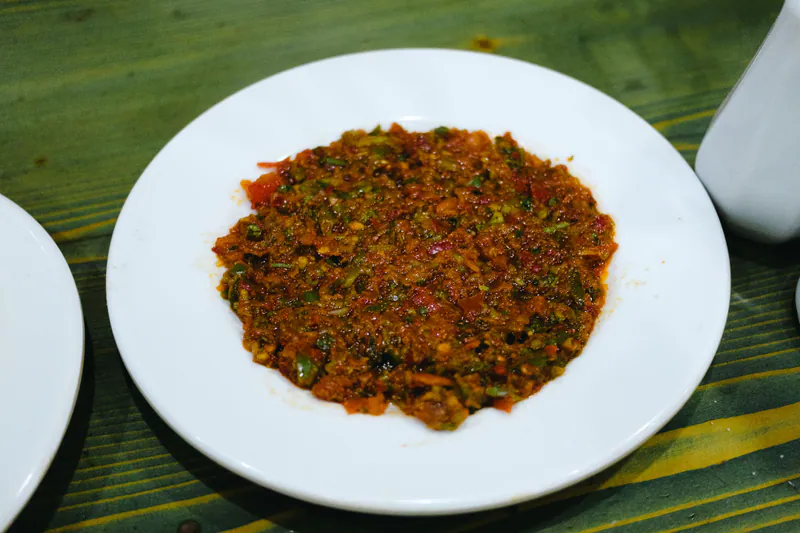
Acılı ezme (Turkish spicy tomato-pepper relish)
 Turkish · 40 min · 73 kcal · Vegan
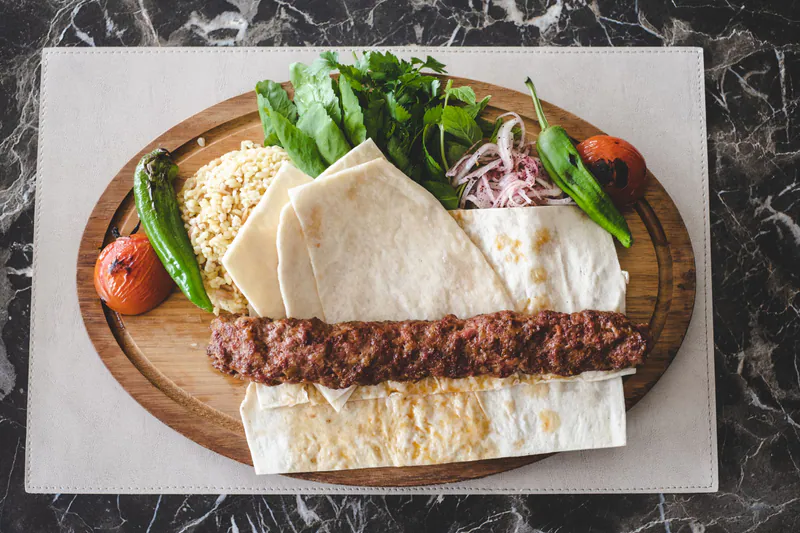
Adana kebab
Turkish · 1 h 7 min · 438 kcal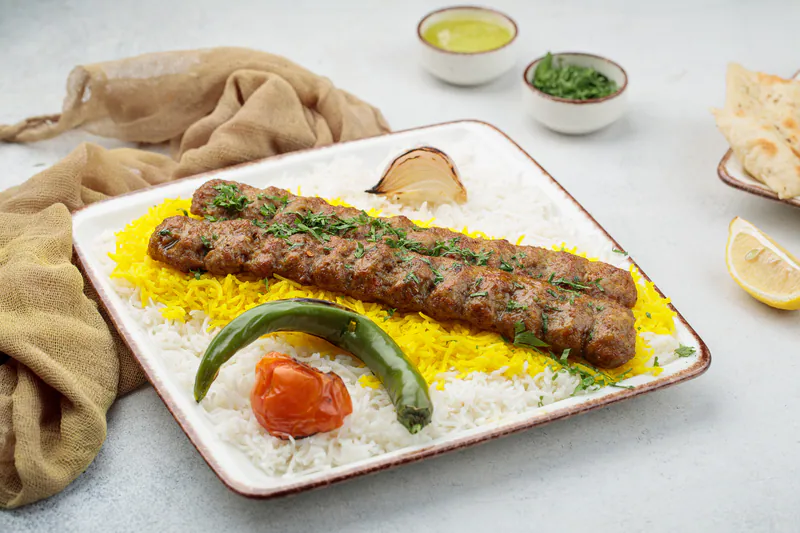
Chelow kabab (saffron rice with kabab koobideh)
 Iranian · 2 h 5 min · 1013 kcal
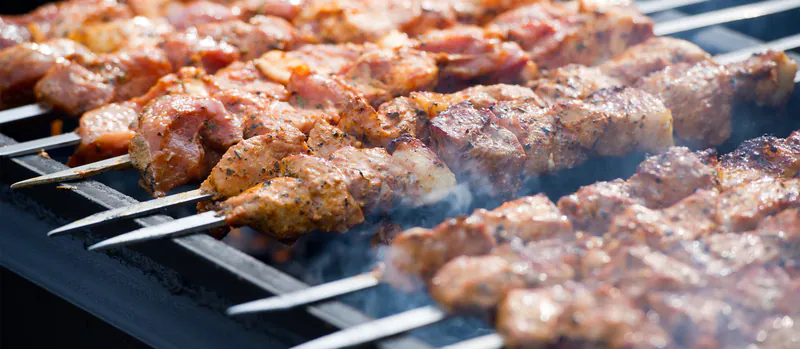
Chopan kabob (Afghan shepherd's lamb kebab)
 Afghan · 2 h 35 min · 751 kcal
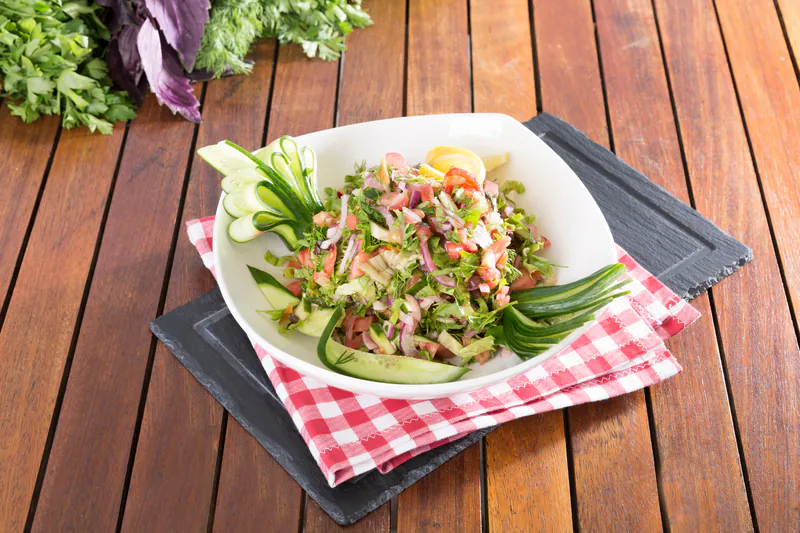
Çoban salatası
Turkish · 15 min · 133 kcal · Vegan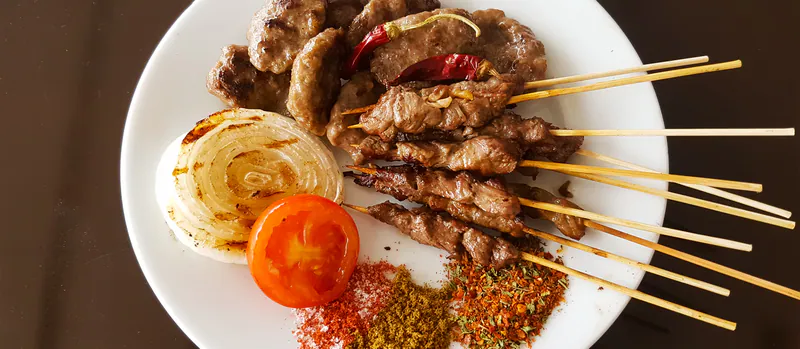
Çöp şiş (Aegean lamb scrap skewers)
Turkish · 2 h 50 min · 773 kcal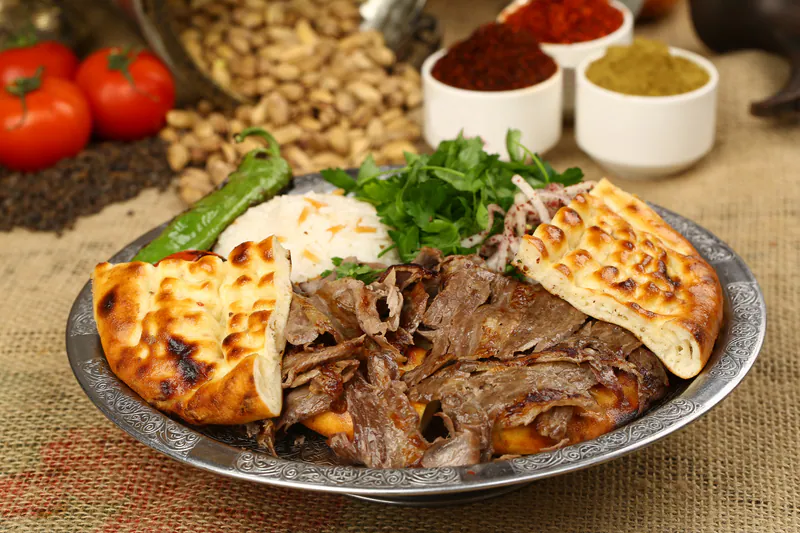
Döner kebab (home oven method)
Turkish · 2 h 25 min · 931 kcal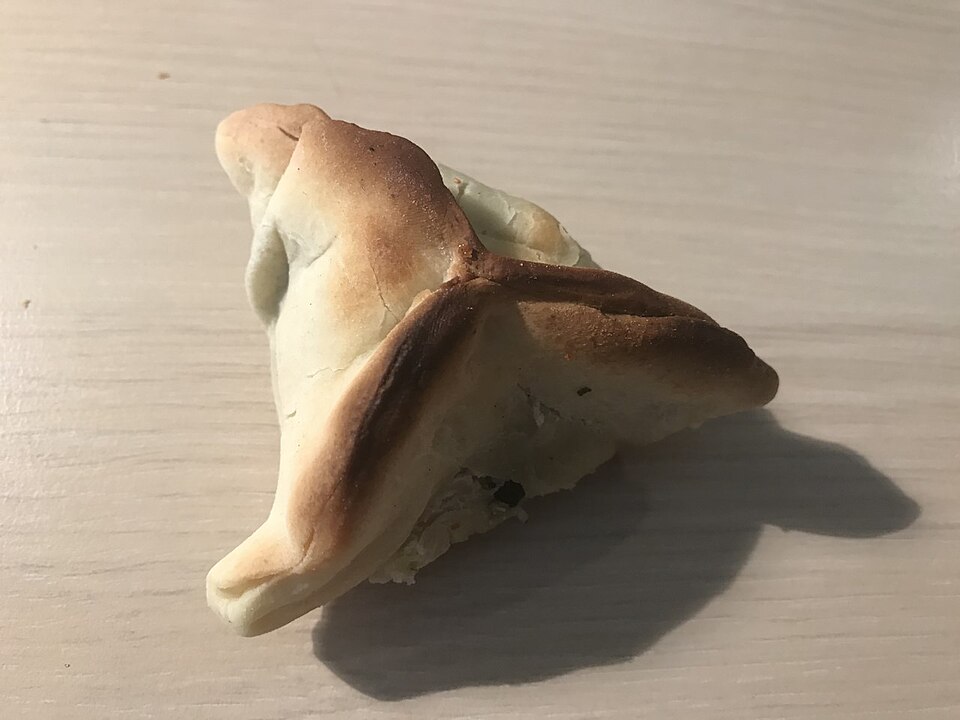
Fatayer bi sabanekh (spinach triangles)
 Lebanese · 2 h 18 min · 125 kcal · Vegan
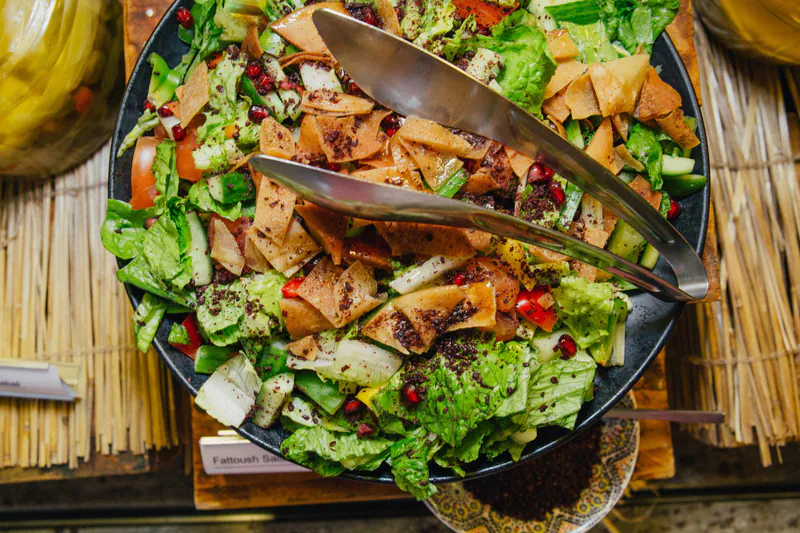
Fattoush
Lebanese · 30 min · 293 kcal · Vegan
14 more
- Gavurdağı salatası · Turkish
- Göy qutabı · Azerbaijani
- Guru khingal (Azerbaijani noodle squares with fried lamb and onions) · Azerbaijani
- İnegöl köfte · Turkish
- Kabab chenjeh (Persian grilled lamb cubes) · Iranian
- Lahmacun · Turkish
- Lula kebab (Armenian minced lamb kebab) · Armenian
- Manisa kebap (meat patties on pide with tomato butter) · Turkish
- Musakhan · Palestinian
- Oltu cağ kebabı (Erzurum horizontal lamb kebab) · Turkish
- Piti · Azerbaijani
- Piyaz · Turkish
- Soyutma (Azerbaijani slow-boiled lamb) · Azerbaijani
- Tantuni (Mersin beef wrap) · Turkish